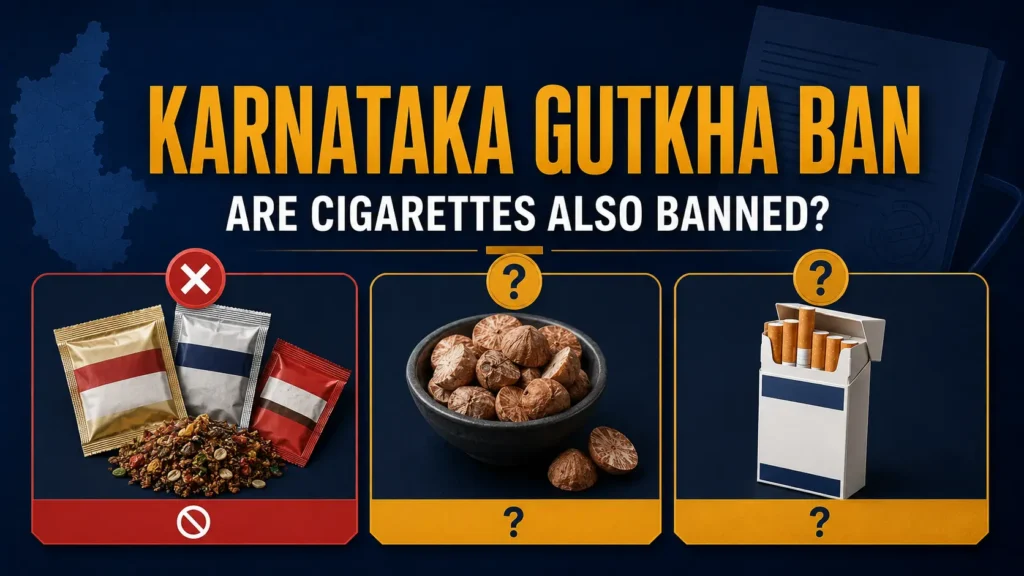





Karnataka gutkha ban existing stock remains a live compliance problem for retailers, wholesalers and distributors because Karnataka’s current prohibition covers storage, transportation, distribution and sale of covered gutkha and pan-masala products containing tobacco or nicotine. Food Safety officials are also conducting special inspection and enforcement drives across the state.
No verified old-stock sell-through exemption, statewide buy-back arrangement or transport exception for returning covered inventory has been identified. A shop should therefore not assume that stock purchased before August 10 can stay in the premises, be sold until exhausted or be moved back to a supplier without a controlling instruction.
Direct answer
Can shops sell pre-ban gutkha stock?
No verified grandfathering or sell-through rule has been identified. Storage and sale are both within the reported prohibition, so an older invoice does not by itself create permission to continue selling covered stock.
Current enforcement state
Inspections are active
Karnataka’s Food Safety Department says enforcement measures include special inspections against manufacture, storage, transportation, distribution and sale of prohibited tobacco/nicotine products.
Confirmed framework
- Tobacco and nicotine cannot be used as ingredients in food products under the applicable food-safety framework.
- Gutkha and tobacco/nicotine-containing pan masala fall within that framework.
Current Karnataka action
- The prohibition is statewide and lasts one year.
- Storage, transportation, distribution and sale are covered activities.
- Special enforcement inspections are being conducted.
Seller position
- No general old-stock exemption has been identified.
- No mandatory statewide distributor buy-back has been identified.
- No general return-transport exception has been identified.
Still unresolved
- Exact old-stock disposal or surrender process.
- Distributor collection procedure.
- Goods already in transit.
- Retailer compensation.
- Exact enforcement procedure for each stock state.
What sellers need to decide
Can shops sell gutkha stock bought before August 10?
No verified Karnataka old-stock exemption has been identified.
The current prohibition covers sale and storage of covered products. That makes purchase date alone an unsafe basis for assuming that older inventory can still be sold.
Seller rule: do not treat “purchased before the ban” as equivalent to “permitted to sell after the ban.” A specific official exemption or instruction would be needed to support that conclusion.
Can a shop keep covered stock without selling it?
Simply removing covered packets from display does not resolve the storage question because storage itself is one of the activities targeted by the prohibition.
No general Karnataka instruction was identified allowing shops to keep prohibited inventory in a back room or warehouse solely because it is awaiting return or disposal.
Do not assume “not displayed” means compliant. A seller who needs to retain stock temporarily for authorised collection, surrender or disposal should follow a written instruction from the competent authority or other controlling guidance rather than inventing a storage exception.
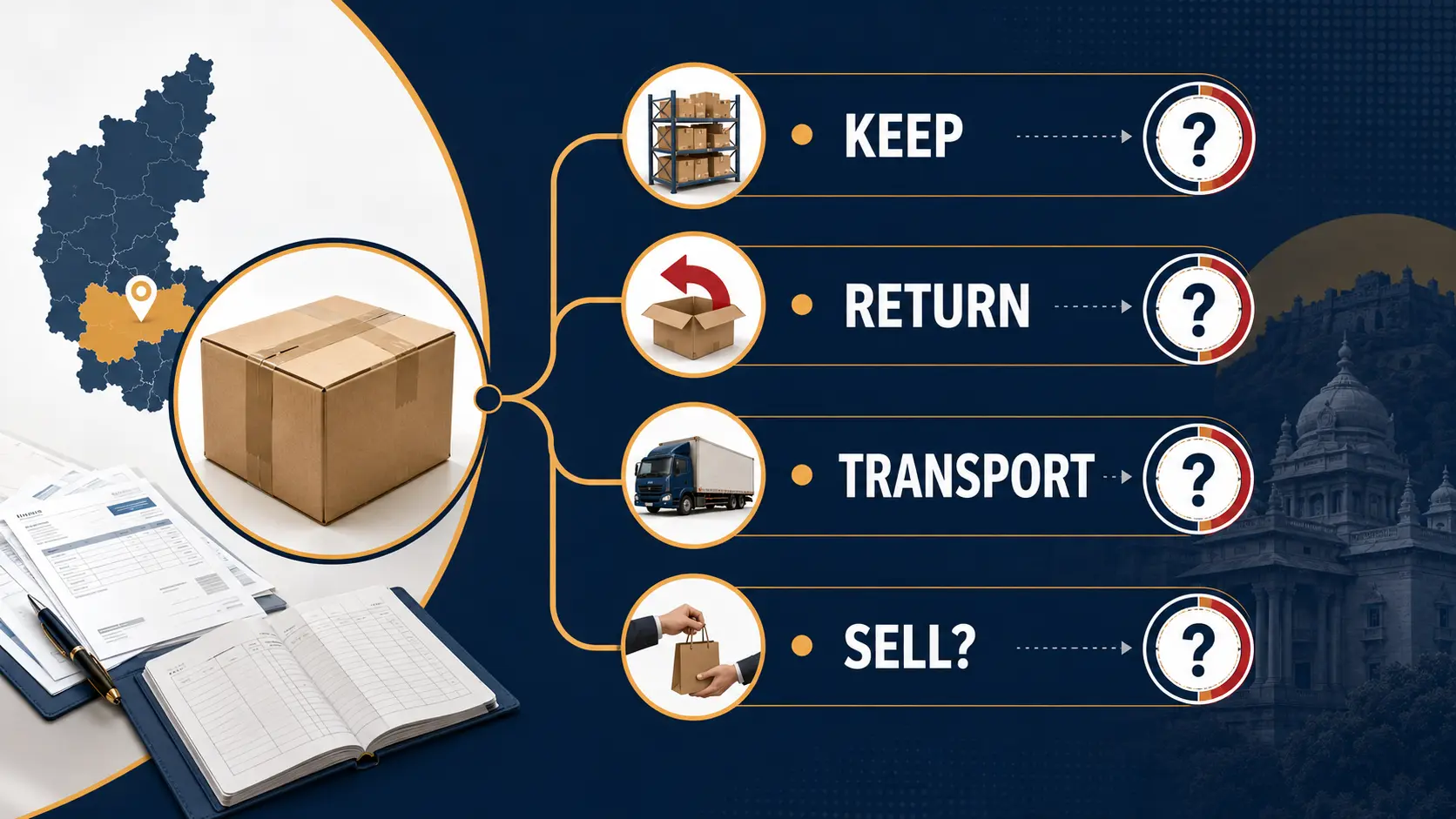
Can retailers return stock to a distributor?
No statewide mandatory buy-back or general supplier-return exemption has been verified.
A commercial agreement with a supplier may determine who is willing to accept unsold inventory, but it does not by itself answer whether the physical movement of prohibited stock is lawful. Transportation and distribution are also within the current prohibition.
Ask whether the distributor has issued a written return or collection instruction.
Do not assume supplier approval creates an exemption from the transport restriction.
No statewide retailer compensation or mandatory buy-back mechanism has been verified.
Can covered stock be transported back to a supplier or out of Karnataka?
No general transport exception for returning or exporting existing covered stock has been identified.
The state’s enforcement statement includes transportation among the prohibited activities. Sellers should therefore not independently move stock merely because the intended destination is a distributor, warehouse or another state.
The destination does not answer the Karnataka movement question. Even if a product could legally be handled somewhere else, the movement from a Karnataka premises still has to comply with the Karnataka prohibition.
What about goods already dispatched or in transit?
This remains unresolved from the public evidence reviewed.
No controlling public instruction was identified establishing a dispatch-date grandfathering rule, allowing a loaded shipment to complete delivery, directing it back to origin or prescribing a surrender route for goods already moving through Karnataka.
For consequential stock movement, the seller should obtain controlling guidance rather than infer a rule from the invoice or dispatch date.
What should a shopkeeper do during a Food Safety inspection?
Karnataka’s Food Safety Department says special inspection and enforcement drives are being conducted across the state.
A seller should preserve an accurate record of the inventory and the official action taken. Useful records can include:
- purchase invoices and distributor bills;
- delivery challans;
- product names, quantities and batch or SKU details;
- written supplier return or collection instructions;
- inspection acknowledgements;
- seizure, sampling, sealing or other official documents actually issued.
Do not conceal, destroy or relabel stock to avoid enforcement. Record preservation can help establish what the shop held and what authorities or suppliers instructed, but it is not an exemption from the prohibition.
Which records should retailers preserve?
| Record | Why it matters |
|---|---|
| Purchase invoice | Identifies supplier, purchase date and quantity. |
| Delivery challan | Records movement and delivery of stock. |
| Inventory count | Creates a dated record of stock actually held. |
| Batch or SKU details | Helps identify whether the product falls within the prohibited category. |
| Supplier communication | Shows whether collection, segregation or return instructions were issued. |
| Inspection or seizure document | Records official action involving the inventory. |
First confirm that the product is actually covered
The seller-side stock problem applies only after identifying the product correctly. Gutkha containing tobacco or nicotine, tobacco/nicotine-containing pan masala, tobacco-free pan masala, plain supari, cigarettes and bidis should not automatically be treated as one legal category.
Current reporting also says the Karnataka prohibition extends to separately marketed or packaged tobacco/nicotine products where the arrangement facilitates mixing by the consumer.
For product scope, use the companion guide: Karnataka Gutkha Ban 2026: Are Pan Masala, Supari or Cigarettes Also Banned?
Verification: what is confirmed and what is still unresolved?
Confirmed framework: the food-safety rules prohibit tobacco and nicotine as ingredients in food products.
Current Karnataka enforcement: official statements reported by current news organisations say manufacture, storage, transportation, distribution and sale of prohibited products are being enforced through special inspection drives across Karnataka.
Seller-specific gap: no publicly verified statewide old-stock sell-through, mandatory buy-back, retailer-compensation or general return-transport exception was identified.
Notification-date evidence: reporting is inconsistent. Some reports describe the underlying Commissioner’s notification as dated June 15, while the Food Safety Department’s August statement refers to a notification dated August 10. Sellers should therefore use the controlling signed notification or direct department guidance when the precise commencement date determines a consequential stock decision.
Sources checked
Limitations and unresolved facts
- The complete controlling Karnataka notification was not recovered from an official state repository during this review.
- No verified old-stock sell-through or grandfathering clause was identified.
- No verified statewide distributor buy-back or retailer-compensation mechanism was identified.
- No verified general transport exception for stock returns was identified.
- No controlling public rule for stock already in transit was identified.
- The exact disposal or authorised surrender process for existing covered stock remains unresolved.
- Published reports conflict on whether the relevant notification is dated June 15 or August 10, 2026.
- Current enforcement inspections are confirmed through the department’s reported statement, but the treatment of an individual seller depends on the actual product, inventory state and controlling official direction.
Karnataka gutkha ban existing stock: FAQs
Can a shop sell gutkha bought before August 10?
No verified old-stock sell-through exemption has been identified. An older purchase date does not itself establish permission to continue selling covered stock.
Can the stock stay in a back room?
Storage is among the prohibited activities. No general exception for keeping covered inventory off display has been identified.
Can a retailer return it to the distributor?
No statewide return or buy-back mechanism has been verified, and transportation is also prohibited. Follow a controlling official instruction rather than moving covered stock on assumption.
Can the distributor collect it?
No general collection exemption has been verified. Written supplier instructions are useful records but do not themselves create regulatory permission.
What if the stock was already in transit?
No controlling public rule for dispatched or in-transit stock was identified. The seller or transporter should obtain official guidance for that stock state.
Are inspections actually happening?
Yes. Karnataka’s Food Safety Department has said special inspection and enforcement drives are being conducted across the state against prohibited manufacture, storage, transportation, distribution and sale.
What records should a shop preserve?
Invoices, delivery challans, inventory counts, batch or SKU details, supplier communications and any official inspection or seizure documentation should be preserved.
Can shops secretly sell the stock until it finishes?
No. Customer demand, scarcity or the date of purchase does not create an exemption from a prohibition covering sale and storage.
Last verified: September 1, 2026. Karnataka enforcement reporting was checked against the official FSSAI regulatory framework, with unresolved seller-specific handling rules kept explicitly unresolved.