







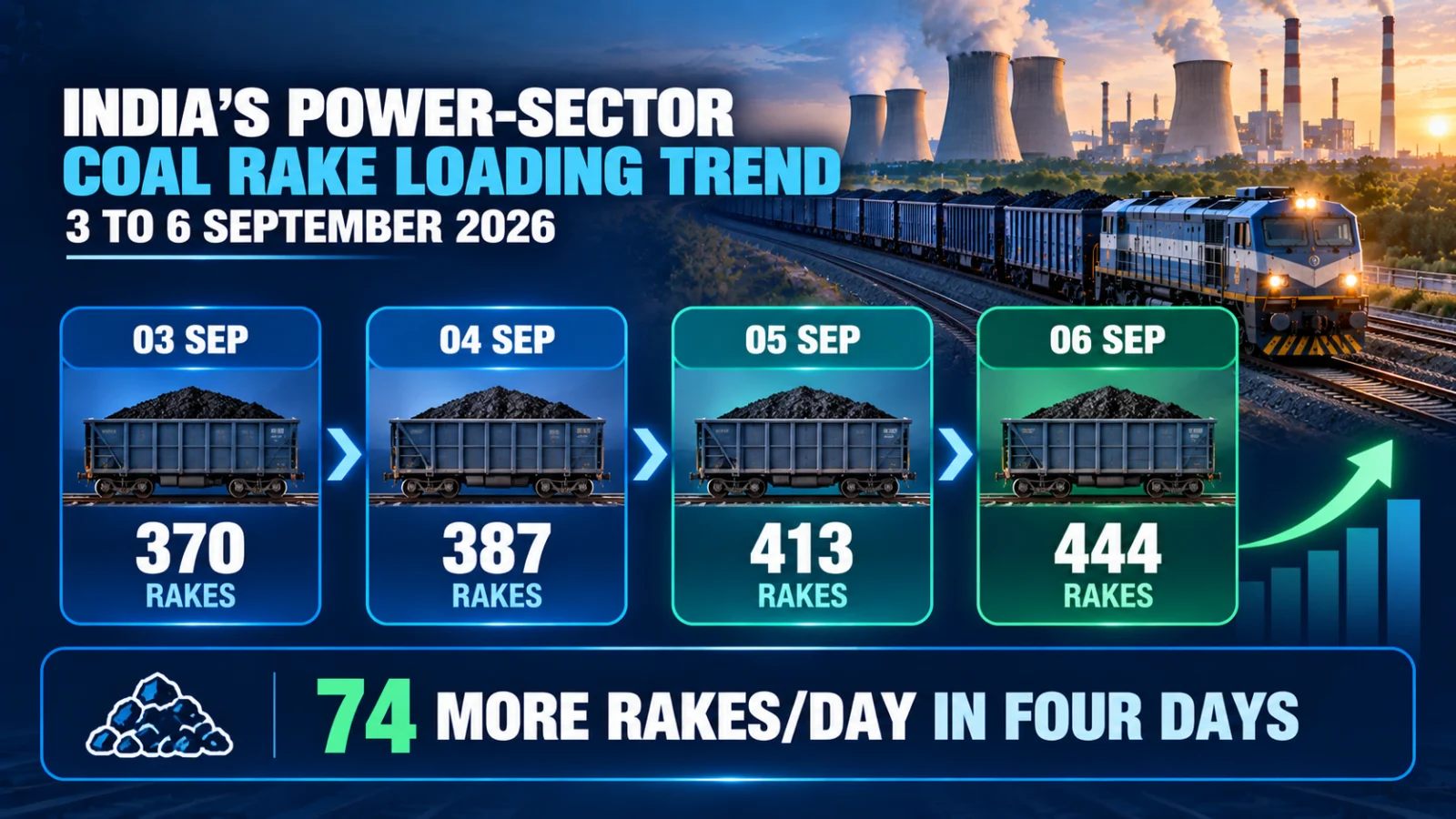
India thermal power coal stocks are under pressure at dozens of generating stations, even as coal movement by rail has accelerated. A Reuters report based on Central Electricity Authority data said 58 thermal power plants were at critical coal-stock levels as of 5 September 2026, compared with 46 at the end of August. At the same time, the Ministry of Coal says power-sector rake loading rose from 370 rakes on 3 September to 444 rakes on 6 September.
Direct answer: the current data shows a coal-stock stress signal, not proof of a nationwide electricity shortage. The government is increasing coal dispatches, and the next important question is whether plant-level stocks recover or whether low stocks begin to constrain generation.
What changed in India thermal power coal stocks?
The key change is the increase in the number of plants reported at critical stock levels. Reuters, citing CEA data, reported 58 thermal power plants in the critical category by 5 September. That was higher than the 46 reported at the end of August.
The Ministry of Coal’s 7 September update shows a simultaneous response on the supply side. Power-sector rake loading increased over four consecutive days: 370 rakes on 3 September, 387 on 4 September, 413 on 5 September and 444 on 6 September. The ministry described this as a net increase of 74 rakes per day, or about 20%, over the four-day period.
Does ‘critical coal stock’ mean a power plant is shutting down?
No. A critical coal-stock classification means a plant’s coal inventory has fallen below the applicable normative threshold used for monitoring. It does not automatically mean the plant has stopped generating electricity, that a state is facing load shedding, or that a nationwide power shortage has begun.
The practical risk depends on how low the stock is at each plant, how quickly fresh coal arrives, the plant’s generation schedule, local demand and whether supply constraints persist. The Ministry of Coal says plants below 25% of their normative stock requirement are being closely monitored and that corrective supply measures are in place.
Why rising rake loading matters
Coal-fired power stations depend on a chain that runs from mine production and loading to railway movement, plant receipt and on-site stock. A plant can therefore face low inventory even when coal exists elsewhere in the system if evacuation and delivery do not keep pace with consumption.
The rise to 444 rakes on 6 September is important because it shows the logistics response is strengthening. But one stronger day does not establish that the stock problem is solved. The useful test is whether subsequent CEA data shows fewer plants in the critical category and whether generation remains unconstrained.
Is India facing a power shortage because of this?
The evidence reviewed for this article does not establish a nationwide power shortage caused by coal scarcity. The Ministry of Coal’s current release focuses on improved dispatches and corrective action. The reported increase in critically stocked plants is a warning indicator that deserves monitoring, but TPS is not treating it as evidence of outages or generation curtailment without separate power-system confirmation.
What should readers watch next?
- Whether the number of thermal plants in the critical coal-stock category rises or falls in the next CEA update.
- Whether the Ministry of Coal sustains higher rake loading after 6 September.
- Whether named plants, states or regions emerge with materially lower stock positions.
- Whether Grid-India, the Ministry of Power or another controlling power-system source reports generation constraints, load shedding or supply deterioration linked to coal availability.
What did not change
No reviewed source establishes a nationwide electricity emergency, a new tariff, a consumer action requirement or a confirmed plant shutdown from this coal-stock position. Readers should therefore separate the phrase critical coal stock from claims of an actual power outage.
Verification note
TPS reviewed the Ministry of Coal’s 7 September 2026 rake-loading release and cross-checked the reported thermal-plant stock position against Reuters’ reporting based on CEA data. The plant count can change with new daily data, and TPS will update this same URL when a material stock, dispatch or power-system change is confirmed.
Limitations and unresolved facts
The official Ministry of Coal release does not provide a complete plant-by-plant list of the critical stations, their individual days of stock or a confirmed consumer-level electricity impact. TPS has therefore not inferred state-specific outage risk or generation failure from the national critical-stock count alone.