






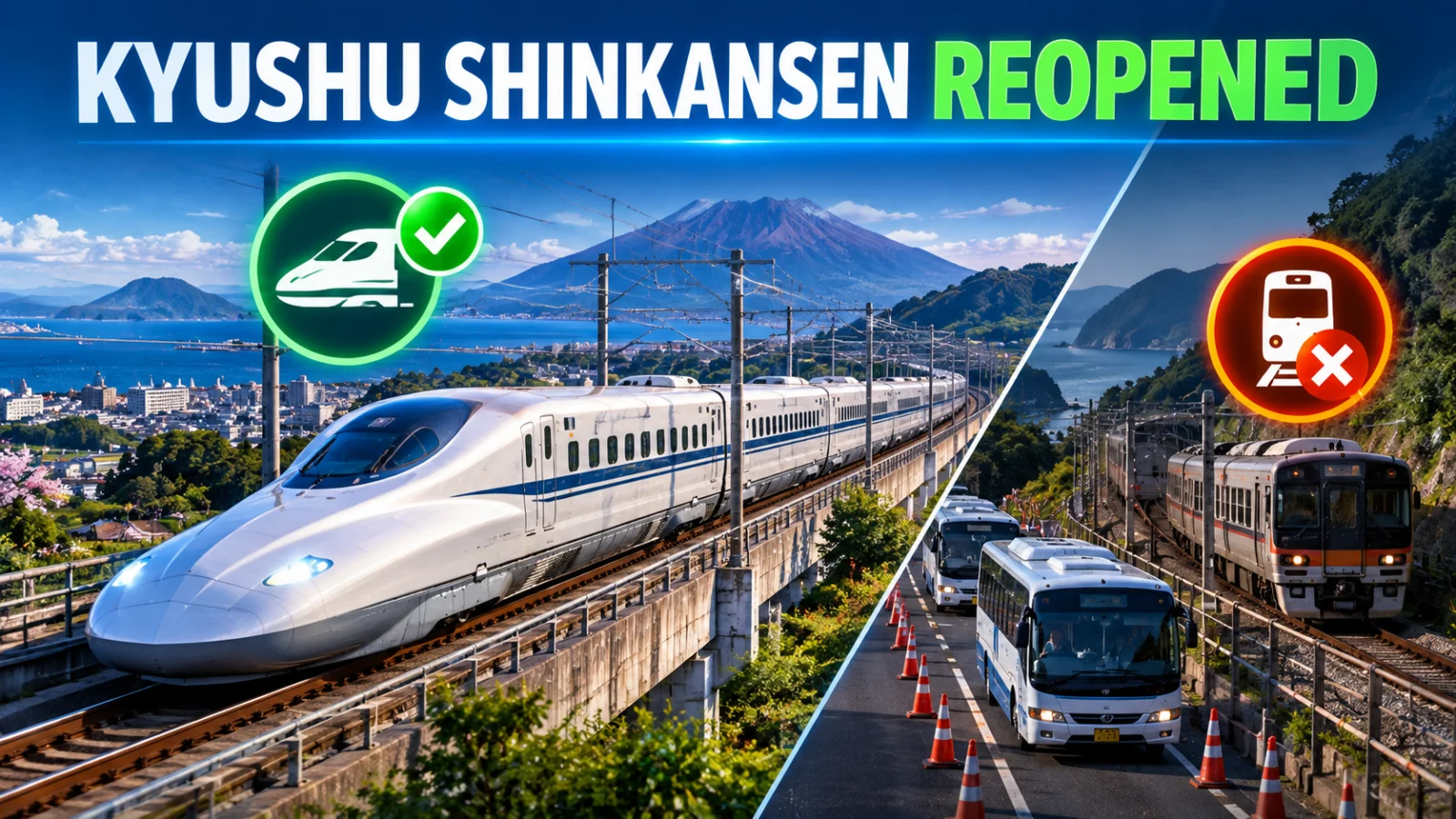
The Kyushu Shinkansen has resumed service across its full route after the Kumamoto earthquake disruption. JR Kyushu says the previously suspended Kumamoto–Shin-Minamata section reopened from the first train on September 18, 2026.
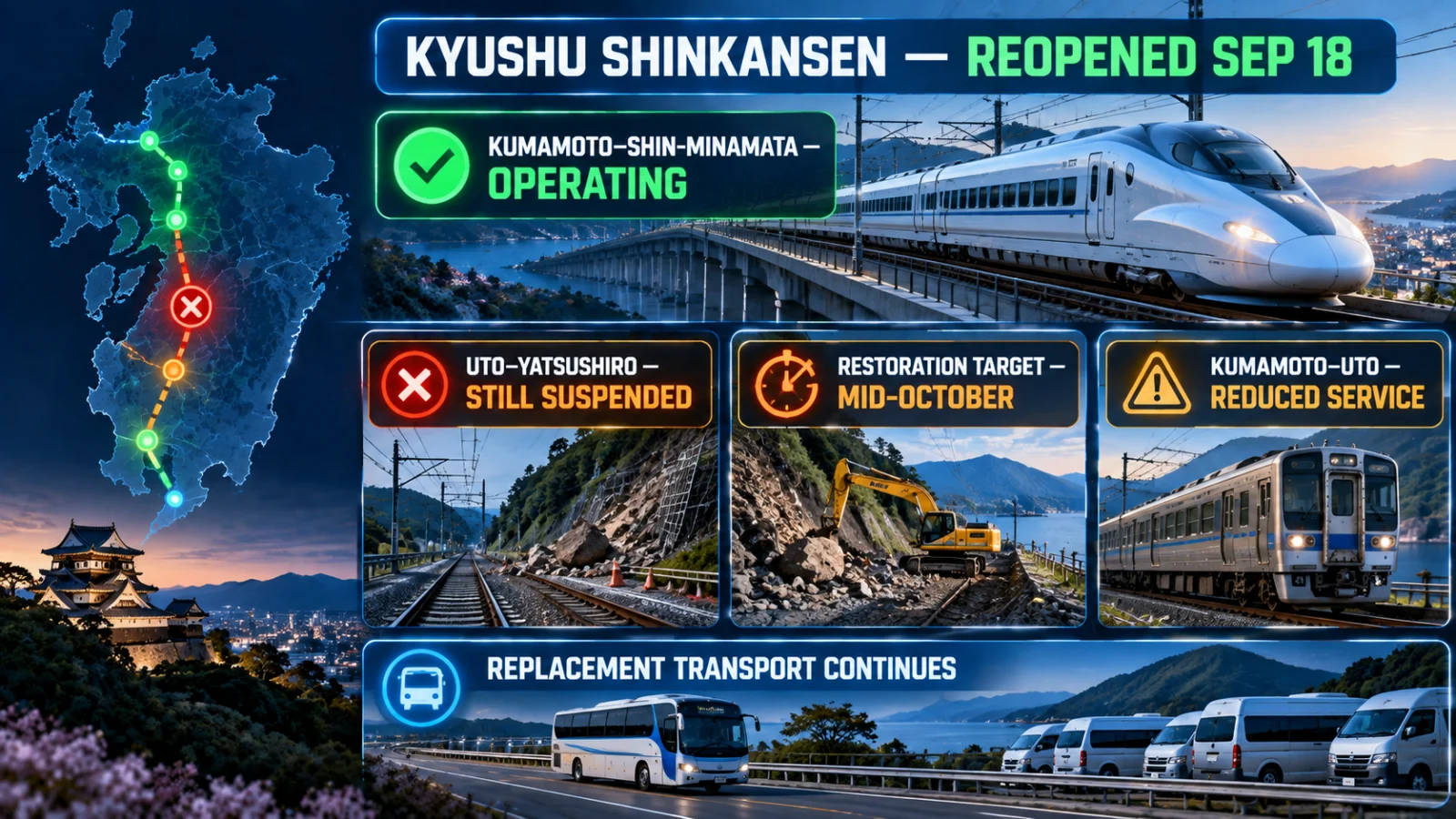
The conventional railway recovery is not complete. The Uto–Yatsushiro section of the Kagoshima Main Line remains suspended, and JR Kyushu is still aiming to restore that section around mid-October 2026.
Current travel rule: Shinkansen passengers can now plan around restored through service, but travellers using the Kagoshima Main Line through Uto–Yatsushiro still need substitute transport. Check JR Kyushu’s current timetable and your exact connection before departure.
What is the current Kyushu earthquake rail status?
| Route or service | Current status | Current outlook |
|---|---|---|
| Kyushu Shinkansen: Kumamoto–Shin-Minamata | Reopened | Service resumed from the first train on September 18 |
| Kyushu Shinkansen: full route | Operating | JR Kyushu says the full Kyushu Shinkansen route resumed operation from September 18 |
| Kagoshima Main Line: Uto–Yatsushiro | Suspended | JR Kyushu is aiming for restoration around mid-October; an exact date has not yet been published |
| Kagoshima Main Line: Kumamoto–Uto | Operating with reduced frequency | Reduced operation continues for the time being |
| Replacement transport for Uto–Yatsushiro corridor | Operating under revised arrangements | September 18 onward arrangements remain relevant until conventional rail service resumes |
Has Kumamoto–Shin-Minamata Shinkansen reopened?
Yes. JR Kyushu now states that the Kyushu Shinkansen resumed operation across the full route on September 18.
The Kumamoto–Shin-Minamata section had been the main earthquake-related break in Shinkansen continuity. Travellers should still check the current timetable because restoration of the route does not guarantee that every train operates exactly as it did before the earthquake.
Can I travel through Kumamoto by Shinkansen now?
JR Kyushu’s current status says the Kyushu Shinkansen is operating across the full route from September 18. That restores the through rail connection that had been interrupted between Kumamoto and Shin-Minamata.
Check your specific departure before travelling, particularly if you have onward connections or are relying on services affected by temporary operating arrangements.
Is Uto–Yatsushiro on the Kagoshima Main Line open?
No. The Uto–Yatsushiro conventional-rail section remains suspended.
JR Kyushu says it is aiming to restore the section around mid-October 2026. A precise reopening date has not yet been published, and the outlook can change depending on restoration and aftershock conditions.
Are replacement buses still needed?
Yes. Replacement transport remains relevant for passengers travelling through the suspended Uto–Yatsushiro corridor.
From September 18, substitute-transport arrangements were revised alongside the Shinkansen reopening. Local authorities and JR Kyushu information show replacement buses continuing between parts of the Uto–Yatsushiro corridor, with Shinkansen substitute transport also used between Kumamoto and Shin-Yatsushiro under the current arrangement.
Travellers should verify the current bus timetable, boarding point and connection before relying on a particular departure.
Does the Shinkansen reopening mean all earthquake disruption is over?
No. The September 18 Shinkansen reopening resolves the main high-speed-rail suspension, but conventional rail restoration is still incomplete.
Uto–Yatsushiro remains out of service, Kumamoto–Uto continues with reduced-frequency operation, and replacement transport remains part of the current journey plan for affected conventional-line passengers.
Two different recovery states: the Kyushu Shinkansen has reopened, while Uto–Yatsushiro conventional rail remains suspended with restoration targeted around mid-October.
What changed for travellers on September 18?
The most important change is restoration of through Kyushu Shinkansen service across the earthquake-affected Kumamoto–Shin-Minamata section.
Replacement-transport arrangements for the Uto–Yatsushiro conventional-line suspension also changed from September 18. Travellers using that corridor should follow the current JR Kyushu or local transport timetable rather than relying on arrangements that applied before the Shinkansen reopened.
What is the current status between Kumamoto and Uto?
The Kumamoto–Uto section of the Kagoshima Main Line continues to operate with reduced frequency.
Reduced service is different from the complete Uto–Yatsushiro suspension, so travellers should check the exact train they intend to use.
When will Uto–Yatsushiro reopen?
JR Kyushu continues to target around mid-October 2026 for restoration of the Uto–Yatsushiro section.
The company has not published a precise reopening date in the current operating information. Restoration progress, infrastructure conditions and aftershocks can still affect that timetable.
Can affected JR tickets still qualify for special handling or refunds?
JR Kyushu continues to provide earthquake-related ticket and travel guidance. Eligibility for refunds, changes or other handling depends on the ticket, route, validity period and current operating conditions.
Check JR Kyushu’s latest ticket guidance before cancelling or changing a booking.
What about Aso Kumamoto Airport?
The rail disruption does not establish the operating status of Aso Kumamoto Airport or any individual flight.
Air passengers should check their airline and airport separately, then verify the ground-transport connection they plan to use. Rail, bus, road and flight operations can have different disruption states.
What should travellers check before leaving?
- Check JR Kyushu’s current earthquake and operating-information page.
- Confirm the exact Shinkansen departure you intend to use even though the full route has reopened.
- If travelling through Uto–Yatsushiro on the Kagoshima Main Line, plan for the continuing rail suspension.
- Check the current replacement-bus or substitute-transport timetable for the affected corridor.
- Check reduced-frequency trains between Kumamoto and Uto.
- Do not treat the mid-October Uto–Yatsushiro target as a confirmed exact reopening date.
- If travelling by air, verify the flight and airport ground transport separately.
- Check for newer earthquake, weather or operating notices immediately before departure.
What remains unresolved?
- the precise reopening date for Uto–Yatsushiro;
- when normal-frequency conventional service returns on reduced-service sections;
- how long current replacement-transport arrangements remain necessary;
- the exact timetable after each later restoration stage; and
- the status of individual flights or local connections unless confirmed by the relevant operator.
Verification method
ThePulseSignal checked JR Kyushu’s current earthquake operating information and railway status on September 18, 2026. JR Kyushu now states that the Kyushu Shinkansen resumed operation across the full route from September 18, while Uto–Yatsushiro remains suspended and is still targeted for restoration around mid-October.
Limitations and unresolved facts
The remaining restoration plan can change because of aftershocks, infrastructure conditions, weather or operational requirements. The Uto–Yatsushiro reopening window remains approximate. Replacement buses, reduced-frequency trains, flights and local connections should be verified directly before travel.
Bottom line: the Kyushu Shinkansen has reopened across its full route, but earthquake-related rail disruption has not ended. Uto–Yatsushiro on the Kagoshima Main Line remains suspended, with replacement transport still required and restoration targeted around mid-October.
Last verified: September 18, 2026.