






Adani US case dismissed is correct for the three criminal counts charged against Gautam Adani, Sagar Adani and Vneet Jaain: Judge Nicholas Garaufis dismissed Counts Two, Three and Four with prejudice on August 10, 2026. That was not a trial acquittal. The broader eight-defendant criminal case was not fully dismissed because Counts One and Five involving five other defendants remain in the case after the court denied DOJ’s renewed dismissal request without prejudice on September 3.
The September 3 order is now the controlling development for the remaining criminal counts. The court found that the Justice Department still had not supplied sufficient factual information to support its stated reasons for dismissing Counts One and Five with prejudice. The denial was without prejudice, so DOJ may renew the request with sufficient factual support. No later court order changing that September 3 status was identified in the current docket evidence reviewed through September 14.
Direct answer
Gautam Adani’s three criminal counts in this indictment are over. Counts Two, Three and Four were dismissed with prejudice on August 10.
The broader eight-defendant criminal case is not fully over. Counts One and Five against five other defendants remain because the court denied DOJ’s renewed request to dismiss those counts without prejudice on September 3.
Current legal status
Gautam Adani, Sagar Adani, Vneet Jaain: Counts Two–Four dismissed with prejudice.
Five other defendants: DOJ’s request to dismiss Counts One and Five with prejudice was denied without prejudice on September 3.
SEC and OFAC: separate civil and sanctions-enforcement tracks.
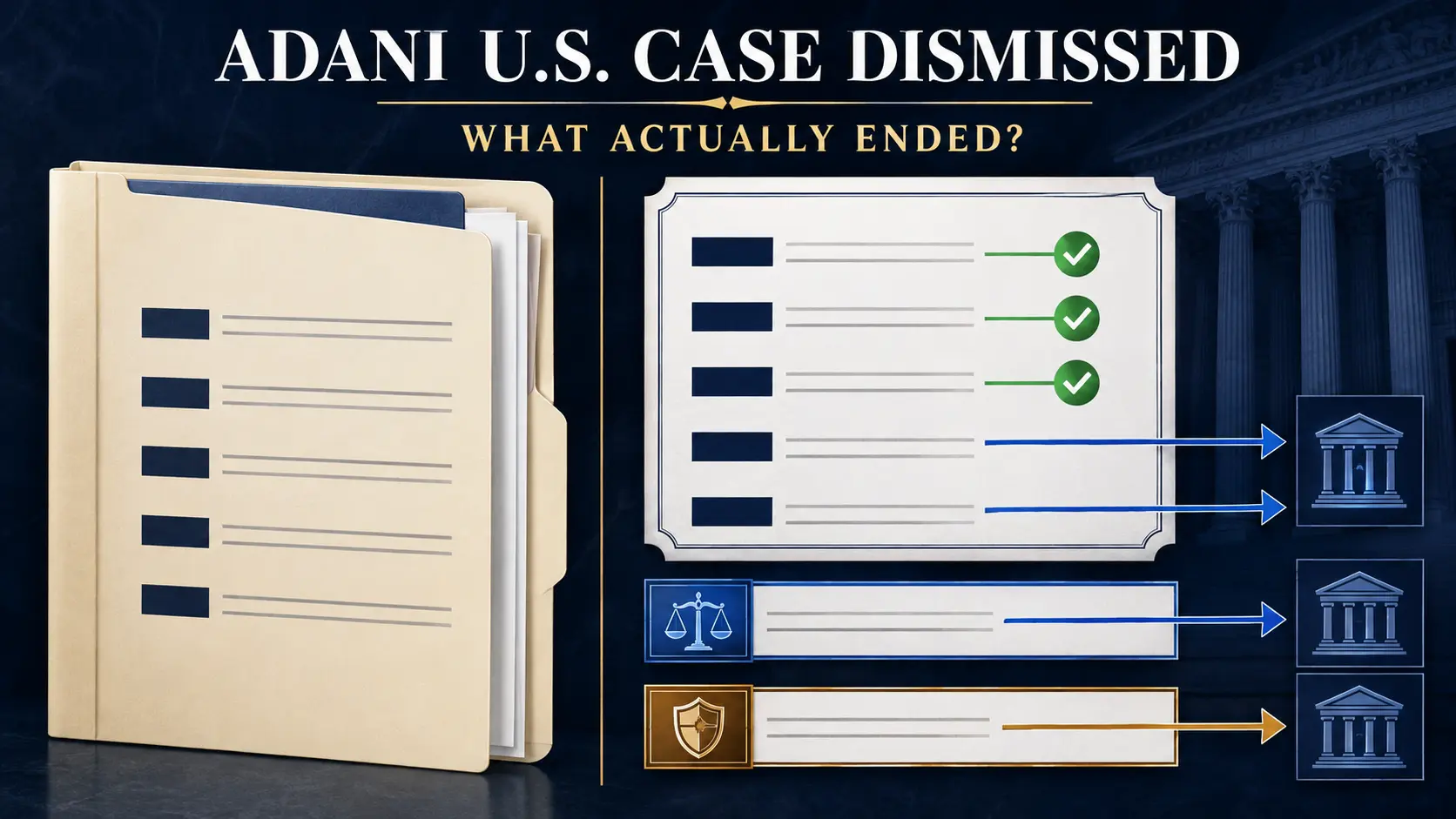
What is finally ended
- Count Two against Gautam Adani, Sagar Adani and Vneet Jaain;
- Count Three against those three defendants;
- Count Four against those three defendants;
- refiling those same dismissed counts in this case, because dismissal was with prejudice.
What is not ended
- Counts One and Five against the five non-appearing defendants;
- the possibility that DOJ renews its Rule 48(a) dismissal request with additional factual support;
- the SEC civil proceeding;
- the separate OFAC settlement;
- other legally distinct proceedings or conduct not covered by the August 10 dismissal.
What exactly did the August 10 court order dismiss?
The original Eastern District of New York indictment named eight defendants and contained five counts. The August 10 order granted the Justice Department’s Rule 48(a) motion only in part.
| Count | Defendants relevant here | Current status |
|---|---|---|
| Count One — FCPA conspiracy | Five non-appearing defendants | Dismissal denied without prejudice Sep 3 |
| Count Two — securities-fraud conspiracy | Gautam Adani, Sagar Adani, Vneet Jaain | Dismissed with prejudice Aug 10 |
| Count Three — wire-fraud conspiracy | Gautam Adani, Sagar Adani, Vneet Jaain | Dismissed with prejudice Aug 10 |
| Count Four — securities fraud | Gautam Adani, Sagar Adani, Vneet Jaain | Dismissed with prejudice Aug 10 |
| Count Five — obstruction conspiracy | Four of the five non-appearing defendants | Dismissal denied without prejudice Sep 3 |
Do not turn a defendant-specific dismissal into an indictment-wide conclusion. The August 10 order permanently ended Gautam Adani’s three charged counts. The September 3 order left Counts One and Five against other defendants in place because the court denied DOJ’s dismissal request without prejudice.
Is Gautam Adani’s U.S. criminal case over?
Yes, for the three criminal counts charged against Gautam Adani in this indictment. The same is true for Sagar Adani and Vneet Jaain on Counts Two, Three and Four.
The order was a judicial dismissal under Rule 48(a), not merely a request by prosecutors. Judge Garaufis granted dismissal of those three counts with prejudice on August 10.
That answer should not be expanded to mean every count against every defendant was dismissed. Counts One and Five against five other defendants remained in the case after the September 3 order.
What happened to Counts One and Five?
The August 10 order initially reserved judgment on the government’s request to dismiss Counts One and Five against Ranjit Gupta, Cyril Cabanes, Saurabh Agarwal, Deepak Malhotra and Rupesh Agarwal.
The court required DOJ to identify its reasons for dismissal and provide sufficient factual support. It also required direct assurances concerning the non-appearing defendants’ consent.
After additional filings, Judge Garaufis issued a new Memorandum & Order on September 3. The court held that the government still had not provided sufficient factual information to support its stated reasons for dismissing Counts One and Five.
The court therefore denied DOJ’s request to dismiss Counts One and Five with prejudice, but it did so without prejudice. That distinction matters: the counts remain in the case, but DOJ is not barred from submitting a renewed Rule 48(a) request supported by additional facts.
Current position: the September 3 denial without prejudice is the latest material court disposition identified in the current docket evidence reviewed through September 14. No later order dismissing Counts One and Five was identified.
Does dismissal mean Gautam Adani was acquitted?
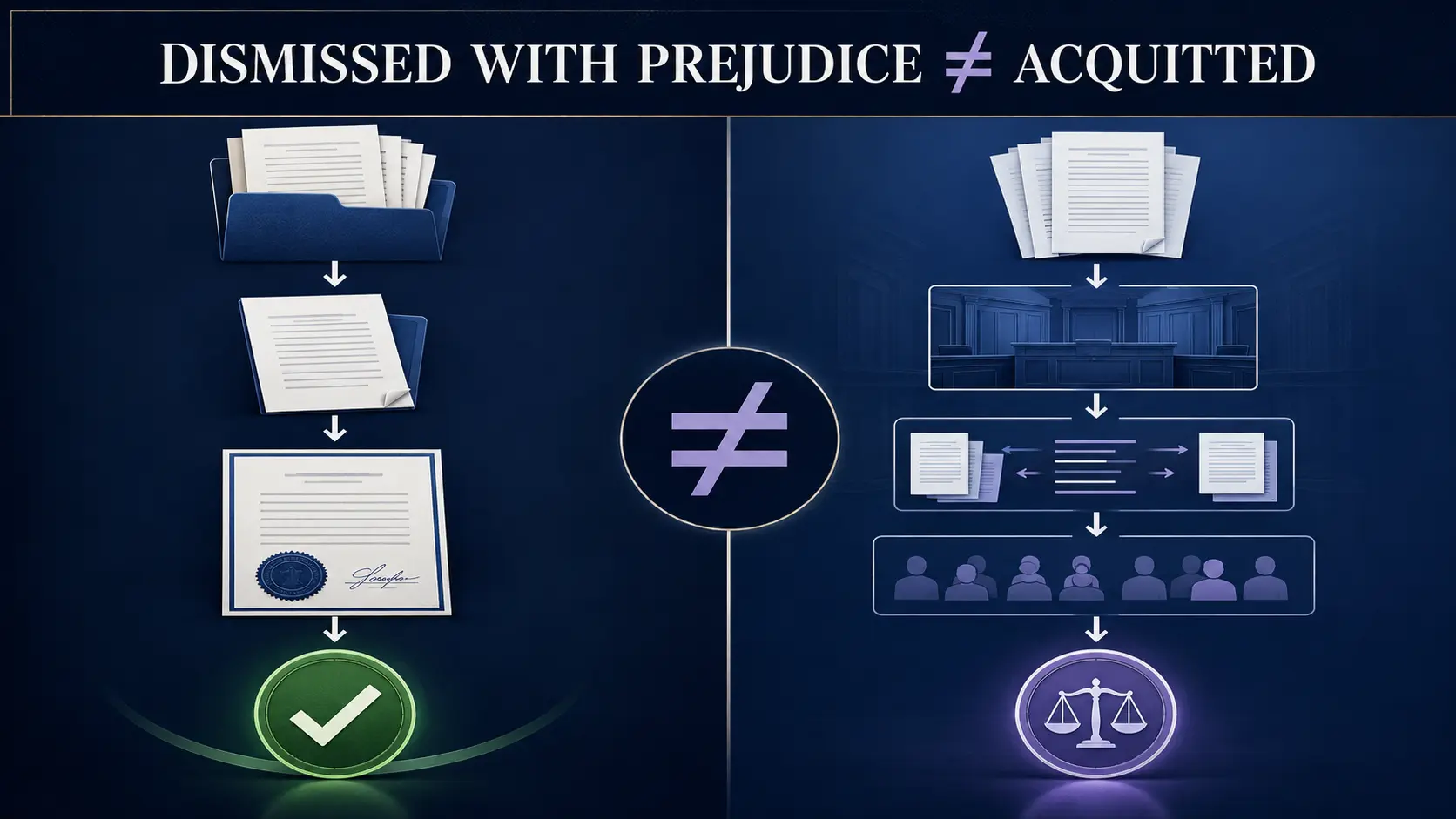
No. A dismissal with prejudice and an acquittal are different legal outcomes.
What happened
Dismissal with prejudice
DOJ sought to end the prosecution under Rule 48(a), and the court granted dismissal of Counts Two, Three and Four against Gautam Adani, Sagar Adani and Vneet Jaain.
What did not happen
Trial acquittal
No jury or judge completed a criminal trial and returned a not-guilty determination on those counts.
Judge Garaufis expressly cautioned that granting dismissal should not be read as an opinion on the merits of the underlying allegations.
What does “dismissed with prejudice” mean?
For Counts Two, Three and Four covered by the August 10 order, dismissal with prejudice means the government cannot simply refile those same dismissed counts against Gautam Adani, Sagar Adani and Vneet Jaain.
This is different from the September 3 treatment of Counts One and Five. DOJ’s request to dismiss those remaining counts was denied without prejudice, which leaves open the possibility of a renewed dismissal request supported by sufficient factual material.
Are all U.S. Adani proceedings over?
No. The criminal prosecution, SEC civil securities proceeding and Treasury/OFAC sanctions matter are separate legal tracks.
| Track | Current status established here | Effect of August 10 criminal order |
|---|---|---|
| Criminal — Gautam Adani, Sagar Adani, Vneet Jaain | Counts Two–Four dismissed with prejudice | Directly ended those counts |
| Criminal — five other defendants | DOJ’s request to dismiss Counts One/Five denied without prejudice on September 3 | Counts remain unless a later court order changes their status |
| SEC civil — Gautam and Sagar Adani | SEC moved for proposed final judgments by consent in May 2026; no newer Adani litigation release superseding that state was identified through September 14 | Separate proceeding |
| OFAC — Adani Enterprises Limited | $275 million civil settlement announced May 18, 2026 | Separate enforcement matter |
What happened in the SEC civil proceeding?
The SEC separately sued Gautam Adani and Sagar Adani over alleged false and misleading statements connected with a 2021 bond offering.
On May 14, 2026, the SEC announced that it had moved for entry of proposed final judgments by consent. Gautam Adani consented to a proposed $6 million civil penalty and Sagar Adani to a proposed $12 million penalty, without admitting or denying the SEC’s allegations and subject to court approval.
The August 10 criminal dismissal did not itself resolve or dismiss that civil action. The SEC’s current litigation-release index reviewed through September 14 did not show a newer Adani release superseding the May 14 state.
What was the separate Treasury / OFAC matter?
On May 18, 2026, the U.S. Treasury’s Office of Foreign Assets Control announced a $275 million settlement with Adani Enterprises Limited over potential civil liability for apparent Iran-sanctions violations.
That settlement involves a company and a different enforcement regime. It should not be described as another count in Gautam Adani’s criminal indictment.
Why did DOJ ask to dismiss the criminal prosecution?
DOJ cited prosecutorial discretion and supplied explanations involving the foreign character of the alleged conduct, enforcement priorities, evidentiary considerations and legal vulnerabilities in the fraud theories.
Judge Garaufis accepted enough of the government’s charge-specific reasoning to dismiss Counts Two, Three and Four against Gautam Adani, Sagar Adani and Vneet Jaain on August 10, but demanded more factual support before ending Counts One and Five against the five non-appearing defendants.
On September 3, the court concluded that the government still had not provided sufficient factual information supporting its stated reasons for dismissal of those remaining counts. The denial was procedural under Rule 48(a) and without prejudice to a properly supported renewed request.
The distinction matters: the prosecution has ended for Gautam Adani’s charged counts, but the court did not adjudicate those allegations at trial. Different counts against other defendants remain unless a later judicial order changes their status.
Verification method
Primary court source
September 3 Memorandum & Order
Checked for the current disposition of Counts One and Five and the court’s denial without prejudice of DOJ’s renewed dismissal request.
Primary court source
August 10 Memorandum & Order
Checked for Counts Two–Four dismissed with prejudice and the original reservation of judgment on Counts One and Five.
Official regulator
SEC
Checked separately for the civil securities proceeding and proposed consent judgments.
Official Treasury source
OFAC
Checked for the separate $275 million Adani Enterprises settlement.
The current federal docket and recent legal reporting were also checked through September 14. The docket lists the September 3 Memorandum & Order as the latest material judicial disposition concerning Counts One and Five identified in this review.
Limitations and unresolved facts
- The August 10 order conclusively disposes of Counts Two, Three and Four against Gautam Adani, Sagar Adani and Vneet Jaain.
- The September 3 order denies DOJ’s request to dismiss Counts One and Five against five other defendants without prejudice.
- A denial without prejudice leaves open the possibility that DOJ may submit a renewed dismissal request supported by additional factual material.
- No later court order dismissing Counts One and Five was identified in the current docket evidence reviewed through September 14.
- The SEC civil proceeding and OFAC settlement are separate and should not be merged into the criminal docket.
- The August 10 dismissal is not an acquittal or a judicial determination that the underlying allegations were false.
Adani US case dismissed: frequently asked questions
Was Gautam Adani acquitted?
No. His criminal counts were dismissed with prejudice; there was no trial acquittal.
Is Gautam Adani’s criminal case over?
Yes, for Counts Two, Three and Four charged against him in this indictment.
Was the entire eight-defendant indictment dismissed?
No. Counts One and Five against five other defendants remain after the court denied DOJ’s dismissal request without prejudice on September 3.
What happened after the August 31 deadline?
Judge Garaufis issued a September 3 order denying DOJ’s request to dismiss Counts One and Five without prejudice because the government had not supplied sufficient factual support for its stated reasons.
Can DOJ ask again to dismiss Counts One and Five?
Yes. The September 3 denial was without prejudice, and the court said it continued to encourage DOJ to submit sufficient factual support for its reasons.
Can Gautam Adani’s dismissed counts simply be refiled?
No. Counts Two, Three and Four were dismissed with prejudice.
Did the criminal dismissal end the SEC case?
No. The SEC matter is a separate civil proceeding.