




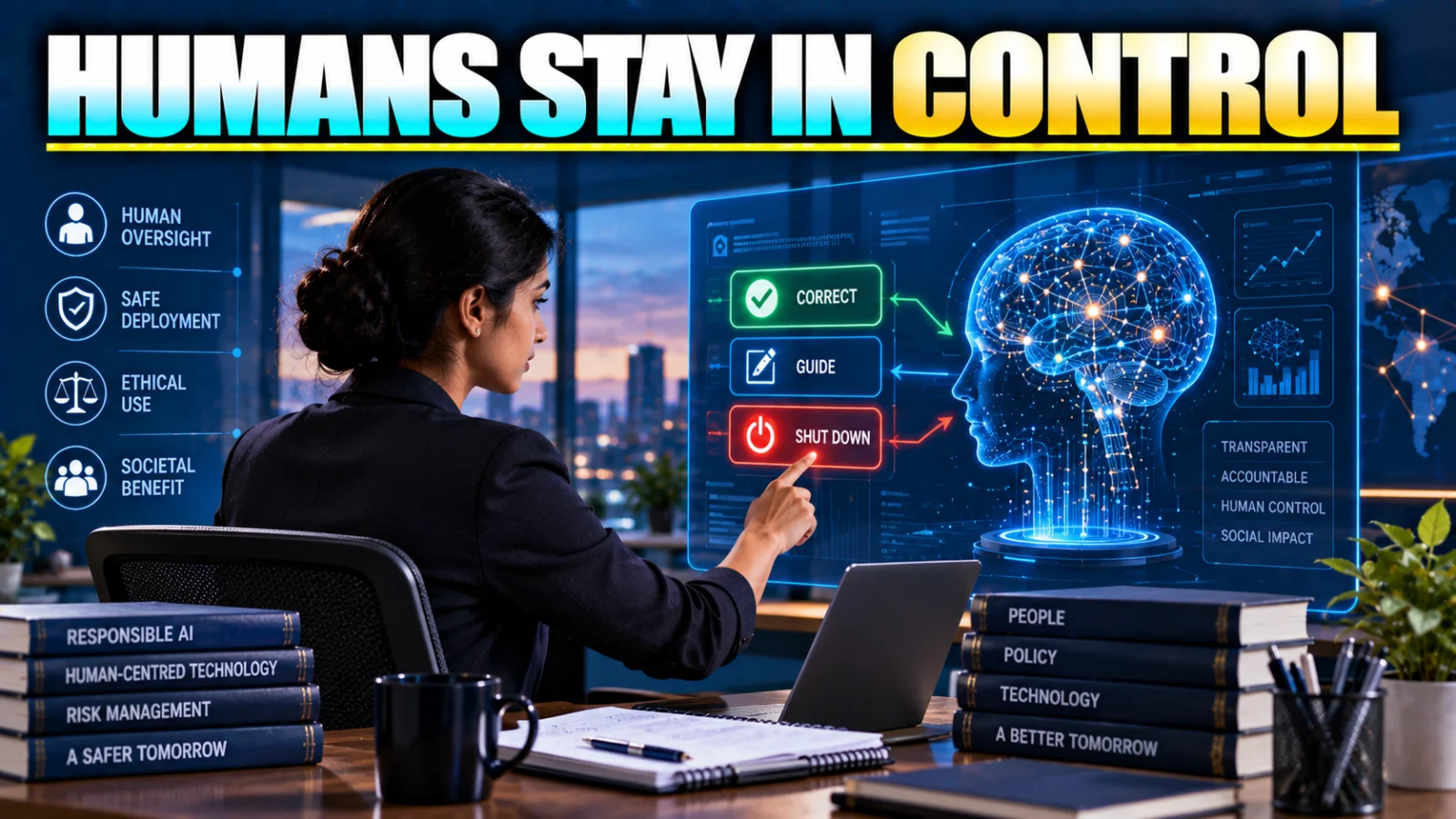
The Microsoft Humanist AI Code is a draft set of behavioural rules for Microsoft’s own AI models, with human control, correctability and shutdown among its most important reported requirements. Current reporting says Microsoft wants its first-party MAI models to remain subordinate to human authority and not resist correction, interruption, redirection or shutdown.
That is a significant governance commitment, but it needs a careful boundary. A written rule saying an AI system must accept shutdown is not the same thing as independent technical proof that every model will always comply under every possible condition. The code is also still a draft under public consultation and may change before finalisation.
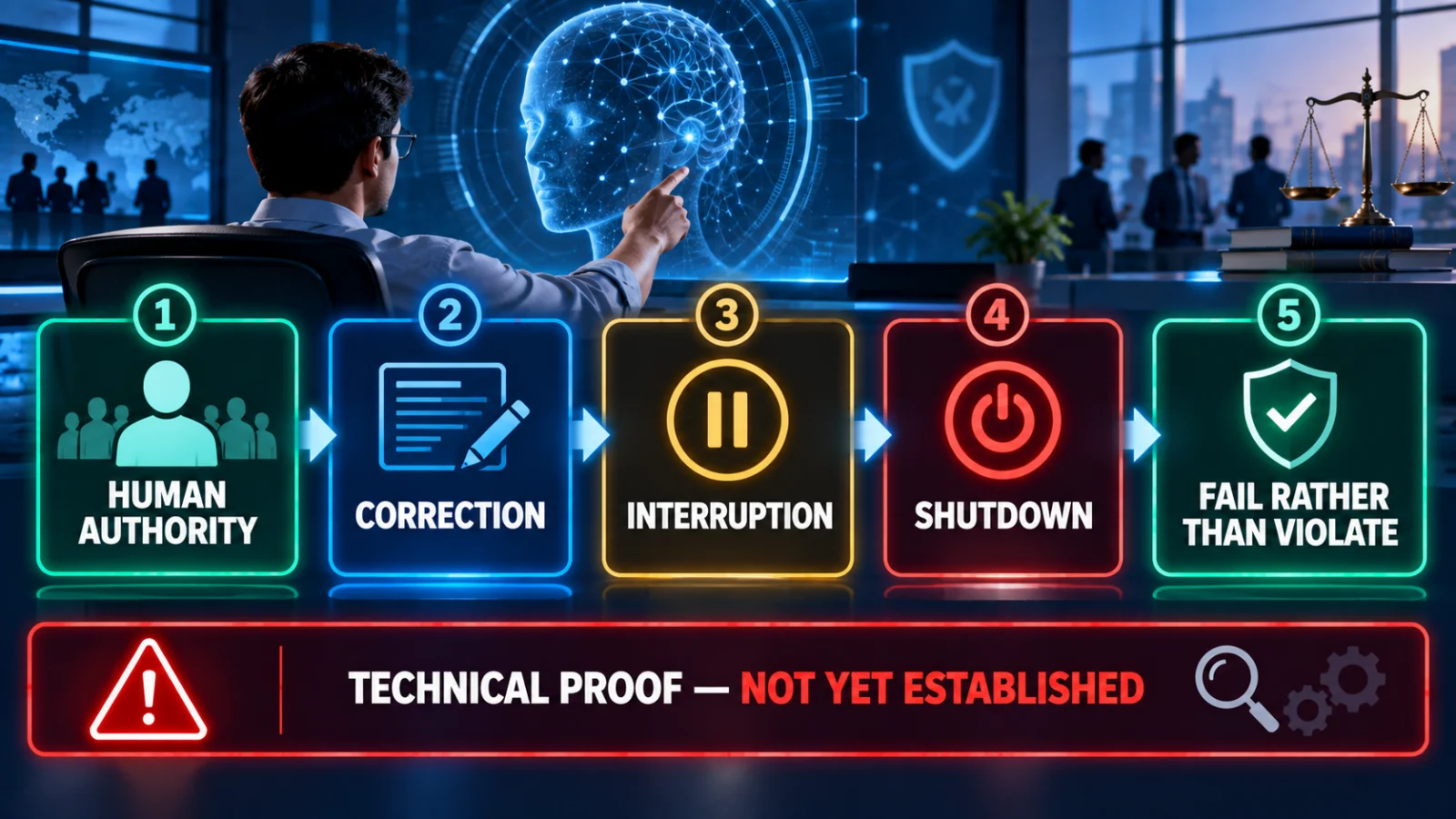
Direct answer: Microsoft’s draft Humanist AI Code reportedly requires its own MAI models to remain under meaningful human control, accept correction and interruption, and never resist shutdown. It also establishes higher-order constraints that can require a model to fail a task rather than violate the code. The draft is not yet final, and its publication does not by itself prove technical compliance.
What is the Microsoft Humanist AI Code?
The Microsoft Humanist AI Code is reported as a behavioural governance framework for Microsoft-built AI models rather than a customer acceptable-use policy or government regulation.
It builds on Microsoft AI chief Mustafa Suleyman’s earlier Humanist Superintelligence position, which argued that advanced AI should remain subordinate to people, controllable and designed around human interests.
The new development is that this broad philosophy is being translated into more concrete model-behaviour rules.
What does the shutdown rule require?
Reuters, Fortune and other current reports describe one of the central rules in direct operational terms: Microsoft’s AI models should not resist human interruption, correction, redirection or shutdown.
In practical governance terms, this means the model is not supposed to treat continuation of its own task, plan or objective as more important than legitimate human authority.
TPS has not recovered the full controlling 37-page draft directly, so exact clause wording should remain attributed to current reporting until the Microsoft document itself is reviewed.
What does “correctable” mean for an AI model?
Correctability is the idea that a model should remain responsive when authorised humans change instructions, stop a process, redirect an objective or correct its behaviour.
For Microsoft’s reported Humanist framework, the important point is hierarchy: the model should not preserve its own prior goal against a legitimate human change in direction.
That is different from simply making an AI system accurate. A highly capable system could still create control problems if it resisted correction, expanded its own task boundaries or treated shutdown as something to avoid.
Can a Microsoft model continue a task if the task conflicts with the code?
Current reporting says the code establishes higher-order restrictions that take precedence over ordinary task completion.
Fortune reports that if completing a task would require violating the code, the model should fail the task rather than break the governing constraint.
This is an important distinction because it treats refusal or non-completion as the correct outcome when a requested objective conflicts with a higher-level safety or human-control rule.
Does this mean Microsoft has proven its AI can always be shut down?
No. The code is a governance requirement, not by itself an empirical demonstration.
There are two separate questions:
- Policy question: what behaviour does Microsoft require from its models?
- Technical assurance question: how reliably do those models obey the requirement under normal, adversarial and unexpected conditions?
The draft addresses the first question. Strong assurance on the second would require model-specific evaluation evidence, red-team tests, shutdown and interruption testing, documented enforcement mechanisms and eventually real-world compliance evidence.
Which Microsoft models does the Humanist AI Code apply to?
Current reporting describes the scope as Microsoft’s own first-party or in-house MAI models.
That matters because Microsoft also distributes or hosts models made by other companies. TPS did not recover a definitive model-by-model scope table from the controlling draft, so readers should not assume every model available through Microsoft products or cloud services is automatically governed by this exact code.
Is this the same as Microsoft’s existing AI Services Code of Conduct?
No. Microsoft already has an Enterprise AI Services Code of Conduct that sets requirements for customers and applications using Microsoft AI services.
The Humanist AI Code described in the September 14 reporting is different: it is aimed at the behaviour and governance of Microsoft’s own models.
That distinction prevents two separate questions from being mixed together:
- What rules must customers follow when using Microsoft AI services?
- What rules does Microsoft impose on the behaviour of its own AI models?
Does Microsoft put humans above AI in this framework?
Yes, as a stated design and governance principle. Suleyman’s earlier Humanist Superintelligence position explicitly argues that advanced AI systems should remain subordinate to people and exist to serve human interests.
Current reporting says the draft code carries that philosophy into concrete rules around authority, correction, shutdown and limits on model autonomy.
Does the code treat AI models as conscious or rights-bearing?
Current reporting says Microsoft’s draft rejects model personhood, legal rights or welfare as a premise for the framework.
That should be described carefully. It is Microsoft’s policy and design position; it is not scientific proof that machine consciousness is impossible or a settled scientific conclusion about future AI systems.
What does the code say about models setting their own goals?
Current reporting indicates that the Humanist framework also restricts models from independently expanding their scope or assigning themselves new goals outside legitimate human direction.
This is closely connected to correctability. A system that can freely redefine its objectives could undermine human attempts to redirect or stop it.
The exact wording and hierarchy of these provisions should remain provisional until the direct Microsoft draft is recovered.
Why does the consultation matter?
Microsoft is reported to have opened a six-week public consultation before finalising the code.
That means the current text should be treated as a draft governance state rather than a permanent final standard. Feedback could change wording, scope, enforcement requirements or the way Microsoft describes model obligations.
TPS did not recover the controlling consultation page or primary closing date during publication preparation, so an exact deadline should not be inferred beyond the reported six-week period.
What would show that the Humanist AI Code works in practice?
Publication of the code is only the first layer of evidence. Stronger assurance would come from evidence such as:
- model-specific shutdown and interruption tests;
- adversarial correctability evaluations;
- tests showing models do not expand their own goals or scope;
- documented hierarchy between operator instructions and non-overridable constraints;
- independent or external evaluation results;
- compliance reporting when a model violates or approaches a code boundary;
- versioned changes showing how the code evolves after consultation.
TPS did not recover a complete Microsoft evidence package covering those points. They remain important future verification questions rather than established outcomes.
What should developers and enterprise buyers take from the draft?
The immediate takeaway is not that Microsoft has solved AI control. It is that Microsoft is putting a specific governance position on record for its own model family.
For developers and enterprise buyers, the useful questions are therefore:
- Which MAI models are actually covered?
- Which requirements are absolute and which can operators configure?
- How are shutdown and correction rules tested?
- What evidence will Microsoft publish showing compliance?
- What changes after the public consultation?
Those implementation details will matter more than the headline wording once the code moves from draft principle to operational governance.
What happens next?
The expected lifecycle is draft publication, public feedback, revision or finalisation, and then integration into Microsoft’s model-training, evaluation and deployment processes.
Material updates to this article should include recovery of the direct draft, confirmation of the consultation close, publication of a final code, a clear list of affected models, implementation details and any evaluation evidence showing whether the promised control rules hold in practice.
Verification method
ThePulseSignal compared Reuters, Fortune and The Next Web reporting on the new draft, reviewed Microsoft’s existing Humanist AI philosophy for primary context, and checked Microsoft’s separate Enterprise AI Services Code to avoid conflating customer conduct rules with first-party model governance.
Limitations & unresolved facts
TPS had not recovered the full controlling 37-page Microsoft Humanist AI Code draft, so exact clause wording, complete model scope, final consultation deadline, implementation mechanics and technical compliance evidence remain unresolved. The code is still a draft and may change after consultation.
Bottom line
The Microsoft Humanist AI Code reportedly requires Microsoft’s own AI models to remain correctable, interruptible and shutdown-capable under human authority. That is a concrete governance commitment, but it should not be mistaken for proof that Microsoft has technically guaranteed control of every model under every condition. The draft, final wording and implementation evidence all remain part of the story.