







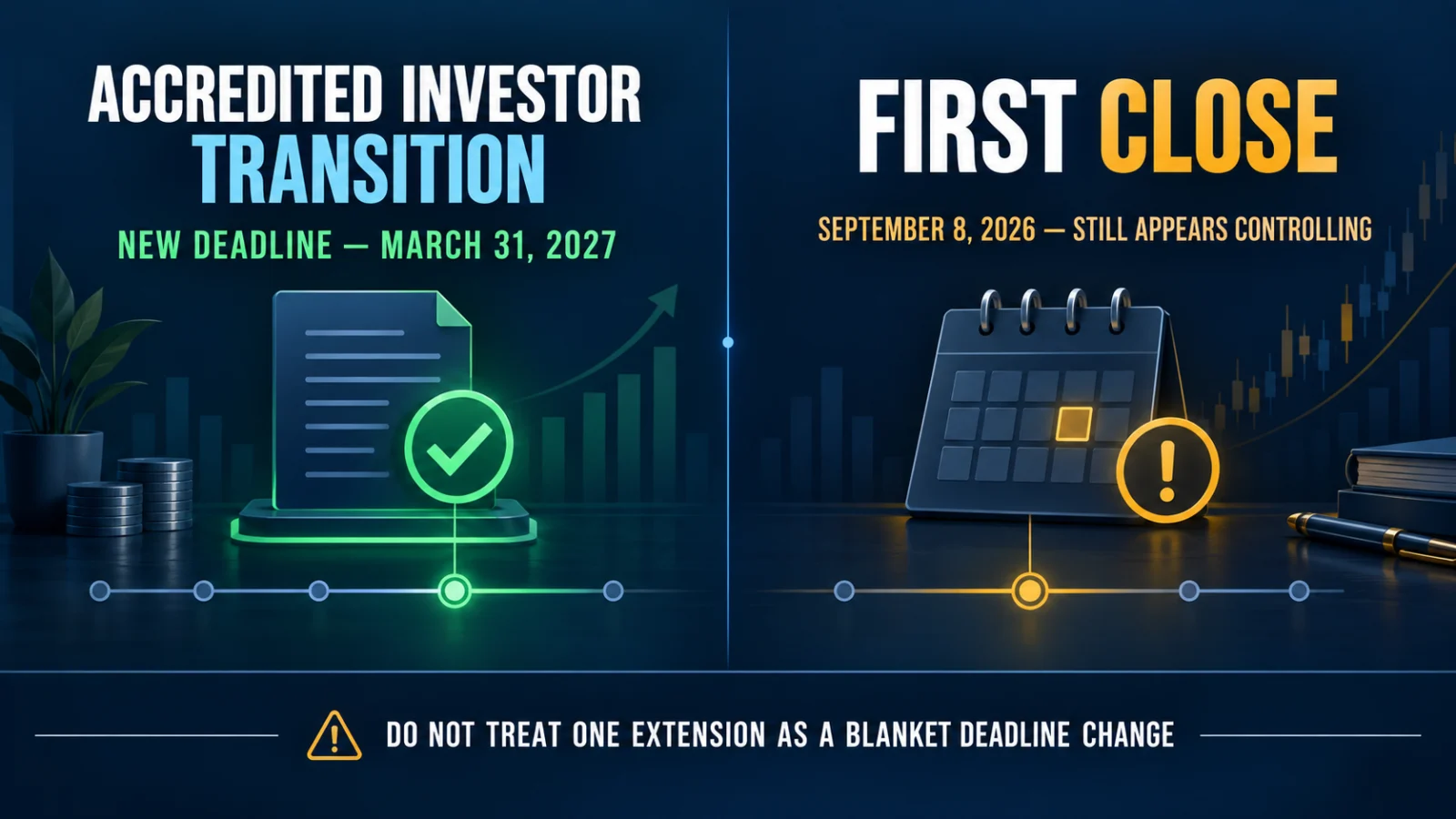
The two SEBI Angel Fund deadlines are now in different states. The separate September 8, 2026 first-close deadline has passed, while qualifying existing Angel Funds still have until March 31, 2027 to complete the transition to the Accredited Investor mandate.
SEBI’s September 7 relaxation extended only the Accredited Investor transition timeline for Angel Funds registered on or before September 10, 2025. It did not extend the separate first-close deadline in Chapter 8 of the June 2026 AIF Master Circular.
What happens if an Angel Fund missed the September 8 first-close deadline?
Chapter 8 of SEBI’s June 3, 2026 AIF Master Circular states that existing Angel Funds as of September 10, 2025 that had not declared first close were required to do so on or before September 8, 2026.
The next clause states that if first close is not declared within that timeline, the Angel Fund shall refile the PPM with SEBI under the applicable provisions of the AIF Regulations and pay the requisite fee.
No newer SEBI circular extending that first-close date was identified in the current legal and circular listings checked on September 9.
Which Angel Funds get until March 31, 2027?
The September 7 relaxation applies to Angel Funds registered on or before September 10, 2025 that fall within the transition framework for the Accredited Investor mandate.
These eligible funds now have until March 31, 2027 to complete the transition.
Angel Funds registered after September 10, 2025 are not part of that legacy transition cohort and should not rely on the March 31, 2027 relaxation as permission to apply the older investor-eligibility framework.
Can qualifying existing Angel Funds still accept non-Accredited Investors during the transition?
Eligible existing Angel Funds may continue offering investment opportunities to non-Accredited Investors during the transition period, subject to the existing ceiling of no more than 200 non-Accredited Investors.
The extension gives those qualifying funds additional time to transition. It does not remove the Accredited Investor mandate itself.
What changes after March 31, 2027?
After March 31, 2027, an Angel Fund covered by the transition cannot accept contribution from a non-Accredited Investor for investment in an investee company under that transitional framework.
Existing investments already made by non-Accredited Investors are not automatically cancelled merely because the transition period ends. Their treatment continues according to the applicable fund documents and regulatory framework.
Did SEBI extend every September 8 Angel Fund requirement?
No. The September 7 circular is specifically titled as a relaxation in the timeline for the Accredited Investor mandate for Angel Funds.
The separate first-close provision remains in Chapter 8 of the AIF Master Circular, and its September 8 date has now passed.
No later SEBI circular identified in the current September 9 legal listings extends the first-close requirement to March 31, 2027.
What does the current SEBI position not establish?
- It does not establish that every Angel Fund deadline moved to March 31, 2027.
- It does not create a new post-September-8 grace period for first close.
- It does not remove the PPM-refiling consequence for an Angel Fund that missed the first-close timeline.
- It does not remove the ceiling of 200 non-Accredited Investors during the applicable transition.
- It does not place Angel Funds registered after September 10, 2025 into the legacy transition cohort.
- It does not require existing investments by non-Accredited Investors to be automatically exited solely because the transition period ends.
What should Angel Fund managers verify now?
Is there a late first-close application or extension?
The controlling Master Circular does not describe the post-deadline consequence as an automatic late first-close extension. Instead, it states that an Angel Fund that did not declare first close within the specified timeline shall refile its PPM with SEBI under the applicable provisions and pay the requisite fee.
No separate September 9 SEBI circular providing a general first-close extension or waiver was identified in the current legal listings reviewed for this article.
What should be watched next?
The main future regulatory checkpoint is March 31, 2027 for the Accredited Investor transition applicable to eligible legacy Angel Funds.
Before then, a material new state would include a SEBI clarification on Angel Fund PPM refiling, Accredited Investor transition implementation, treatment of legacy investors or any further change to Chapter 8 of the AIF framework.
Verification method
ThePulseSignal checked SEBI’s September 7, 2026 circular extending the Accredited Investor transition, the June 3, 2026 AIF Master Circular containing the separate first-close requirement and post-deadline PPM-refiling consequence, and SEBI’s current legal and circular listings on September 9.
The legal listings still show the September 7 Accredited Investor relaxation as the latest Angel Fund circular identified during this review. No newer first-close extension was identified.
Limitations and unresolved facts
The exact number of Angel Funds that missed the September 8 first-close deadline is not publicly established. This article cannot determine whether one fund’s first close was validly declared, whether a PPM refiling has already been accepted or the exact fee applicable to an individual filing. Affected managers should verify their fund-specific position against the current SEBI framework and professional compliance advice before taking consequential action.
Last verified: September 9, 2026.