






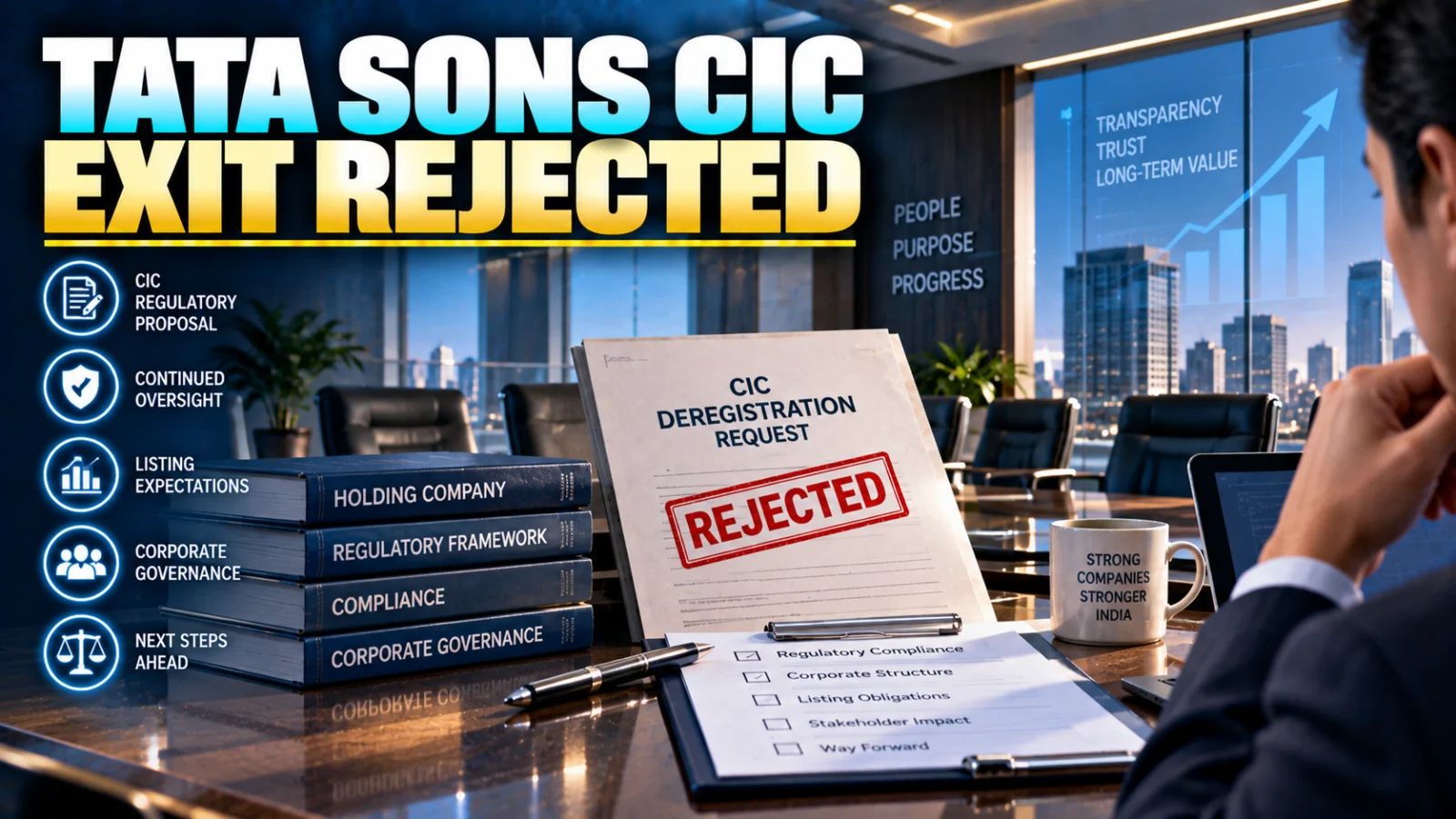
Tata Sons’ board has reportedly agreed to move ahead with a public listing after the Reserve Bank of India rejected the holding company’s request to surrender its Core Investment Company registration. The September 17 board decision materially changes the listing question: listing is no longer only a regulatory pressure or possible compliance route from the company’s side. Current reporting says the board has decided to initiate steps toward listing, although no reviewed evidence establishes that Tata Sons has filed a DRHP, announced an IPO timetable or opened a public offer.
Has Tata Sons decided to list?
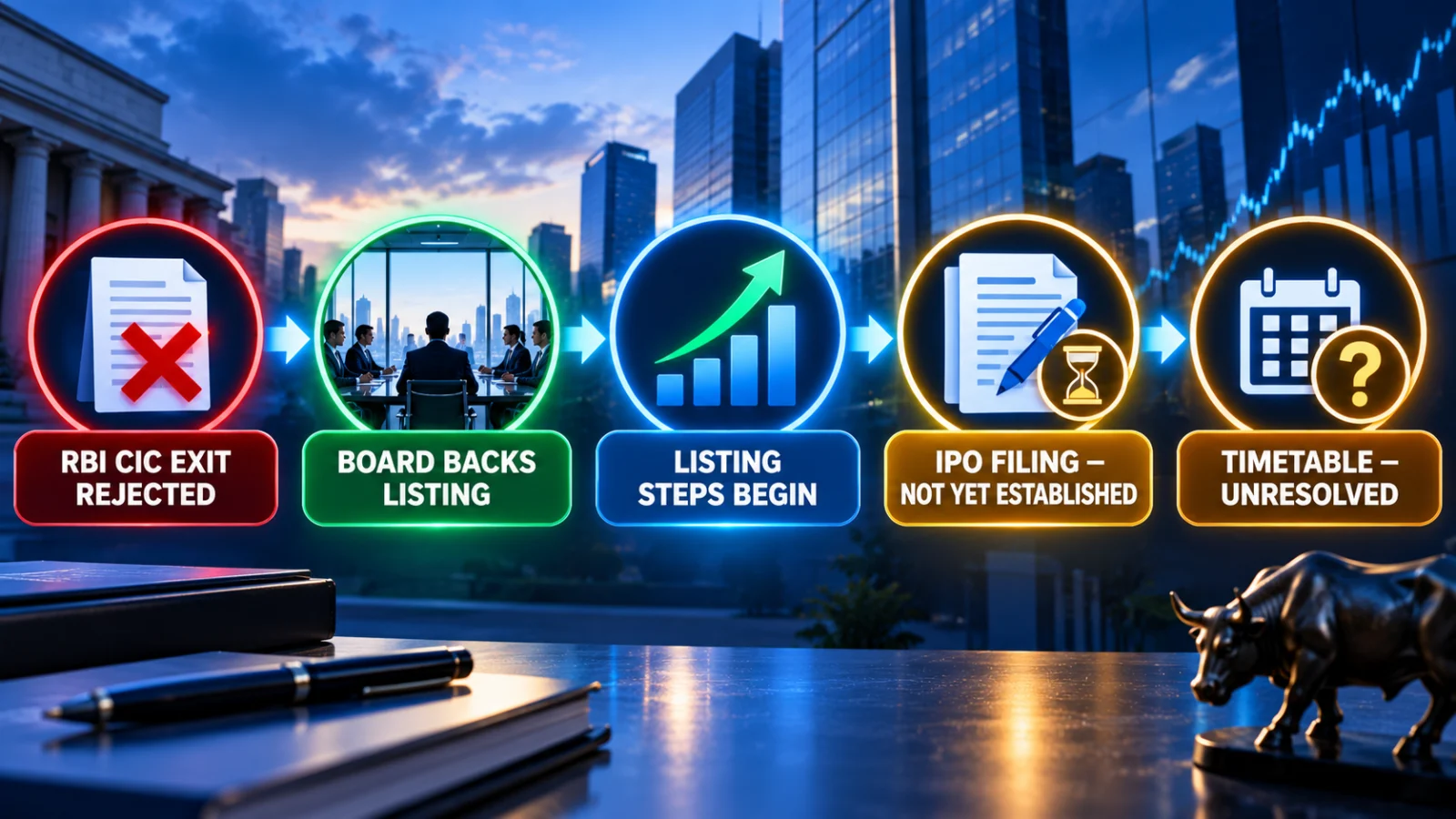
Current reporting says yes at the board level. Business Standard and other current reports say the Tata Sons board agreed on September 17 to move ahead with listing the holding company following RBI’s rejection of its CIC deregistration request. That is a significant corporate decision, but it is not the same as a completed IPO process. The transaction structure, approvals, timetable, valuation, offer size and securities filings remain unresolved.
What changed after the September 17 Tata Sons board meeting?
The board meeting was an identified decision point because Tata Sons needed to consider its response to RBI’s reported rejection of the company’s attempt to exit the Core Investment Company regulatory framework.
Current reporting after the meeting says the board backed a listing plan and agreed to initiate steps toward compliance with RBI’s listing requirements. The board also approved a fresh five-year term for chairman N. Chandrasekaran, according to Reuters and multiple Indian business reports.
The listing decision is the more important change for this article’s reader question because it moves Tata Sons from evaluating possible responses to the RBI decision toward a reported corporate decision to pursue the listing route.
Does this mean the Tata Sons IPO has started?
Not yet in the transaction-stage sense.
A board decision to pursue a listing and an actual IPO are separate stages. TPS has not reviewed evidence establishing a Tata Sons DRHP, offer document, issue price, offer size, subscription dates or exchange-listing date.
The current evidence therefore supports saying that Tata Sons has reportedly decided to move toward listing, not that a Tata Sons IPO has already been launched.
Why is Tata Sons moving toward a listing?
RBI’s Scale Based Regulation framework places enhanced requirements on Upper Layer NBFCs. Tata Sons has been publicly identified by RBI within that framework.
Tata Sons had sought to surrender its registration as a Core Investment Company, a route that could have changed the regulatory basis behind the listing pressure. RBI reportedly rejected that request in September 2026.
With deregistration rejected, the company had to decide how to respond to the continuing regulatory position. The September 17 board decision, according to current reporting, is to begin steps toward listing compliance.
What does the RBI caveat mean now?
RBI has also reportedly filed a caveat in the Bombay High Court. A caveat is a protective court filing intended to ensure that RBI is heard before a court grants relief if Tata Sons or another petitioner challenges the regulator’s decision.
The caveat remains relevant because a legal route could still affect the regulatory dispute. However, the board’s reported listing decision means the current corporate state is no longer limited to considering whether litigation or another alternative might avoid listing.
TPS has not reviewed a Tata Sons writ petition or a judicial order changing the company’s regulatory position.
Has Tata Sons abandoned a possible court challenge?
That is not established by the evidence reviewed.
A decision to begin listing steps does not by itself prove that every regulatory or legal option has been abandoned. RBI’s caveat remains evidence that the regulator has prepared for a possible challenge, while the reviewed material does not establish a substantive Tata Sons writ petition or court order.
Until Tata Sons, RBI or the Bombay High Court provides controlling evidence, the relationship between the listing process and any potential legal challenge remains unresolved.
What is confirmed, reported and still unresolved?
| Question | Current evidence state |
|---|---|
| Is Tata Sons identified within RBI’s NBFC-Upper Layer framework? | Confirmed. RBI has publicly included Tata Sons in its Upper Layer NBFC material. |
| Does RBI’s framework impose enhanced requirements including a listing requirement on applicable Upper Layer NBFCs? | Confirmed. The regulatory framework is available from RBI. |
| Did RBI reject Tata Sons’ CIC deregistration request? | Reported by Reuters and multiple financial publications. TPS has not reviewed the September 11 rejection letter from a public RBI source. |
| Did RBI file a Bombay High Court caveat? | Corroborated by Reuters and multiple Indian reports. |
| Has the Tata Sons board decided to move toward listing? | Reported by multiple current publications. Business Standard reports that the board backed the listing proposal and current reporting says steps toward listing compliance will be initiated. |
| Has Tata Sons filed a DRHP or launched an IPO? | Not established in the reviewed evidence. |
| Is the final listing timetable known? | No. Transaction timing and implementation details remain unresolved. |
What does N. Chandrasekaran’s reappointment change?
Reuters reports that the Tata Sons board approved a fresh five-year term for N. Chandrasekaran as chairman, reversing his earlier intention not to seek another term.
The leadership decision provides greater continuity while Tata Sons deals with the RBI decision and the listing process. Current reporting also indicates opposition within Tata Trusts to the reappointment and to aspects of the listing decision, making corporate-governance developments another issue to watch.
Those governance disagreements do not, by themselves, establish that the reported board listing decision has been cancelled or that an IPO transaction has begun.
What still has to happen before a Tata Sons IPO?
The reported board decision is an important corporate step, but a public-market transaction requires substantially more evidence and execution.
- A clear implementation route and corporate approvals required for the transaction.
- Resolution of any material governance, shareholder or legal issues that affect execution.
- Appointment of advisers and preparation of the transaction structure where required.
- Formal securities-market filings, including an offer document when the process reaches that stage.
- Disclosure of offer structure, size, timetable and other transaction terms.
- Completion of applicable regulatory and exchange processes before shares can be publicly listed.
None of those later stages should be inferred solely from the reported September 17 board decision.
Does the board decision settle Tata Sons’ listing deadline?
No new transaction timetable is established by the evidence reviewed.
The regulatory framework and RBI’s reported rejection explain why listing pressure exists, while the board decision indicates the company is now moving toward compliance. The date on which a public offering could actually be filed, launched or completed remains unresolved.
What should investors and Tata group stakeholders watch next?
- A formal Tata Sons statement or corporate record detailing the listing decision and implementation route.
- Any securities-market filing showing that an IPO process has formally entered the transaction stage.
- Any shareholder or governance approval required before the listing can proceed.
- Any Tata Sons filing in the Bombay High Court or judicial order affecting RBI’s decision.
- Any new RBI direction or public regulatory document clarifying Tata Sons’ compliance path.
- Details on offer structure, valuation, shareholder participation and listing timetable once formally disclosed.
Verification method
ThePulseSignal reviewed RBI’s Scale Based Regulation framework and official Tata Sons NBFC-Upper Layer material, then checked current reporting on RBI’s rejection, the Bombay High Court caveat and the September 17 Tata Sons board meeting. Business Standard and multiple current reports say the board agreed to move ahead with listing, while Reuters confirms the board’s leadership decision and the continuing regulatory context.
Limitations & unresolved facts
TPS has not reviewed a public copy of the September 11 RBI rejection letter, a public Tata Sons board resolution detailing the listing decision, a Tata Sons writ petition or an IPO filing. The precise implementation route, transaction structure, shareholder approvals, offer terms and listing timetable therefore remain unresolved.
Bottom line
Tata Sons has reportedly crossed an important decision point: its board has agreed to move toward a public listing after RBI rejected the company’s CIC deregistration request. That materially strengthens the listing path, but it does not mean a Tata Sons IPO has already been filed or launched. The next decisive evidence will come from formal corporate, regulatory, court or securities-market documents showing how the listing decision will actually be implemented.