






Diageo bottle seizure India headlines do not mean Smirnoff, VAT 69 or DSP Black have been banned nationwide. Reuters reported that Indian inspectors seized or quarantined about 18,000 boxes at United Spirits’ Bengaluru facility because certain plastic bottles allegedly lacked required markings identifying recycled PET used for food-contact packaging.
The distinction matters. The reported regulatory action concerns packaging compliance and the ability to identify food-grade recycled PET. The public evidence reviewed does not establish that the liquor itself was contaminated. Diageo says its products are safe, the bottles came from an FSSAI-approved recycler and mandatory supplier testing was carried out.
Direct answer
No nationwide ban on Smirnoff, VAT 69 or DSP Black has been established by this action.
The reported seizure involved specific stock at United Spirits’ Bengaluru facility, particularly smaller plastic bottles, over alleged recycled-PET marking deficiencies.
Current status
Specific stock was seized or quarantined pending further direction.
Diageo acknowledged that some bottles were quarantined by authorities and said it was engaging with the regulator. The event-specific government memos reported by Reuters were not found as publicly posted FSSAI documents during this review.
Confirmed from primary sources
FSSAI has an rPET food-contact framework
FSSAI publicly maintains packaging rules and recycled-PET food-contact guidance, and it maintains a list of manufacturers authorised to produce food-grade recycled PET resin.
Reported from government documents
The event-specific seizure
Reuters reported the Bengaluru seizure, quantity, affected examples and alleged missing recycled-PET markings after reviewing government memos. Those memos were not located as publicly posted FSSAI documents.
Company position
Diageo says the products are safe
Diageo said the bottles came from an FSSAI-approved recycler, mandatory supplier testing had been conducted and the products were safe for consumption.
Not established
Nationwide ban or proven contamination
The material reviewed does not establish a nationwide ban on the named brands, contamination of the liquor itself or the status of every bottle already distributed to retailers.
1. What happened in the Diageo bottle seizure in India?
Reuters reported on August 10, 2026 that inspectors seized around 18,000 boxes of Diageo liquor bottles during checks at United Spirits’ factory in Bengaluru.
The affected stock was reported to be worth about $1.6 million and involved more than half a dozen brands. Examples named in government memos reviewed by Reuters included:
- DSP Black Deluxe Whisky;
- Smirnoff Zesty Lime Triple Distilled Flavoured Vodka;
- VAT 69 blended Scotch whisky.
The inspection reportedly focused mainly on smaller plastic bottles, typically around 180 ml. Larger Diageo bottles are commonly glass, so the reported action should not be interpreted as applying automatically to every bottle size or package of every named brand.
Important: Reuters described stock as seized and Diageo described some bottles as quarantined until further direction. Neither term by itself establishes a nationwide brand ban.
2. Are Smirnoff, VAT 69 or DSP Black banned in India?
The evidence reviewed does not establish a nationwide ban on these brands.
| Claim | Status | What the evidence supports |
|---|---|---|
| About 18,000 boxes seized | Reported | Reuters reported the figure from government sources and memos relating to the Bengaluru inspection. |
| Some Diageo bottles quarantined | Company confirmed | Diageo told Reuters that some bottles had been quarantined by authorities until further direction. |
| Smirnoff nationwide ban | Not established | No nationwide Smirnoff prohibition arising from this PET inspection was established in the material reviewed. |
| VAT 69 nationwide ban | Not established | The reported seizure of specific stock does not establish a nationwide VAT 69 ban. |
| DSP Black nationwide ban | Not established | The evidence reviewed concerns inspected stock and packaging compliance, not a nationwide prohibition on every DSP Black product. |
This distinction matters because warning, seizure, recall, restriction and ban are not interchangeable regulatory states. For a broader explanation, see ThePulseSignal’s guide to FSSAI ban vs recall and what each type of action means.
3. Does the seizure mean the Diageo liquor was unsafe?
The public evidence reviewed does not establish that the liquor itself was contaminated or proven unsafe.
Reuters reported that government memos raised food-safety, misleading and misbranding concerns because inspectors allegedly found ordinary PET markings but not the required recycled-PET identification associated with food-grade recycled packaging.
That is different from laboratory evidence proving that the alcoholic liquid itself was contaminated.
Diageo gave the opposite safety position: it said its products were safe for consumption, that the plastic bottles were sourced from an FSSAI-approved recycler and that suppliers had conducted mandatory tests.
Reported regulator concern
Packaging identification and compliance
The reported issue was whether recycled PET used in the bottles carried the required food-contact identification and marking.
Not established
Proven contamination of the alcohol
The material reviewed does not establish a laboratory finding that the whisky or vodka itself was contaminated.
Do not convert a packaging-compliance seizure into a contamination claim. The reported regulator concerns and Diageo’s safety statement should remain separately attributed until stronger event-specific official evidence is published.
4. What is the recycled-PET issue behind the seizure?
PET stands for polyethylene terephthalate, a plastic widely used in bottles and packaging. Recycled PET, often written as rPET, uses PET material that has been recycled and processed for reuse.
Recycled PET is not automatically prohibited in food-contact packaging in India. FSSAI has a regulatory framework for accepting recycled PET as food-contact material, and FSSAI maintains an official list of manufacturers authorised to produce food-grade rPET resin for food-contact applications.
FSSAI also published guidelines in 2025 for the acceptance of recycled PET as food-contact material under its packaging framework.
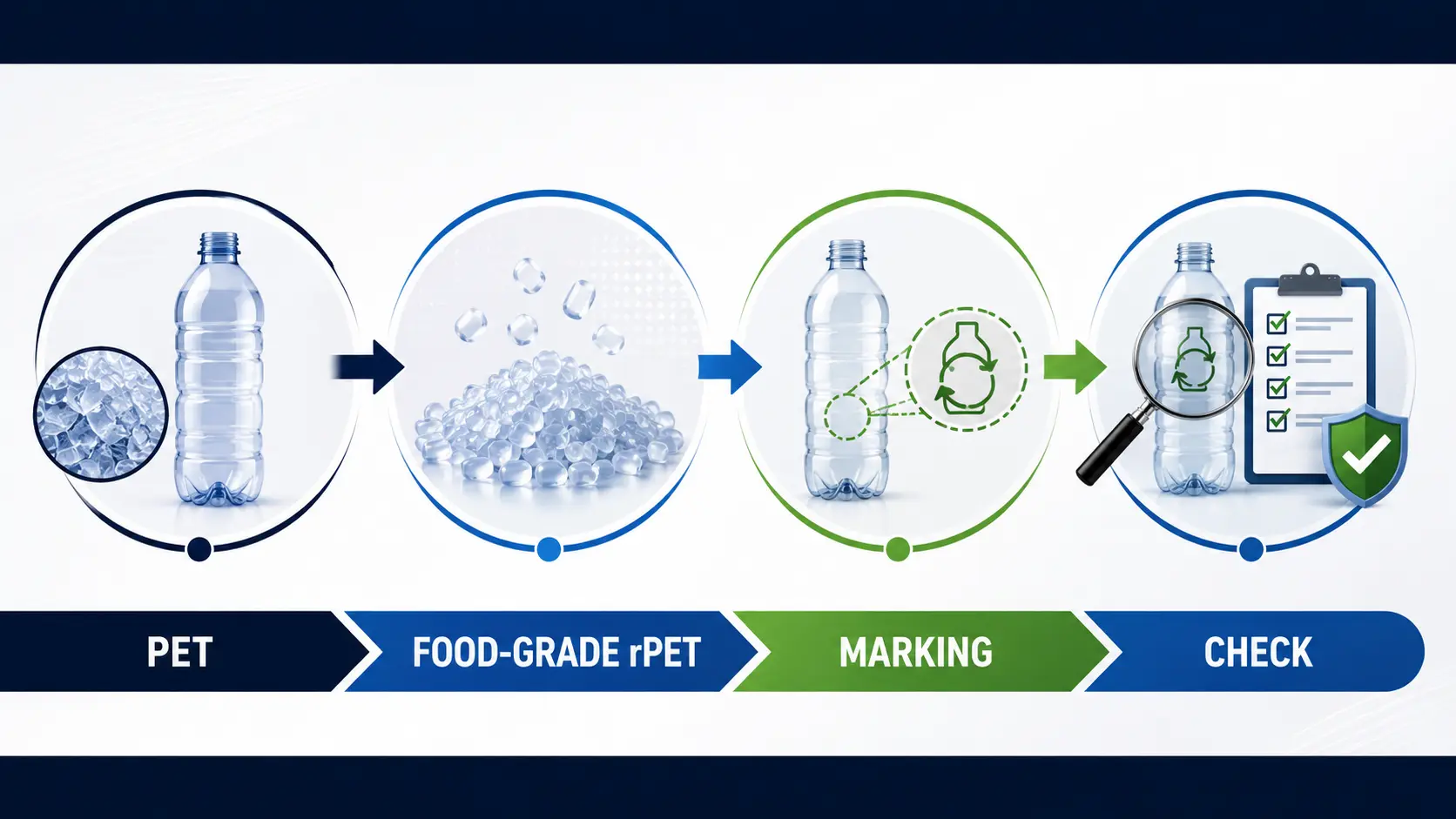
Recycled PET resin
The resin must come through an accepted food-contact recycling framework.
Food-contact use
The material has to meet the applicable safety and regulatory conditions for food-contact packaging.
Required identification
The finished packaging must carry the applicable recycled-PET food-contact identification or declaration required by the regulatory framework.
Inspection
Authorities can inspect the finished package and check whether its material and identification comply with the applicable rules.
5. If Diageo used an FSSAI-approved recycler, why did inspectors still seize bottles?
This is one of the most important distinctions in the case.
An approved source of recycled resin and a compliant finished package are related but separate compliance questions.
FSSAI publicly maintains a list of manufacturers authorised to produce food-grade rPET resin for food-contact use. Diageo says its bottles came from an FSSAI-approved recycler and mandatory testing was completed.
Reuters reported that inspectors said the finished bottles carried ordinary PET markings rather than the required recycled-PET identification showing their food-grade recycled status.
So Diageo’s position about the source and testing of the resin does not automatically answer the separate question of whether the finished bottle carried the required regulatory identification.
Simple version: “approved material” and “correctly marked finished packaging” are not necessarily the same compliance check.
Diageo had also publicly stated before this inspection that 33% food-grade recycled PET was being used across its PET bottle portfolio as part of its sustainability programme.
6. Is this the same FSSAI action as the Royal Challenge whisky warning?
No. These are separate regulatory issues.
The current Diageo bottle seizure concerns plastic packaging and recycled-PET identification.
The earlier Royal Challenge development concerned separate whisky-related regulatory questions, including product declarations and maturation-related claims.
The two stories involve the same broader company/regulatory environment but should not be merged into one violation.
If you are trying to understand that separate whisky-label issue, read ThePulseSignal’s Royal Challenge FSSAI warning explainer.
The distinction also matters because ThePulseSignal previously examined another food-regulatory case where readers could easily interpret an FSSAI action as a broader product prohibition. See our separate explainer on the FSSAI Dabur products ban question and what the regulator actually did.
What about Diageo bottles already available in shops?
This remains an important unresolved question.
The Reuters report concerns stock seized or quarantined during an inspection at United Spirits’ Bengaluru facility. The evidence reviewed for this article does not establish the legal or operational status of every bottle that may already have reached retailers elsewhere in India.
Therefore this article does not tell retailers to remove all Smirnoff, VAT 69 or DSP Black products, and it does not tell consumers that every plastic bottle is prohibited.
Watch for the next official step: a fresh FSSAI direction, company recall, release of quarantined stock, relabelling instruction or broader enforcement notice could materially change the answer.
Verification notes: what is confirmed, reported and interpreted
Confirmed
Recycled PET can be used under FSSAI’s framework
FSSAI publicly maintains rules and guidance for recycled PET used as food-contact material and a list of authorised manufacturers of food-grade rPET resin.
Reported
The seizure details
The roughly 18,000-box figure, affected examples, Bengaluru inspection and alleged missing markings come from Reuters’ reporting based on government memos and sources.
Company statement
Diageo’s safety and sourcing position
Diageo says the bottles came from an FSSAI-approved recycler, mandatory supplier testing was carried out and its products are safe.
Unresolved
Retail stock and next regulator action
The sources reviewed do not establish what happens to all bottles already in retail distribution or whether FSSAI will order relabelling, release, recall or a broader restriction.
Editorial interpretation: The evidence supports describing this as a packaging-compliance seizure involving alleged recycled-PET identification deficiencies. It does not support describing it as a nationwide ban on Smirnoff, VAT 69 or DSP Black, and it does not support saying the liquor itself was proven contaminated.
Verification method: ThePulseSignal used FSSAI primary material for the governing recycled-PET framework, Diageo’s own published material for its prior rPET use, and Reuters for the event-specific seizure because the inspection memos described in the report were not publicly available during this review.
Sources checked
The governing regulation and the event itself were verified separately so that an official general rule was not used as proof of an individual inspection event.
Reliable secondary / government memos reviewed
Reuters — August 10 seizure report
Used for the reported seizure quantity, affected examples, Bengaluru inspection, government-memo findings and Diageo’s response.
FSSAI primary regulation page
Packaging Regulations and recycled-PET guidance
Used to verify that FSSAI maintains a regulatory framework and guidelines for recycled PET used as food-contact material.
FSSAI primary database
Authorised food-grade rPET manufacturers
Used to verify that FSSAI authorises manufacturers to produce recycled PET resin for food-contact applications.
Company primary source
Diageo India rPET use
Used to verify Diageo India’s earlier statement that 33% food-grade recycled PET was used across its PET bottle portfolio.
Limitations and unresolved facts
The event-specific government inspection memos described by Reuters were not found as publicly posted FSSAI documents during this verification pass. The quantity seized, affected examples and exact inspection findings therefore remain attributed to Reuters’ reporting from government sources and documents.
FSSAI’s public packaging rules and recycled-PET guidelines establish the broader regulatory framework but do not independently prove the facts of the individual Diageo inspection.
No nationwide ban on Smirnoff, VAT 69 or DSP Black arising from this recycled-PET action was established by the evidence reviewed.
The evidence reviewed does not establish that the whisky or vodka itself was contaminated.
The status of every affected bottle already distributed to retailers across India was not established.
Diageo’s statements that the bottles came from an FSSAI-approved recycler, passed mandatory supplier testing and were safe are company claims and do not independently resolve the reported regulator concern about identification on the finished packaging.
This is a fast-moving regulatory story. A fresh FSSAI order, recall, release of quarantined stock, relabelling direction or wider sales restriction could materially change this article.
Diageo bottle seizure India: FAQs
Is Smirnoff banned in India after the Diageo bottle seizure?
No nationwide Smirnoff ban arising from this recycled-PET action has been established in the evidence reviewed. Reuters reported seizure or quarantine of specific stock at United Spirits’ Bengaluru facility.
Is VAT 69 banned in India?
The reported action included VAT 69 among affected products, but that does not establish a nationwide prohibition on every VAT 69 bottle in India.
Is DSP Black banned?
The Reuters report named DSP Black Deluxe Whisky among affected stock, but the public evidence reviewed does not establish a nationwide DSP Black ban from this packaging action.
Why were Diageo bottles seized?
Reuters reported that inspectors found ordinary PET markings but not the required identification showing that recycled PET used in the bottles was food-grade and compliant with the applicable recycled-PET framework.
Does this mean the liquor was unsafe?
The public evidence reviewed does not establish contamination of the liquor itself. Government memos described by Reuters raised food-safety and misbranding concerns relating to packaging compliance, while Diageo says its products are safe.
Is recycled PET banned in food or alcohol bottles?
No. FSSAI has a regulatory framework for food-grade recycled PET used in food-contact applications and maintains a list of authorised rPET resin manufacturers. The issue is compliance with the applicable conditions and identification requirements.
Is the Diageo PET case the same as the Royal Challenge FSSAI warning?
No. The PET seizure concerns packaging identification and recycled-plastic compliance. The Royal Challenge action concerns separate whisky-labelling and product-related issues.