




The BRICS Summit 2026 in New Delhi matters to India for a reason that is easy to miss in the diplomatic headlines: several economic, trade, education and digital-cooperation tracks have already produced ministerial-level outcomes before leaders meet on September 12–13. The important question is therefore not simply what BRICS is. It is what has already been agreed during India’s 2026 chairship, what still needs leaders’ endorsement, what remains only under discussion, and which outcomes could eventually have a practical effect on India.
What is the BRICS Summit 2026 actually for?
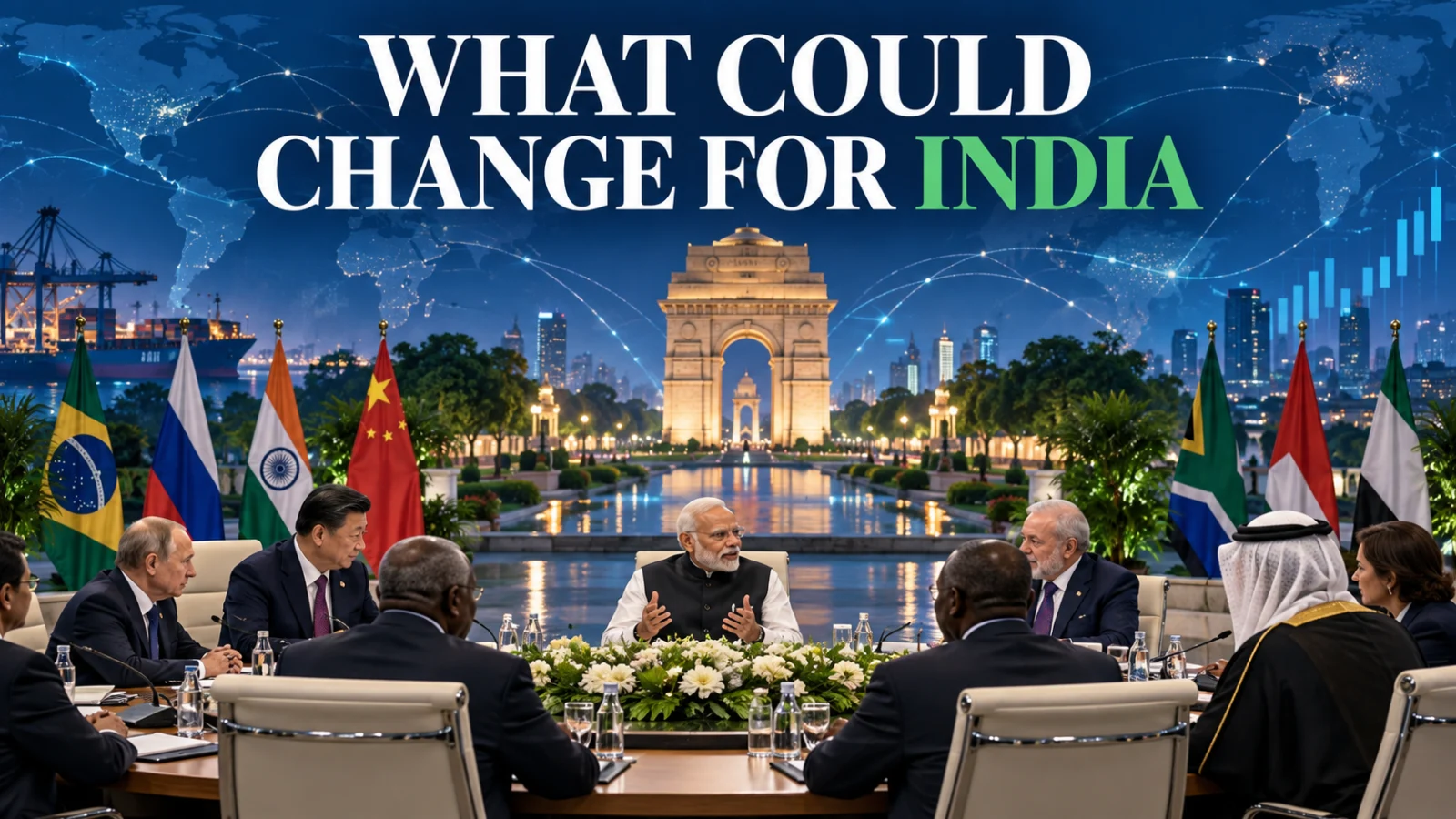
India is hosting the 18th BRICS Summit in New Delhi on September 12–13, 2026. The leaders’ meeting is the culmination of sectoral work carried out during India’s BRICS chairship under the theme of resilience, innovation, cooperation and sustainability. Leaders can endorse political and economic priorities, adopt a summit declaration and give direction to workstreams that ministries and technical groups have been developing during the year.
That does not mean every proposal discussed under BRICS becomes an immediate rule in India. BRICS is an intergovernmental cooperation forum, and implementation usually depends on later decisions by member governments, regulators, ministries, development institutions or technical bodies.
What has already been agreed before the summit?
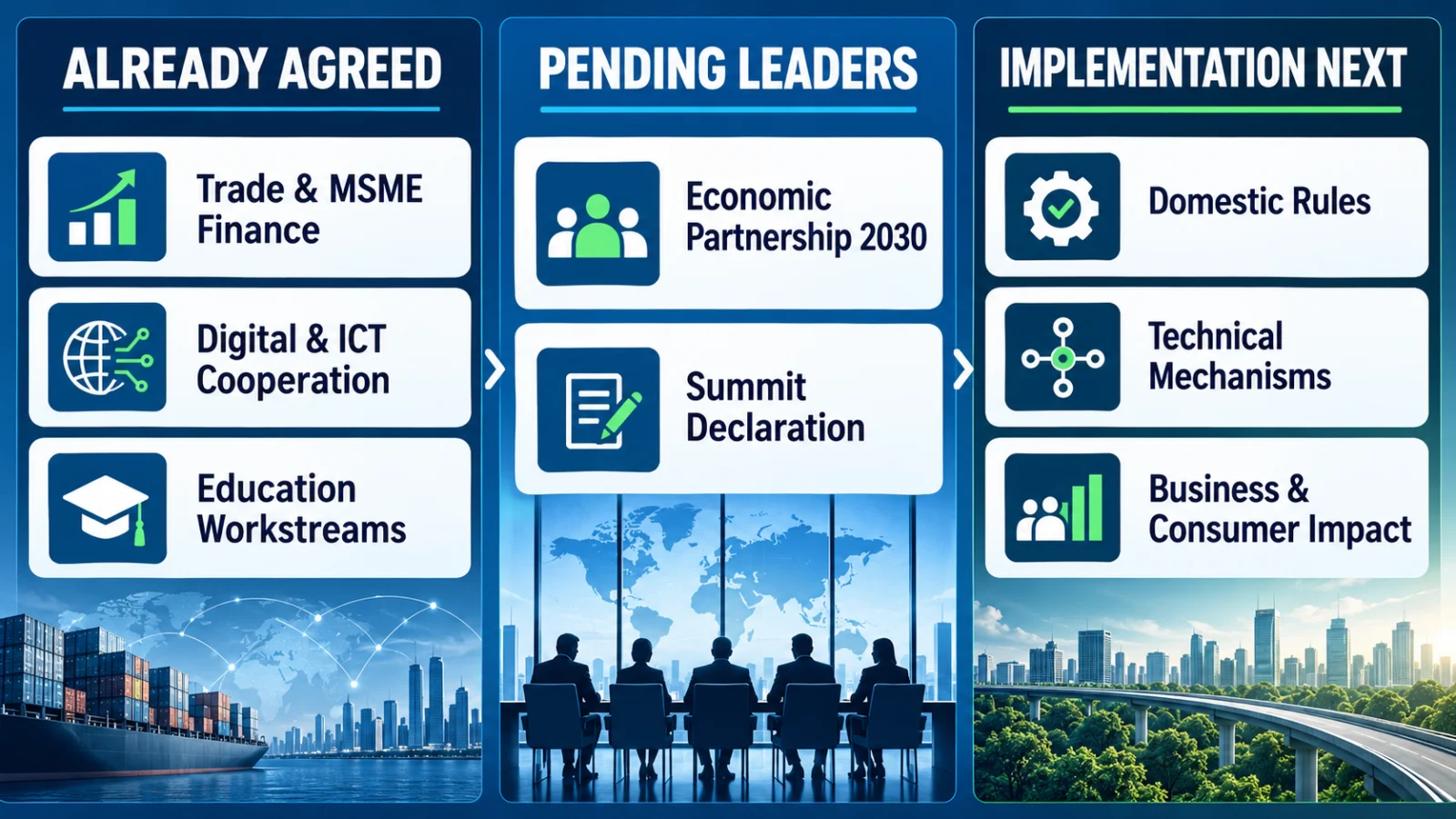
One of the clearest areas is trade and economic cooperation. BRICS Trade Ministers have already adopted or advanced work around resilient and diversified global value chains, access to trade finance for micro, small and medium enterprises, digitally delivered services and a longer-term economic partnership strategy.
A particularly important distinction is the Strategy for BRICS Economic Partnership 2030. The strategy is being taken forward for submission to BRICS leaders for endorsement. That means the work exists before the summit, but leader-level endorsement is still a separate stage.
What could this mean for Indian exporters and MSMEs?
The practical opportunity is not a sudden tariff cut or automatic new export entitlement. The more realistic impact is through cooperation designed to improve access to trade finance, strengthen supply-chain links, expand digitally delivered services and make participation in cross-border trade easier for smaller businesses.
For Indian exporters and MSMEs, the key post-summit question will be whether the leaders’ declaration or subsequent implementation documents turn those broad workstreams into specific programmes, financing channels, standards, platforms or bilateral and multilateral arrangements that businesses can actually use.
Is BRICS creating a new currency in 2026?
No confirmed launch of a single BRICS currency has been established by the official evidence reviewed for this article. BRICS has discussed local-currency financing, payment-system cooperation and cross-border payment interoperability in earlier leaders’ and technical work.
Those subjects are materially different from announcing one common BRICS currency. Before or during the New Delhi summit, any claim that a new currency has already been launched should be checked against the final leaders’ declaration and official financial-sector documents.
Could BRICS affect payments used by Indians?
Potentially, but the current evidence does not support claiming that Indian consumers will receive an immediate new payment option after the summit. Cross-border payment interoperability and local-currency settlement have been recurring BRICS workstreams, and future agreements could matter for businesses, banks and travellers if they become operational.
The evidence boundary is important: discussion of interoperable payment systems is not the same as a live UPI connection, a common payment network or a consumer-facing service that can already be used.
What is happening on education and qualification recognition?
BRICS education cooperation has also moved forward during India’s chairship. Ministers have discussed mutual recognition of qualifications and continued work toward a framework or memorandum between participating countries.
That does not mean an Indian degree has automatically become recognised across every BRICS country. Qualification recognition remains dependent on the specific framework, participating jurisdictions, professional rules and any later implementation steps.
What about AI, digital infrastructure and cybersecurity?
Digital cooperation is another established 2026 workstream. BRICS ICT discussions have covered resilient digital infrastructure, cybersecurity, digital skills, innovation and startup cooperation.
For India, these discussions are relevant because they touch sectors where domestic policy, telecom infrastructure, technology companies and cybersecurity standards can intersect with international cooperation. The summit may give political direction to this work, but a leaders’ statement by itself would not automatically change Indian cyber rules, telecom obligations or AI regulation.
Why does the summit matter geopolitically for India?
The expanded BRICS grouping gives India a forum that includes major emerging economies and strategically important partners across Asia, the Middle East, Africa and Latin America. It also places India at the same table as countries with which it may cooperate economically while disagreeing on security, border, sanctions or geopolitical questions.
That makes BRICS useful to India as a platform for Global South representation and economic coordination without requiring India to align with every member on every international dispute.
The summit’s geopolitical importance should therefore not be measured only by whether members issue a strong joint statement on a particular conflict. A significant part of the value lies in whether India can build consensus on practical economic, institutional and development priorities while preserving its own strategic positions.
What is already confirmed, and what is still pending?
| Issue | Current evidence state | What to watch next |
|---|---|---|
| September 12–13 New Delhi leaders’ summit | Confirmed | Final agenda, leader participation and declaration |
| Trade, MSME finance and global value-chain work | Already advanced at ministerial level | Leader endorsement and implementation language |
| BRICS Economic Partnership Strategy 2030 | Prepared for leader-level endorsement | Whether and how leaders endorse it |
| Education qualification-recognition cooperation | Work in progress | MoU/framework details and participating jurisdictions |
| Digital, ICT and cybersecurity cooperation | Established 2026 workstream | Concrete projects or commitments after the summit |
| Cross-border payment interoperability | Ongoing area of BRICS work | Any specific mechanism, technical roadmap or implementation commitment |
| Single BRICS currency launch | Not confirmed | Do not treat speculation as an adopted outcome |
What could actually change for India after September 13?
The most meaningful outcomes would be those that move from diplomatic language into identifiable implementation. That could include leader endorsement of an economic strategy, specific trade-finance initiatives, payment-system technical work, development-finance commitments, education frameworks, digital-cooperation programmes or institutional reforms.
Even then, the effect on an Indian business, student, bank customer or consumer may not be immediate. Many BRICS decisions require follow-up by national governments and institutions before they change a service, rule, financing route or eligibility condition.
What should readers watch during the summit?
- The final leaders’ declaration and any annexes.
- Whether the BRICS Economic Partnership Strategy 2030 receives leader-level endorsement.
- Any concrete language on cross-border payments, local-currency financing or financial infrastructure.
- Specific trade, MSME-finance or supply-chain implementation commitments.
- Any new education or mutual-recognition framework with defined next steps.
- Digital, AI, cybersecurity or telecommunications commitments that name specific programmes or implementation mechanisms.
- India-specific announcements that create a measurable domestic policy, business or consumer consequence.
Verification method
ThePulseSignal reviewed official Government of India and PIB material covering the confirmed September 12–13 summit, India’s 2026 BRICS chairship, trade-minister outcomes, education cooperation, ICT workstreams and earlier BRICS financial-cooperation language. Claims about future summit decisions are labelled as pending, expected or unknown rather than presented as completed outcomes.
Limitations & unresolved facts
The final summit agenda, complete leader attendance, declaration wording and leader-level endorsements were not yet available at the time of verification. Payment interoperability, qualification recognition and other workstreams may require later technical or domestic implementation and should not be treated as immediately operational. ThePulseSignal will need to update this article when the official summit declaration and outcome documents are released.
Bottom line
The BRICS Summit 2026 matters to India less because of one dramatic announcement and more because it can convert a year of ministerial work into leader-backed priorities. Trade, MSME finance, digital cooperation, education and payment-system work are already part of the BRICS agenda, but readers should separate those established workstreams from outcomes that have not yet been adopted. The decisive evidence will come from the September 12–13 leaders’ declaration and the implementation steps that follow.