




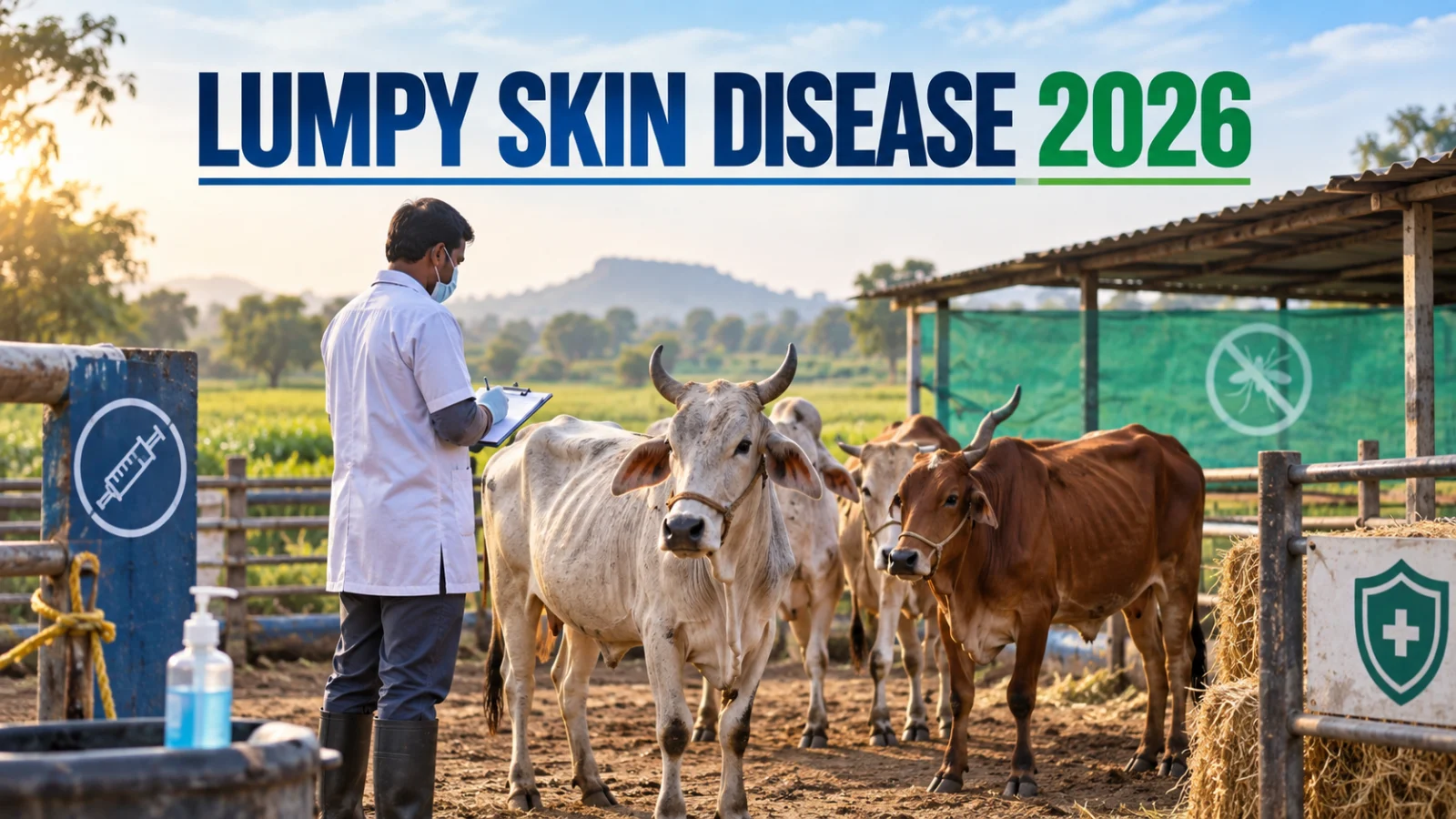
Lumpy skin disease India 2026 is still an active livestock-health issue. The Department of Animal Husbandry and Dairying reported 3,461 active Lumpy Skin Disease cases in its September 8 assessment while describing the national situation as under control, with lower severity and mortality than earlier major outbreaks.
What is the current Lumpy Skin Disease situation in India?
DAHD reported 3,461 active cases on September 8, 2026. Sporadic cases since July were reported mainly from Uttar Pradesh, Rajasthan, Himachal Pradesh, Haryana, Punjab and Uttarakhand, along with a few other states.
That does not mean those are the only affected places or that every district in those states has active disease. The central release is a national snapshot, not a complete district-by-district active-case map.
Does “under control” mean Lumpy Skin Disease is gone?
No. The Centre’s assessment that the situation is under control should not be read as eradication. Active cases remain, vaccination and surveillance are continuing, and states are still being advised to use isolation, movement control, vector control and other containment measures.
The useful distinction for cattle owners is that national severity and mortality may be lower while local infection risk can still exist where cases are being reported.
Which cattle are most represented among the current active cases?
DAHD said active cases were seen mainly among young and unvaccinated animals and cattle with co-morbidities. That does not mean other animals cannot become infected, but it identifies the groups highlighted in the current central assessment.
How much vaccination has been carried out?
The September 8 release reported more than 36.18 crore vaccination and re-vaccination events under the national control effort.
This figure should not be interpreted as 36.18 crore different animals. The official wording combines vaccination and re-vaccination, so TPS is not converting it into a unique-animal count.
What control measures are authorities using?
The current containment programme includes timely vaccination, ring vaccination around affected areas, movement control, isolation of sick animals, vector control, disinfection and sanitation, management of stray animals, treatment of affected animals and quarantine of newly introduced cattle.
DAHD has particularly emphasised timely vaccination of heifers and young cattle, but the exact vaccination schedule and eligibility for an individual animal should follow current state or local veterinary instructions.
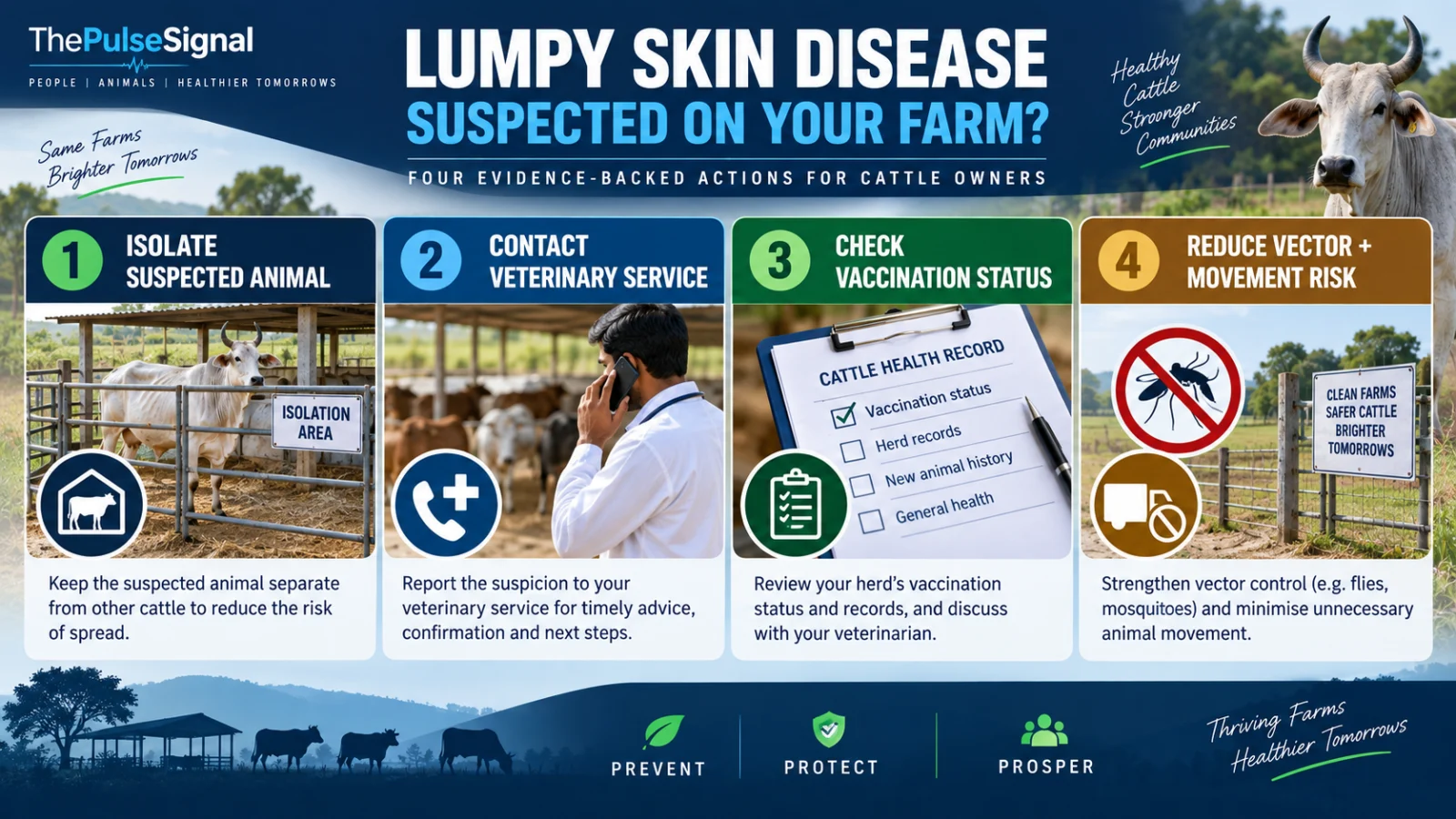
What should a cattle owner do if Lumpy Skin Disease is suspected?
1. Separate the suspected animal
Keep a sick or suspected animal away from healthy cattle to reduce opportunities for further spread.
2. Contact veterinary authorities
Report the suspected case through the local veterinary or animal-husbandry system and seek professional examination rather than relying on an unverified treatment.
3. Check vaccination status
Ask the local veterinary service whether healthy eligible cattle require vaccination or re-vaccination under the current programme.
4. Reduce vector exposure
Follow official fly, mosquito and other vector-control measures and maintain cleanliness and sanitation around cattle housing.
5. Limit avoidable movement
Avoid unnecessary movement of suspected or exposed animals and comply with any current district or state restrictions.
6. Quarantine newly introduced cattle
Follow veterinary guidance on separating newly introduced animals before mixing them with the existing herd.
Is cattle movement banned across India?
No nationwide blanket cattle-movement ban was established in the September 8 national release. Movement control is one of the measures authorities can use to contain LSD, but the exact restriction can depend on the state, district and current local outbreak situation.
Cattle owners and traders should therefore verify local animal-husbandry orders before transport, fairs, sales or other movement where disease controls may apply.
Should every cattle owner vaccinate immediately?
The Centre is urging timely vaccination and has highlighted heifers and young cattle, but TPS has not verified one national instruction requiring every cattle owner to vaccinate every animal immediately regardless of local programme status.
The practical action is to check the animal’s vaccination history and obtain the current schedule or eligibility instructions from the local veterinary service.
Can farmers treat Lumpy Skin Disease themselves?
This article does not provide an individual treatment regimen. The current official response includes veterinary treatment of affected animals, but the appropriate treatment and supportive care depend on the animal’s condition and should be handled through qualified veterinary services.
Cattle owners should be cautious with unverified medicines, injections or home-treatment claims that are not supported by current veterinary guidance.
Is compensation available if cattle die from LSD?
The September 8 national release reviewed by TPS does not establish a universal current compensation entitlement for every cattle owner. Compensation or relief, where available, can depend on state policy, scheme conditions and current administrative orders.
Farmers should therefore check their state animal-husbandry department rather than assuming that a national payment is automatic.
Why the state list needs careful reading
DAHD said sporadic cases since July had been reported mainly from Uttar Pradesh, Rajasthan, Himachal Pradesh, Haryana, Punjab and Uttarakhand, with a few other states also reporting disease.
This wording should not be converted into a claim that exactly six states currently have LSD or that every named state has the same case burden. A newer DAHD or state assessment can change the picture quickly.
What should cattle owners watch next?
The most important next signals are a newer national active-case count, expansion or contraction of the affected geography, state vaccination campaigns, cattle-movement or livestock-fair restrictions, and any material change in reported severity or mortality.
TPS will update this same URL when a later official assessment materially changes the national or farmer-action state.
Verification note
TPS reviewed the September 8 DAHD/PIB national Lumpy Skin Disease assessment, current state-level control reporting and standing ICAR-NIVEDI prevention guidance. The national active-case count and control measures are confirmed, while district-level case data, local vaccination access, compensation and individual treatment instructions remain outside the verified national snapshot.