






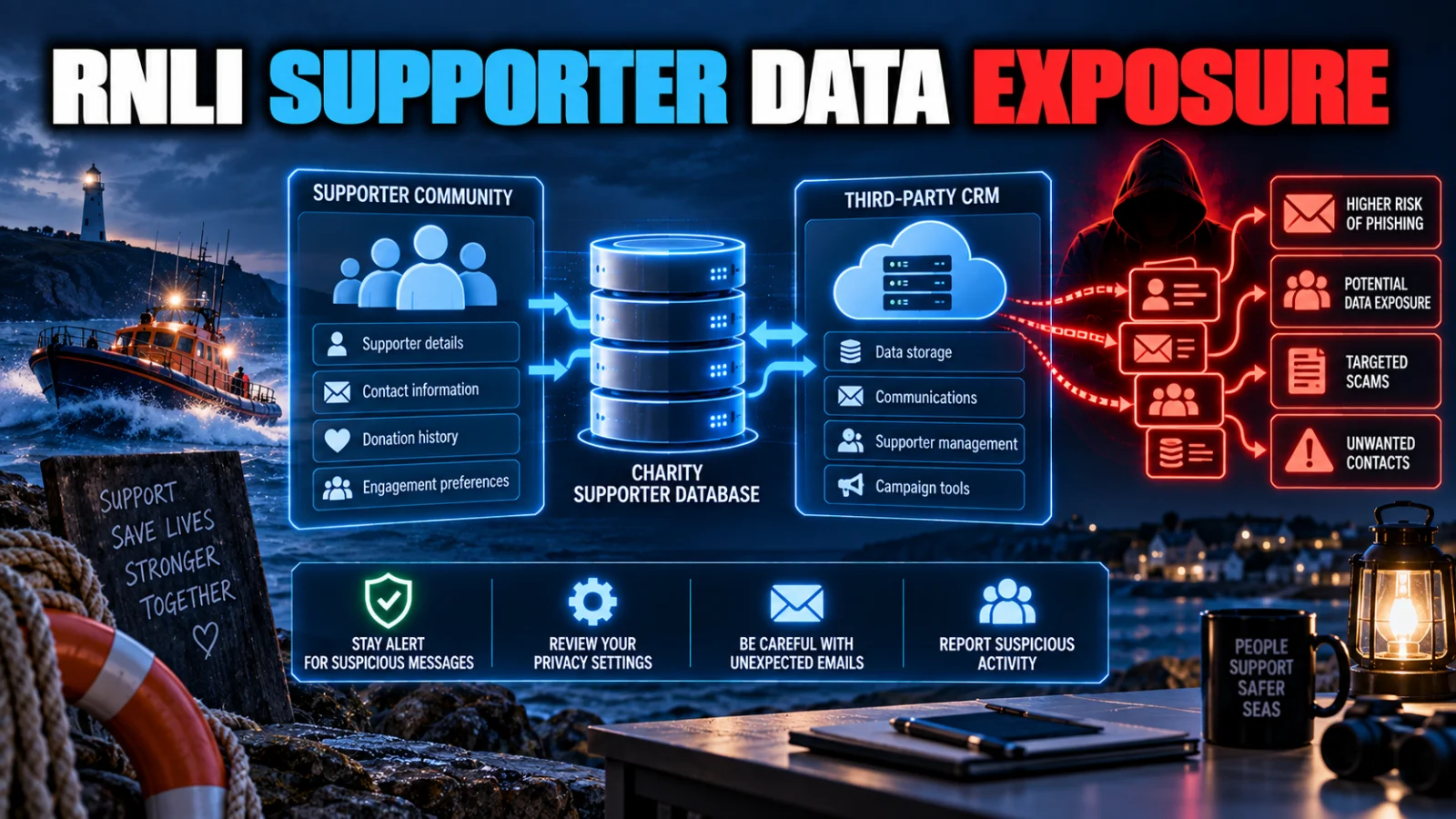
The RNLI data breach story is not a new September attack on the charity itself. RNLI has confirmed that a third-party supplier holding supporter data was involved in a cyber security incident. Current reporting identifies that supplier as Beacon CRM and says RNLI warned supporters that names, contact details and records of interactions with the charity may have been affected.
The distinction matters because the underlying Beacon CRM incident dates to late July. The new information state is that RNLI has now become a publicly identified affected organisation and has begun warning supporters. There is no evidence in the material reviewed by ThePulseSignal that every RNLI supporter was affected, that every record held by Beacon was taken, or that RNLI suffered a separate new intrusion in September.
What the RNLI data breach update actually means
RNLI’s own public notice confirms that a third-party supplier holding supporter information experienced a cyber incident. The more detailed description of affected fields currently comes from reporting of RNLI’s supporter communication, which says names, contact information and records of interactions with RNLI may have been compromised.
Those details should therefore be read as part of RNLI’s reported notification state rather than as proof that every listed field was exposed for every supporter. The exact number of RNLI records involved and the complete customer-specific data inventory remain unresolved.
This is part of the older Beacon CRM incident
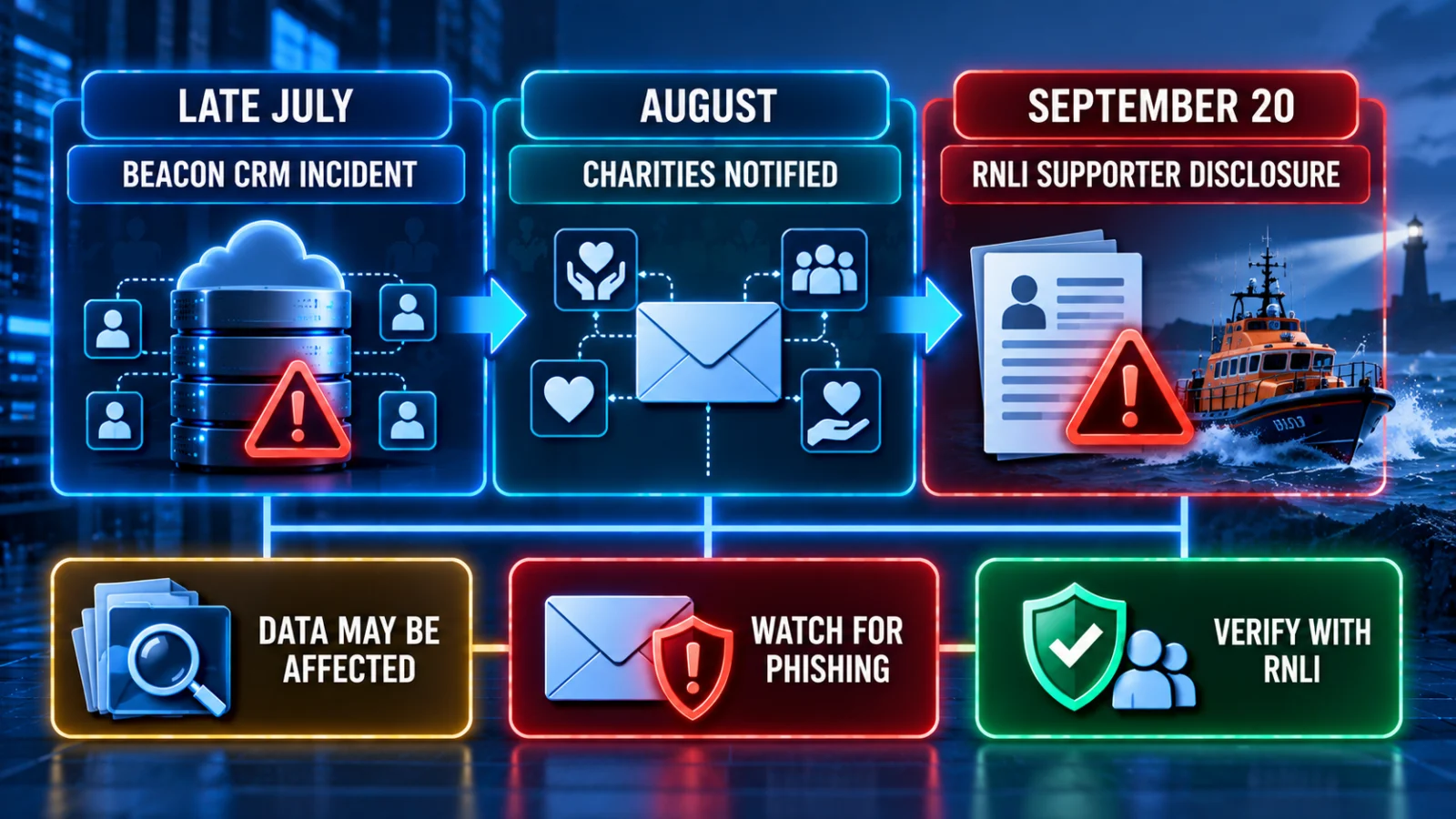
The Beacon CRM security incident was already known before RNLI’s September 20 disclosure. UK charity-sector regulators had warned affected organisations in August, and other charities later published updates based on Beacon’s investigation into unauthorised access to its systems and customer database.
For RNLI supporters, the practical change is not that Beacon was breached again. It is that RNLI has now identified its own supporter records as potentially involved in the earlier incident.
Was every RNLI supporter affected?
No evidence reviewed by TPS supports that conclusion. The current RNLI wording is precautionary, and Beacon’s wider investigation did not always establish exactly which records from each customer were downloaded. Readers should avoid interpreting a notification as proof that every person in RNLI’s supporter database had every field copied.
Were bank or card details exposed?
The RNLI-specific evidence reviewed for this article does not establish that payment-card or banking information was part of the Beacon dataset. RNLI’s general privacy information explains how card payments are handled, but that is not sufficient evidence to reconstruct the exact information stored in Beacon during the incident. TPS therefore treats financial-data exposure as unknown unless RNLI publishes more specific guidance.
Has RNLI supporter data been misused?
Current RNLI-specific reporting says there was no evidence at the time of publication that affected information had been misused, published or sold. That is a current evidence state rather than a guarantee that misuse cannot occur later. Supporter names, contact information and relationship history can still make phishing or social-engineering messages more convincing.
What RNLI supporters should do now
If an email, text or call claims to be from RNLI and asks for sensitive information, use RNLI’s official contact routes rather than replying directly.
Do not provide passwords, one-time codes, card details or banking credentials in response to an unsolicited breach-related message.
Be especially cautious if a message refers to a previous donation, interaction or relationship with RNLI, because interaction records are among the fields reported as potentially affected.
Review relevant accounts and communications for unexpected activity and keep copies of suspicious messages where useful.
RNLI is the controlling organisation for supporter-specific questions about whether your information was held in the affected supplier environment.
UK residents concerned that personal information was not kept safe can follow the Information Commissioner’s Office guidance on raising concerns or complaints.
Was RNLI specifically targeted?
No evidence reviewed by TPS establishes that RNLI was deliberately targeted. Wider Beacon incident updates reported that the attack was not believed to have been aimed at one particular customer. It would therefore be misleading to link the RNLI disclosure to unrelated political or public controversies without direct evidence.
What remains unresolved
RNLI has not, in the evidence reviewed for this article, published a complete numerical count of affected supporters or a definitive customer-specific field inventory. TPS also did not establish an RNLI-specific regulatory outcome or evidence that RNLI-linked data has subsequently been abused.
This page should be updated on the same URL if RNLI publishes a fuller supporter notice, confirms exact affected fields or population, the ICO or Charity Commission announces an RNLI-specific action, or credible evidence of phishing, fraud or misuse linked to the exposed information emerges.