




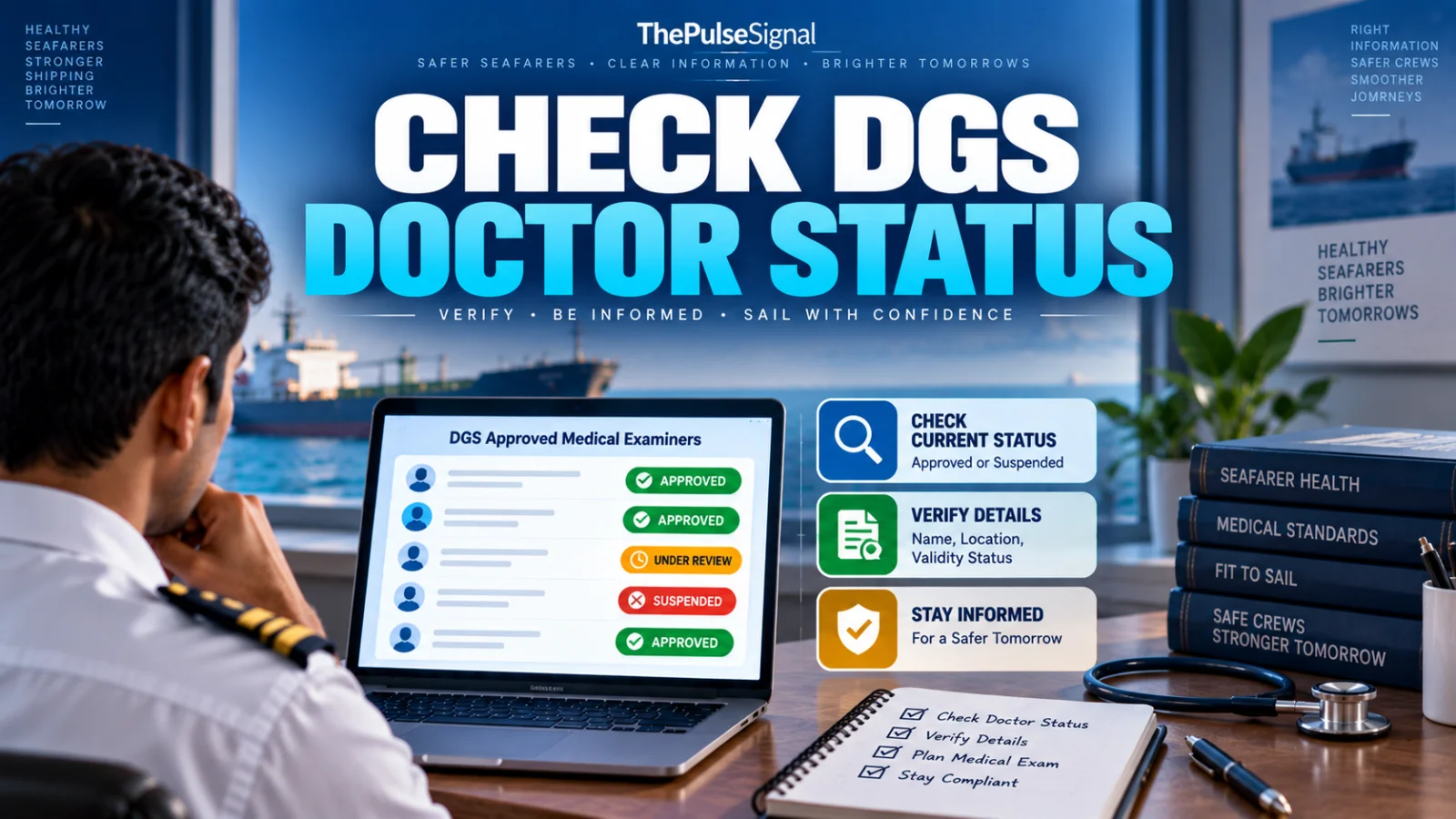
The DGS approved doctor list 2026 has a new current status to check before a seafarer books a medical examination. The Directorate General of Maritime Administration’s Medical Examiner page now carries a regular Medical Examiner list dated September 4, 2026 and a separate suspended DGS-approved doctors list dated September 8, 2026.
How do you check whether a DGS Medical Examiner is currently approved?
Use the latest official DGMA Medical Examiner page rather than relying on an old PDF, saved screenshot or third-party directory. Check the doctor’s details against the current regular Medical Examiner list and also check the latest suspended-doctors list before undergoing a consequential seafarer medical examination.
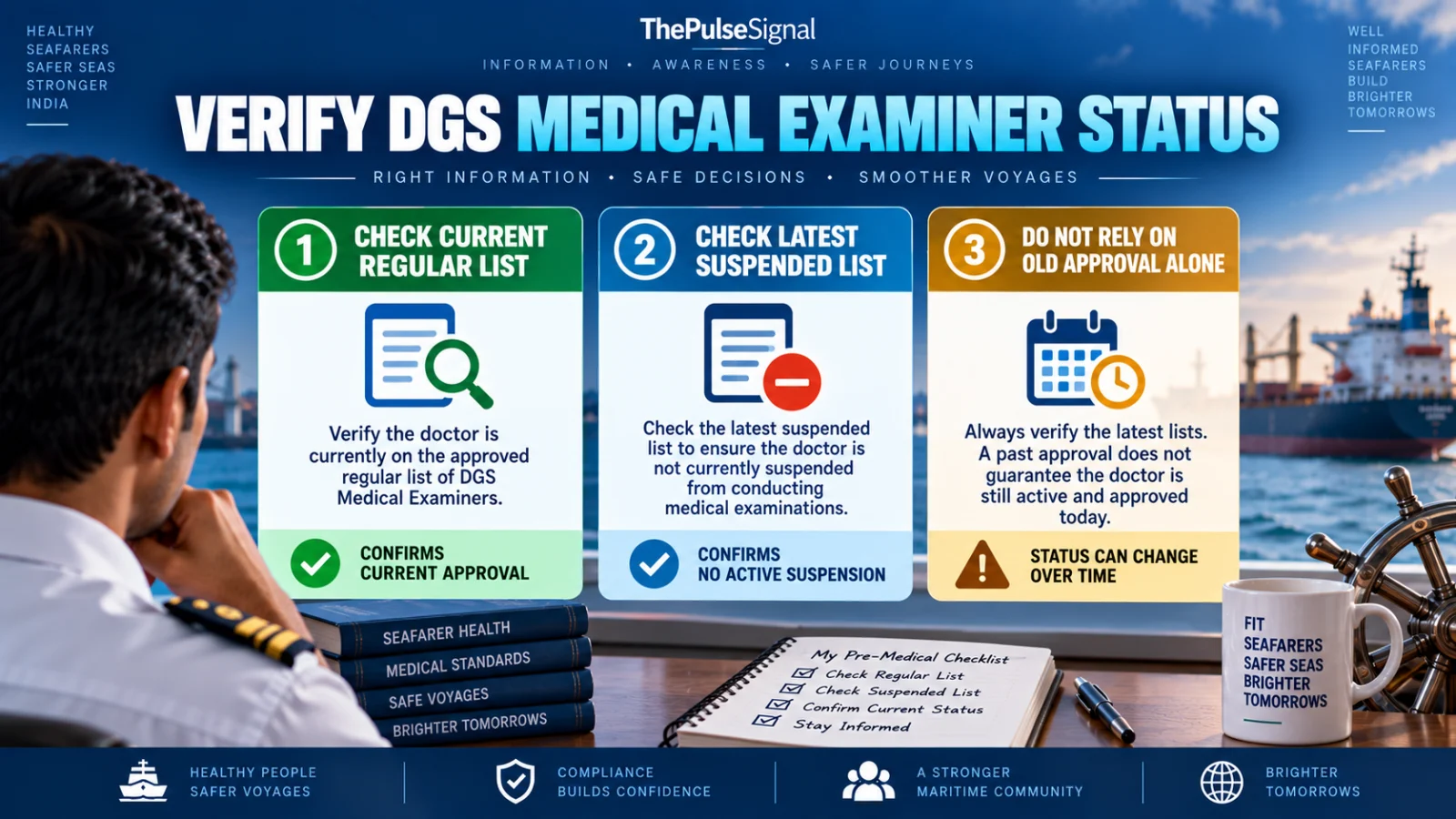
A doctor having been DGS-approved in the past is not by itself proof that the doctor remains authorised today. DGMA’s maritime-health guidance makes current approval status material to whether a Medical Examiner is authorised to issue a DGS-recognised Medical Certificate of Physical Fitness.
What changed on September 8?
DGMA published a refreshed document titled as the list of suspended DGS-approved doctors as on September 8, 2026. The same Medical Examiner page currently carries a regular Medical Examiner list dated September 4.
The important verified change is therefore the current status snapshot. TPS has not yet compared the September 8 suspended list doctor by doctor with the previous suspended list, so this article does not label any individual doctor as newly suspended or newly reinstated.
Why the latest list matters before a seafarer medical
DGMA says only approved Medical Examiners are authorised within the DGS seafarer medical-certification framework. Approval status can change through suspension, cancellation, lapse or later restoration, so historical approval alone is not enough for a current booking decision.
For a seafarer, using an examiner whose current status is unclear can create avoidable risk around the medical examination, certificate acceptance, joining documentation and the need to repeat the process.
What should you check before booking the doctor?
1. Use the current DGMA list
Open the latest official Medical Examiner listing rather than an old directory or saved copy.
2. Match the doctor’s identity carefully
Check the doctor’s name and available approval details against the current regular Medical Examiner list.
3. Check the suspended list too
Verify that the doctor is not shown in the latest suspended-doctors status published by DGMA.
4. Resolve any conflict before the examination
If the current status is ambiguous or different sources disagree, rely on the latest controlling DGMA/DGS material and obtain clarification before paying for or undergoing the examination.
Can an old doctor directory still be trusted?
It can be useful for navigation, but it should not override the latest official DGMA status. Doctor approval is a live regulatory state. A third-party directory or search result may still display a doctor based on an older approved or suspended list even after DGMA has refreshed its records.
For that reason, the safest current check is the official Medical Examiner page immediately before the examination rather than assuming an older listing remains accurate.
Does the September 8 list show which doctors were newly suspended?
Not from the evidence TPS has verified so far. The September 8 suspended-doctors list is confirmed as a newer official status snapshot, but TPS has not completed a doctor-by-doctor comparison against the preceding suspended list.
That means TPS is not publishing a count or naming individual doctors as newly suspended, removed or reinstated until that comparison is verified.
Does a doctor’s suspension automatically invalidate an older medical certificate?
TPS has not verified a blanket rule stating that every certificate previously issued by a doctor who later appears on a suspended list automatically becomes invalid.
The timing of the examination, the doctor’s authorisation status when the certificate was issued, the reason and period of suspension and any specific DGMA instructions can matter. Seafarers should therefore not discard or replace an older certificate solely because a doctor appears on a later suspension list without checking the applicable official guidance.
What if the regular and suspended lists appear to conflict?
Do not guess from one document in isolation. Medical Examiner status is time-sensitive, so compare the latest dated official materials and seek current DGMA/DGS clarification when the same doctor’s status cannot be resolved confidently.
This is particularly important before a new medical examination because the reader’s task is not to prove that the doctor was approved historically; it is to establish that the doctor is authorised for the examination being arranged now.
How is this different from the new e-Samudra medical certificate workflow?
The two issues are related but not identical. The doctor-status question is whether the Medical Examiner is currently authorised. The e-Samudra issue concerns how a DGS Medical Fitness Certificate is issued and handled in the digital certification environment.
A seafarer should therefore verify the examiner’s current approval status separately from understanding the certificate’s e-Samudra issuance process.
What happens next?
TPS will maintain this same page when DGMA publishes a newer regular Medical Examiner list, a newer suspended-doctors list, a reinstatement or cancellation update, or clearer guidance on the treatment of certificates connected with suspended examiners.
The September 8 doctor-by-doctor change versus the previous suspended list also remains a review trigger. Until that comparison is completed, the safe current conclusion is about the updated status list itself, not about newly suspended individuals.
Verification note
TPS checked DGMA’s current Medical Examiner listing, confirmed the September 4 regular list and September 8 suspended-doctors list, and reviewed DGMA maritime-health guidance describing the requirement to use currently approved Medical Examiners. Individual doctor-level changes and retrospective certificate effects remain unresolved.