






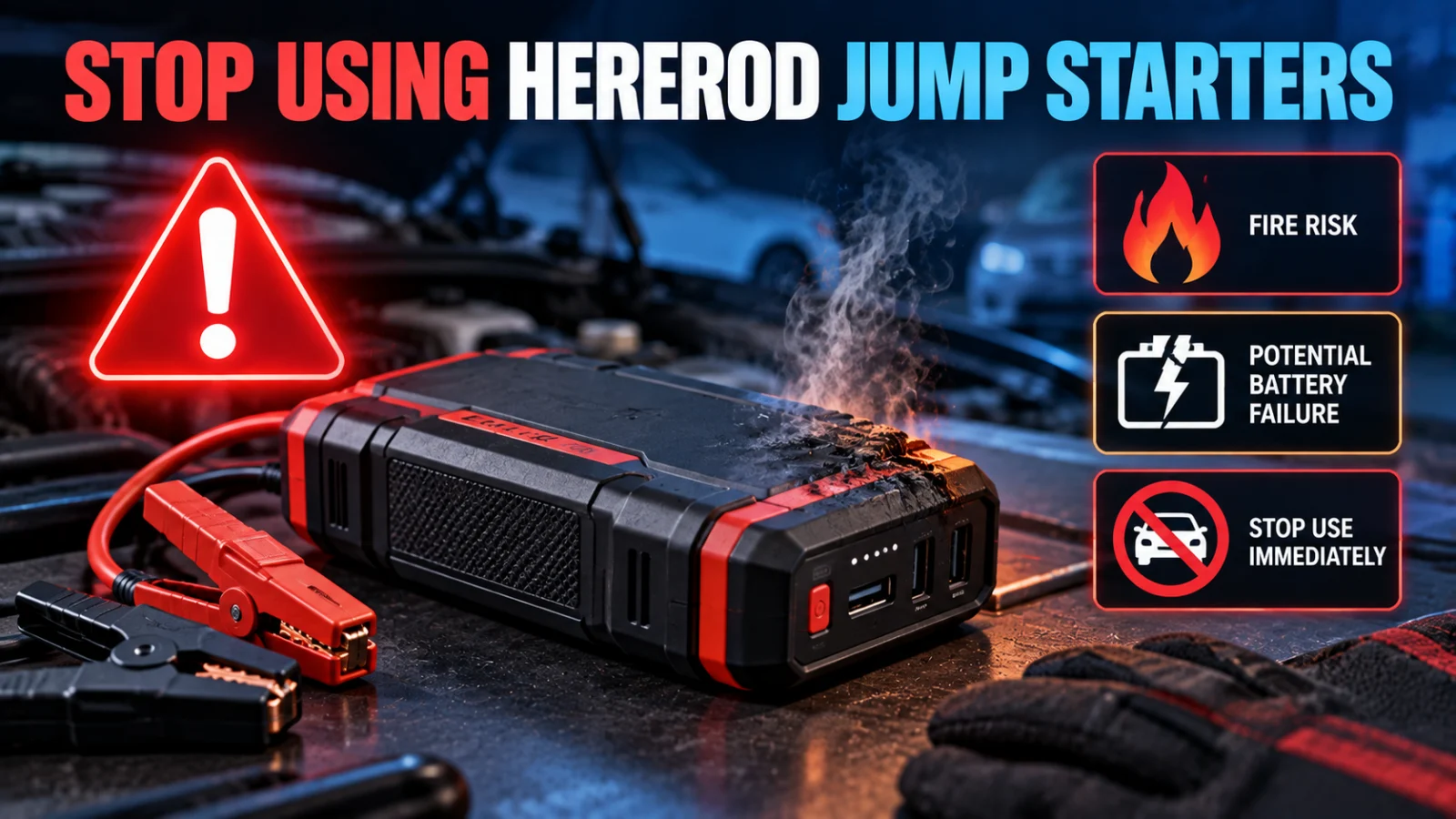
The Hererod jump starter warning covers the PW40 and EW40 jump starters and power banks. The U.S. Consumer Product Safety Commission says consumers should stop using these products immediately because their lithium-ion batteries can explode and ignite, creating a serious fire hazard.
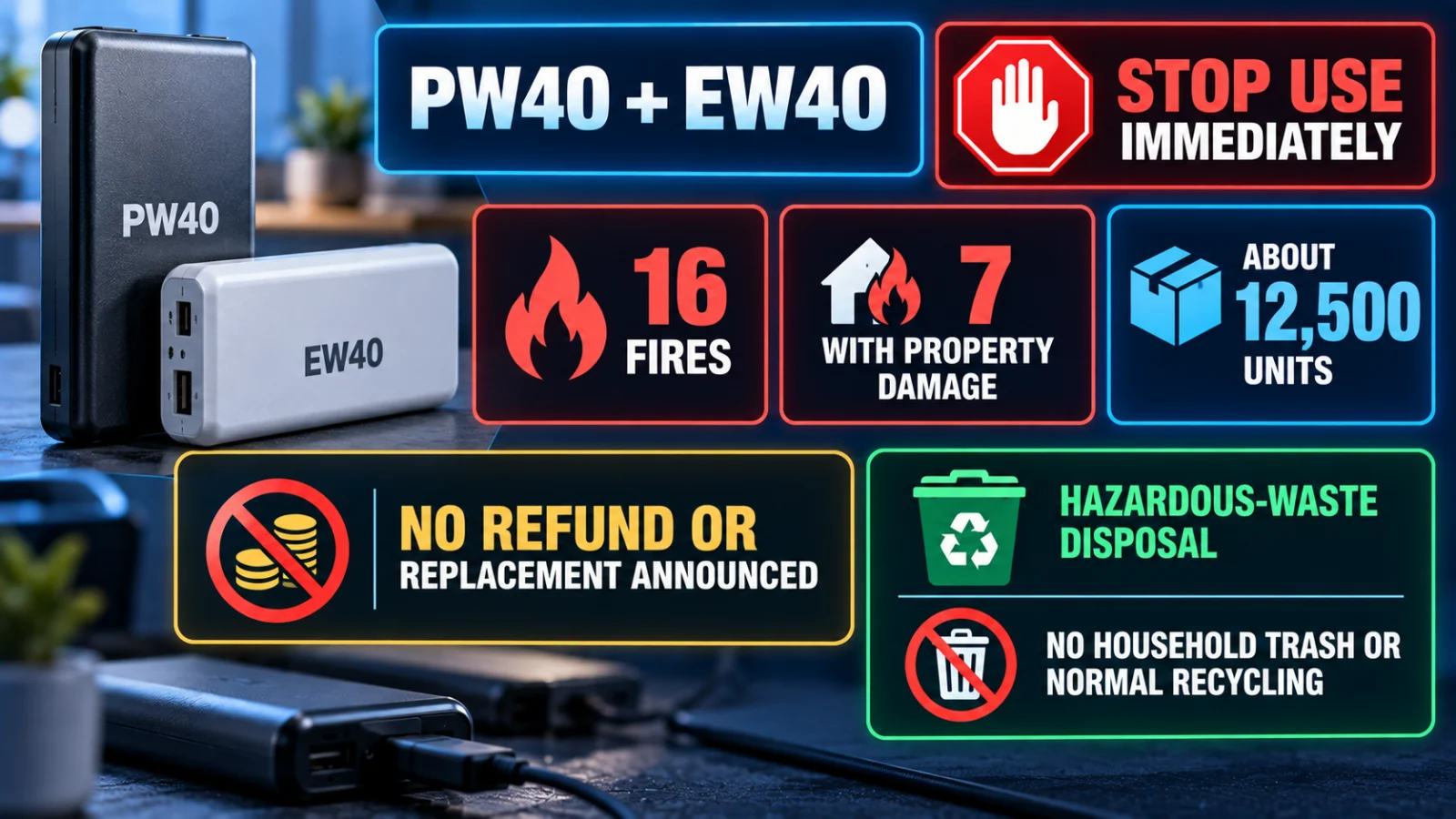
CPSC reports 16 fires involving the products, including seven incidents with property damage. The agency says about 12,500 units are affected.
Stop using the unit. Do not charge it, use it as a jump starter or continue using its power-bank functions while waiting for a possible future remedy.
CPSC says the affected lithium-ion products should not go into household garbage, curbside recycling, ordinary recycling streams or typical used-battery collection boxes.
Check whether your local household hazardous-waste collection facility accepts defective or recalled lithium-ion products before transporting the unit.
Contact your municipality or local waste authority for instructions on safe disposal of a defective lithium-ion device.
Which Hererod models are affected?
The current CPSC warning identifies two models: PW40 and EW40. TPS found no evidence in the reviewed warning that other Hererod models are covered by this specific action.
The products combine a vehicle jump starter with power-bank functions. CPSC says the PW40 also includes a tire-inflation function, while the EW40 does not.
How to identify the PW40
CPSC says the model number PW40 is printed on the front of that product. The PW40 also has tire-inflation capability, which can help distinguish it from the EW40.
If your unit clearly shows PW40, it falls within the current warning.
How to identify the EW40
The EW40 is harder to verify because CPSC says the product does not display its model number. The EW40 does not include the tire-inflation capability found on the PW40.
If you purchased a Hererod jump starter or power bank and cannot find a model number, check your purchase history, product photographs and other identifying details against the CPSC warning. TPS is not assigning an invented label location or serial-number range because the reviewed CPSC material does not provide one.
Where were the affected products sold?
CPSC says the Hererod units were sold online through Amazon.com, CarKart.com and eBay.com from approximately August 2024 through August 2026.
That purchase window can help owners who no longer have the original packaging identify whether a device may be one of the affected units.
What is the fire risk?
CPSC says the internal lithium-ion batteries can explode and ignite. The agency reports 16 fires, seven of which involved property damage.
The warning describes the hazard as capable of causing serious injury or death from fire. The current CPSC notice does not provide a reported injury count for these Hererod products, so TPS is not stating that injuries have occurred.
This is a warning, not a normal cooperative recall
The current CPSC action is a Product Safety Warning. It should not be described as a conventional cooperative recall with a manufacturer-provided refund, replacement or repair.
CPSC says the Chinese manufacturer, Qianjiang Simiaole Network Technology Co., Ltd., was unresponsive to the agency’s requests for a recall or information about the products.
That means owners should not keep using the device while waiting for a refund that has not been announced. The immediate CPSC instruction is to stop use and follow appropriate disposal procedures.
Is there a refund or replacement?
No refund, replacement or repair remedy is described in the current CPSC warning. That status could change if the manufacturer later cooperates, a formal recall is announced or a marketplace creates its own customer remedy.
TPS will treat any such development as an update to this same canonical article rather than creating another page for the same owner-verification task.
Why normal trash and battery bins are not appropriate
CPSC specifically warns consumers not to place the affected lithium-ion products in household trash, ordinary recycling, curbside recycling or typical battery-recycling collection boxes.
Defective lithium-ion batteries require special handling because damaged or unstable cells can create a fire risk during collection, transport or waste processing.
What to do if your local facility refuses the device
Call the hazardous-waste collection facility before taking the product there. If the facility does not accept defective lithium-ion devices, contact your municipality or local waste-management authority for instructions.
Do not improvise another disposal method simply because a local collection site cannot accept the unit.
Why TPS is using the 12,500-unit figure
The dedicated CPSC warning for Hererod states that about 12,500 units are affected. A separate syndicated CPSC roundup surfaced a conflicting 5,451-unit figure in association with the warning.
TPS is using the figure from the dedicated product-specific CPSC warning because it is the controlling primary page for this safety action.
What owners should monitor next
The current state can change if CPSC announces a formal recall, the manufacturer begins cooperating, a refund or replacement program appears, additional models are added or the incident count is revised.
Marketplace action from Amazon, eBay or other sellers could also create a new buyer-notification or remedy path. Until that happens, the evidence-backed current action remains: stop using affected PW40 and EW40 units and follow local hazardous-waste guidance for disposal.