






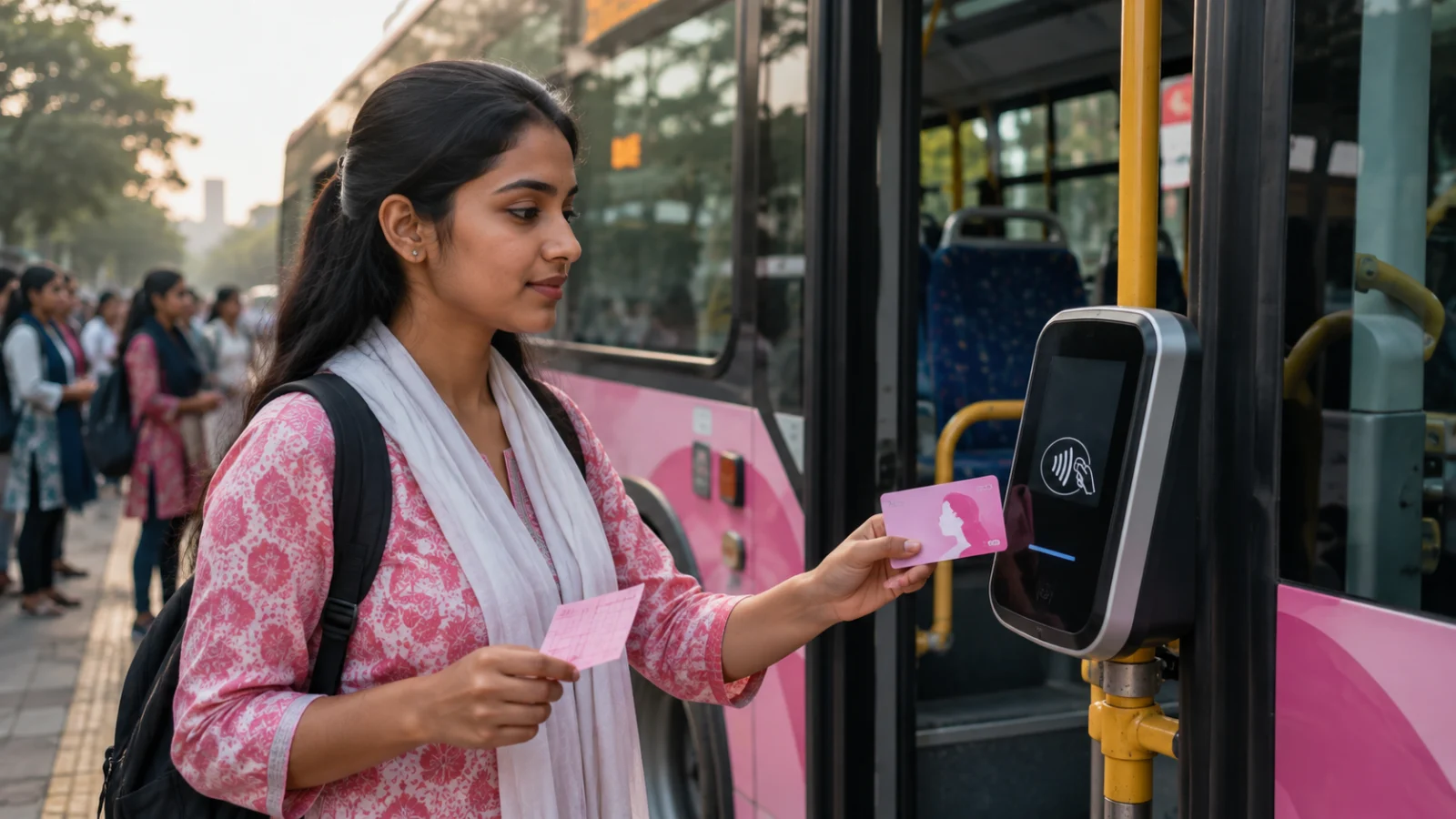
Eligible women in Delhi can continue using paper Pink Tickets for free travel on DTC and Cluster buses through September 30, 2026. The Pink Saheli Smart Card is now due to become mandatory for the covered free-travel benefit from October 1.
A September 17 government order extended the paper-ticket arrangement beyond the earlier September 17 cutoff. Current reporting quoting that order says free travel from October 1 will require tapping a valid Pink Saheli Smart Card; women without a valid card will have to buy a regular ticket and pay the applicable fare.
The direct answer
If you do not yet have a usable Pink Saheli Smart Card, the paper Pink Ticket free-travel arrangement remains available through September 30.
From October 1, current reporting on the government order says eligible women will need to tap a valid Pink Saheli Smart Card to receive the covered free-bus benefit. If you still need a card, use the extension period to complete registration or collection through a currently operating authorised facility.
The transition has been extended again. Paper Pink Tickets continue through September 30, and the Pink Saheli Smart Card is now due to become mandatory for the covered free-travel benefit from October 1.
In this guide
- What applies now?
- How long are paper Pink Tickets valid?
- What if you still do not have a card?
- Pending, lost, damaged or failed cards
- Which buses are covered?
- Where to get the card
- Can registration continue after September 30?
- Does NCMC mean free Metro travel?
- How to complain
- Frequently asked questions
What is the Pink Saheli rule right now?
Women eligible for Delhi’s free-bus travel benefit can continue using paper-based Pink Tickets through September 30, 2026.
Current reporting quoting the September 17 order says the Pink Saheli Smart Card becomes mandatory for the covered benefit from October 1, 2026. From that date, free travel is to be permitted after tapping a valid Pink Saheli Smart Card.
| Situation | Current position | What to do |
|---|---|---|
| Eligible woman travelling through September 30 | The paper Pink Ticket arrangement remains available for the covered free-bus benefit. | Continue using the applicable free-travel arrangement while preparing the Pink Saheli Smart Card. |
| No Pink Saheli Smart Card yet | The mandatory-card transition is now due from October 1. | Use the extension period to register for or collect the card through a currently operating authorised facility. |
| Application still pending | The paper-ticket extension provides additional transition time through September 30. | Keep your acknowledgement and check the current card-registration or collection route. |
| Card lost, damaged or not working | Paper Pink Tickets remain relevant through September 30, but individual replacement or failure handling can be case-specific. | Preserve card, application and journey evidence and seek current DTC instructions. |
| Travel from October 1 onward | Current reporting on the government order says a valid Pink Saheli Smart Card is required for the covered free-travel benefit. | Carry and tap a valid card unless a later controlling instruction changes the transition. |
Are paper Pink Tickets still valid?
Yes. The paper-based Pink Ticket arrangement has been extended through September 30, 2026.
The extension gives eligible women additional time to obtain the Pink Saheli Smart Card while continuing to use the existing free-travel arrangement on covered DTC and Cluster bus services.
What if you still do not have the Pink Saheli Smart Card?
If you have not yet obtained a usable card, you can continue using the paper Pink Ticket arrangement through September 30 for the covered free-bus benefit.
Keep your application or registration acknowledgement and confirm the currently operating registration or distribution location before travelling to a centre.
Current reporting says registration and card issuance will continue after September 30 through designated facilities, so September 30 should not be described as a permanent registration-closure date.
What about pending, lost, damaged or failed cards?
The extension provides additional protection for eligible passengers who do not yet have a usable card because paper Pink Tickets continue through September 30.
It does not establish one universal published procedure for every individual card problem, including:
- application pending;
- approved card not yet collected;
- lost card;
- damaged card;
- inactive card;
- tap failure;
- replacement card still processing; or
- incorrect card details.
For these cases, preserve your application acknowledgement, card details and relevant journey or fare evidence, and seek current DTC instructions through an authorised contact or distribution route.
Which buses does the Pink Saheli free-travel transition cover?
The transition concerns the women’s free-travel arrangement on Delhi Transport Corporation buses and Cluster buses.
The Pink Saheli card’s NCMC capability does not itself create a free-fare entitlement on Delhi Metro, RRTS, interstate buses or every other transport network.
Where can you obtain a Pink Saheli Smart Card?
Current sources agree that card registration and issuance continue through designated facilities, but the exact active-centre count is not fully reconciled in the evidence reviewed.
September 6 reporting said issuance had narrowed to 38 designated DTC centres after DM and SDM office-based centres stopped issuing cards. Reporting on the September 17 extension refers to authorised or designated centres and some reports cite 50 centres. Because a directly updated official centre list was not retrieved, confirm the active location before travelling.
Can Pink Saheli registration continue after September 30?
Yes, according to current reporting. September 30 is the current end date for the extended paper Pink Ticket arrangement, not a proven permanent registration deadline.
Women who have not yet registered are reported to retain access to registration and card issuance through designated facilities after September 30. The practical reason to obtain a valid card before October 1 is to avoid interruption to the free-bus benefit once card use becomes mandatory.
Does NCMC compatibility make Metro or RRTS travel free?
No. NCMC describes payment and mobility-card interoperability. It does not by itself determine whether a journey is free.
The free-travel benefit discussed here concerns eligible women on the covered DTC and Cluster bus services.
What should you record if the card or free-travel process fails?
Keep details that identify the problem, such as the bus or fleet number, route, boarding stop, date and time, direction of travel, ticket or fare receipt, application acknowledgement, card number and tap-error details.
Use DTC’s current directory for complaint and contact information rather than relying on an old copied phone number or email address.
Check the current DTC directory and complaint contacts.
Pink Saheli Smart Card: frequently asked questions
Is the Pink Saheli Smart Card mandatory from September 18?
No. The paper Pink Ticket arrangement has been extended through September 30, with mandatory Pink Saheli Smart Card use currently due from October 1.
Can eligible women still use paper Pink Tickets now?
Yes. Eligible women can continue using paper Pink Tickets for the covered free-bus benefit through September 30, 2026.
What happens from October 1?
Current reporting on the September 17 order says free travel will be permitted only after tapping a valid Pink Saheli Smart Card. Women without a valid card will need to buy a regular ticket and pay the applicable fare.
Where can I get a Pink Saheli Smart Card?
Registration and issuance continue through designated facilities. Confirm the currently active location before travelling because recent sources do not fully agree on the number of operating centres.
What if my Pink Saheli card application is still pending?
The extension gives eligible passengers additional transition time through September 30. Keep your acknowledgement and check the current authorised registration or card-issuance route.
What if my card does not tap?
Preserve the card and journey details and report the failure through an authorised DTC route. Through September 30, the paper Pink Ticket arrangement remains available for eligible women under the current extension.
Is September 30 the permanent last date to apply for a card?
No permanent registration cutoff on September 30 is established. Current reporting says registration and issuance can continue afterward.
Does the scheme cover DTC and Cluster buses?
Yes. The free-travel transition concerns DTC and Cluster buses.
Does the Pink Saheli NCMC card make Delhi Metro free?
No. NCMC compatibility does not itself create free Metro or RRTS travel.
Sources
- Delhi Transport Corporation official website
- India Today — September 17 order extending paper Pink Tickets through September 30
- ETInfra/PTI — September 17 extension and October 1 card requirement
- New Delhi Times — current September 30 extension
- Hindustan — September 17 extension report
- DTC directory and complaint contacts
Verification and current limitation
Current state: multiple current reports quoting the September 17 government order say paper Pink Tickets remain available through September 30 and Pink Saheli Smart Card use for the covered free-travel benefit becomes mandatory from October 1.
Official-site check: DTC’s public site was rechecked, but the latest September 17 extension order was not directly retrievable there during this review.
Distribution-centre limitation: recent sources do not fully agree on the active centre count. September 6 reporting cited 38 DTC centres, while some September 17 reporting cites 50 authorised centres. Confirm the active location before travelling.
Still unresolved: individual pending, replacement, lost, damaged and tap-failure procedures remain case-specific and should be confirmed through DTC where consequential.
Last verified: September 18, 2026.