




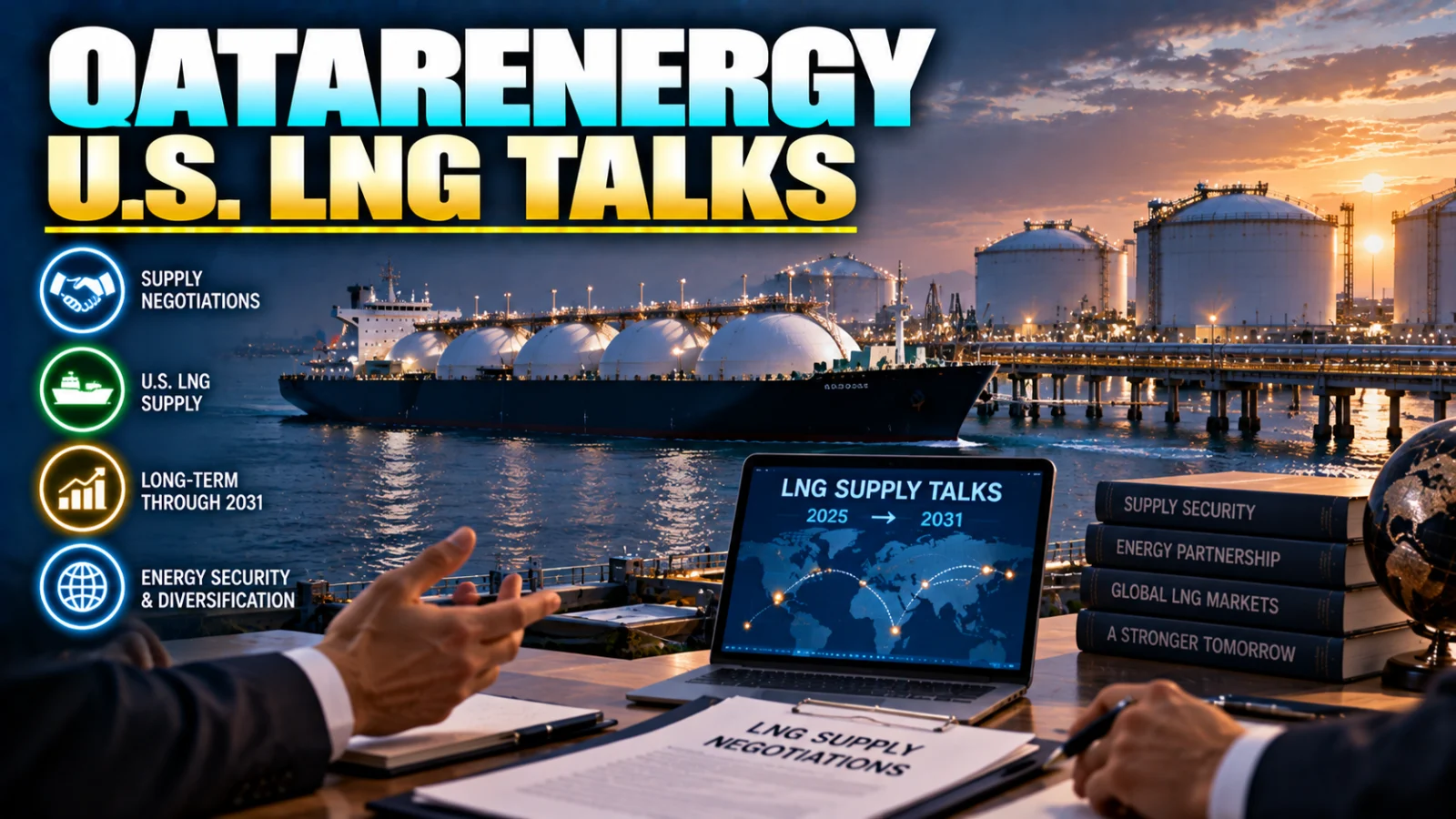
QatarEnergy U.S. LNG deals are currently a reported negotiation, not a confirmed signed-contract state. Reuters reported that QatarEnergy is seeking multi-year U.S. LNG supply through 2031 and that discussions have involved Venture Global, Cheniere and Woodside. The reviewed evidence does not show that QatarEnergy or any named counterparty has publicly announced a signed agreement.
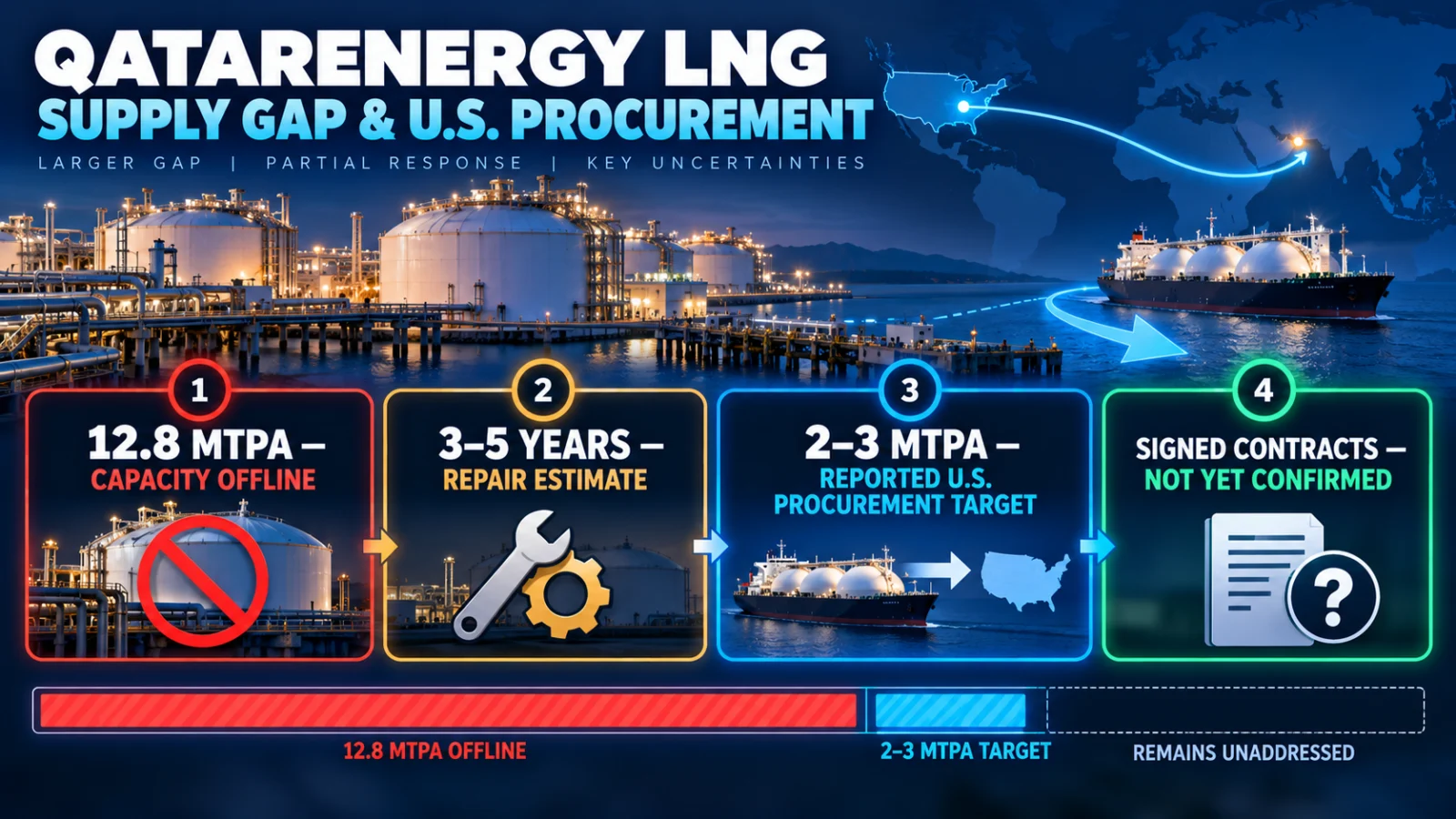
The reported talks fit a longer supply problem that QatarEnergy has already acknowledged publicly. Qatar’s official news agency, carrying statements from QatarEnergy chief executive and energy minister Saad Al-Kaabi, reported that attacks on Ras Laffan took about 12.8 million tonnes per annum of LNG production capacity offline and that repairs could take three to five years.
What is confirmed and what is still reported
Confirmed: QatarEnergy has a multi-year production shortfall. The company said about 12.8 mtpa of LNG capacity was disrupted and that the affected facilities could take three to five years to repair.
Reported: Reuters says QatarEnergy is negotiating U.S. LNG supply through 2031, with Venture Global, Cheniere and Woodside among the companies involved in discussions. One Reuters source said QatarEnergy Trading is seeking roughly 2–3 mtpa.
Not confirmed: TPS found no reviewed primary announcement establishing that a contract has been signed, which supplier has secured final volumes, what the pricing formula is, when deliveries would begin or where those cargoes would ultimately be delivered.
Why would a major LNG exporter buy U.S. LNG?
QatarEnergy is not only a producer. Its trading and portfolio activities allow it to source cargoes from outside Qatar when necessary to meet customer and commercial obligations. When part of Qatar’s own production is unavailable for years rather than days, third-party supply can become part of the portfolio response.
That does not mean Qatar has stopped being a major LNG exporter. It means QatarEnergy may need additional molecules from outside its own production system while damaged capacity remains unavailable.
The scale matters: 12.8 mtpa lost versus 2–3 mtpa reportedly sought
The numbers should not be treated as equivalent. QatarEnergy’s publicly stated production disruption is about 12.8 mtpa. Reuters’ reported procurement target is about 2–3 mtpa. Even at the upper end, the reported U.S. procurement would cover only part of the disrupted capacity.
That makes the reported negotiations easier to interpret: they look like one element of a broader replacement and portfolio-management strategy, not a complete one-for-one substitute for all damaged Ras Laffan production.
Look for a QatarEnergy or supplier announcement that identifies a signed sale-and-purchase agreement rather than relying on reports of negotiations.
The currently reported 2–3 mtpa figure is a negotiating target, not a publicly confirmed contracted volume.
A through-2031 negotiating horizon does not establish when deliveries begin or whether every contract would run for the same period.
Third-party LNG purchases can help QatarEnergy meet portfolio commitments without replacing damaged Qatar production capacity itself.
Which U.S. suppliers are reportedly involved?
Reuters reported that the discussions include Venture Global, Cheniere and Woodside. Those names should remain attributed to the Reuters sourcing rather than presented as awarded suppliers. In the reviewed reporting, QatarEnergy did not publicly confirm the negotiations; Venture Global and Cheniere declined comment, while Woodside said it does not comment on market speculation.
What could this mean for Asian LNG buyers?
QatarEnergy has already said the production disruption affects long-term customers, including buyers in Asia and Europe. If multi-year U.S. supply agreements are eventually signed, they could help QatarEnergy cover part of the gap while damaged Qatari capacity is restored.
That does not establish which buyers would receive U.S.-origin cargoes, whether specific contractual obligations would be reallocated, or how individual Asian import prices would change. Those details remain unresolved.
What this means for India
India is exposed to global LNG availability and pricing through its import requirements, so a sustained Qatar supply shortfall and additional U.S. procurement can matter to the wider market. However, the reviewed evidence does not establish a specific QatarEnergy U.S. LNG arrangement for Indian buyers or a quantified India-specific price effect.
What happens next
The strongest next evidence would be a direct QatarEnergy statement or a counterparty announcement confirming a sale-and-purchase agreement, contracted annual volume, start date and duration. U.S. regulatory disclosures could also provide contract details. Separately, any change in QatarEnergy’s Ras Laffan repair timeline or force-majeure position could change how much replacement LNG it needs.
TPS should update this same canonical if the current reported talks become directly confirmed, a supplier signs an agreement, volumes or delivery dates are disclosed, first deliveries begin, or the procurement strategy materially changes. Stronger evidence for the same reader job should not create a second URL.
Verification note
TPS checked QatarEnergy-related primary statements carried by Qatar’s official news agency for the production-loss and repair timeline, then compared those facts with Reuters reporting on the September U.S. LNG negotiations and named counterparties. The production shortfall is primary-supported; the U.S. negotiations and 2–3 mtpa target remain reported rather than company-confirmed.