




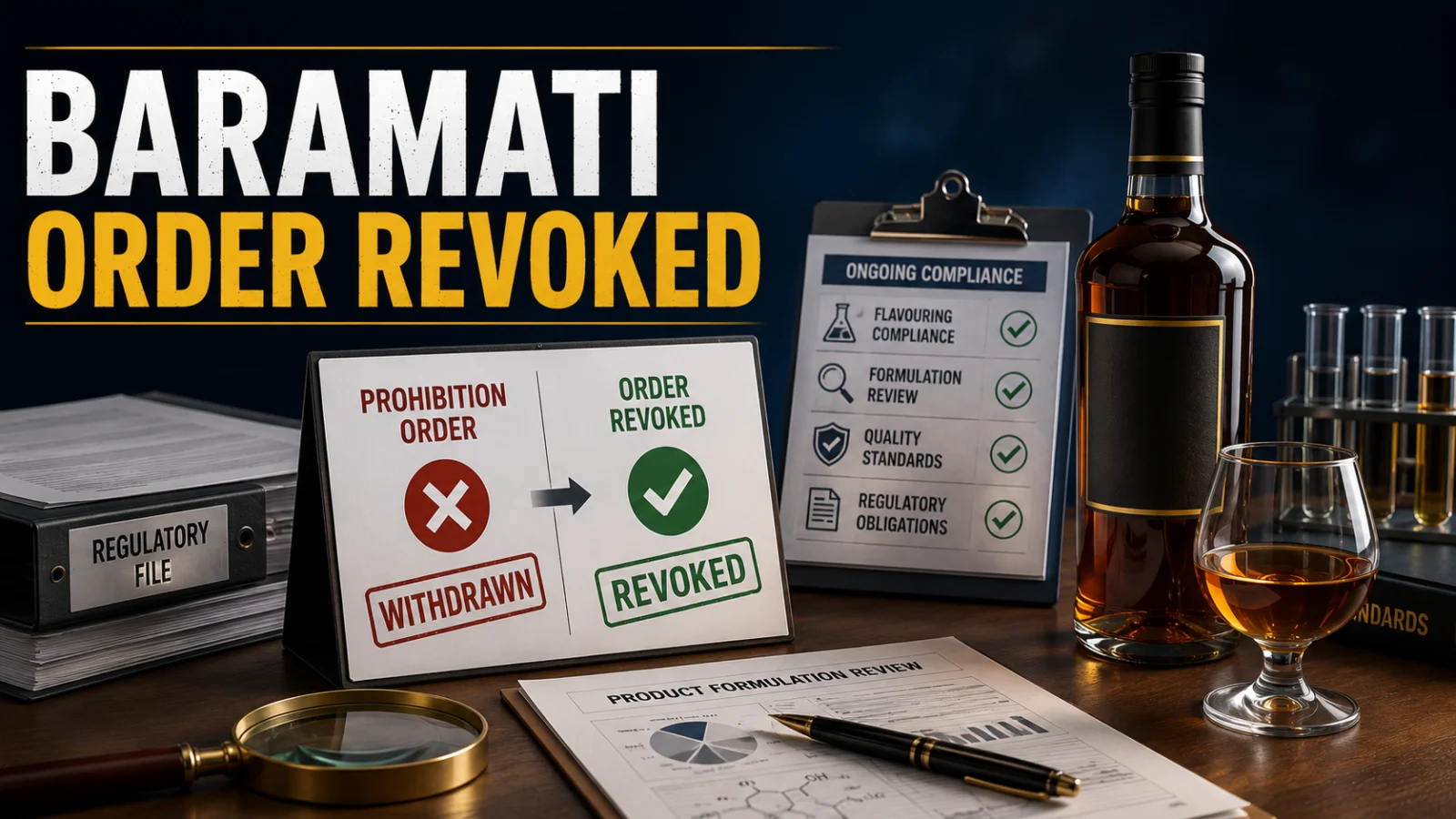
The June 29 FSSAI prohibition concerning McDowell’s No.1 Celebration Matured XXX Rum manufactured at United Spirits’ Baramati unit has been revoked. United Spirits says FSSAI issued the revocation order on August 17, 2026 and that the company received it on August 18.
This means the Baramati-made product should not currently be described as prohibited under that June 29 order. The revocation is product- and order-specific, however: it does not automatically cancel separate FSSAI actions involving other alcoholic-beverage products, plants or manufacturers.
Direct answer
Is McDowell’s No.1 Rum still banned?
The specific June 29 FSSAI order concerning McDowell’s No.1 Celebration Matured XXX Rum from United Spirits’ Baramati unit has been revoked.
That does not establish that every regulatory question involving McDowell’s, Diageo or other alcohol brands has ended.
Important scope
Was there an all-India consumer recall?
No nationwide consumer recall was established in the evidence reviewed. The case concerned a regulatory prohibition tied to flavouring/composition compliance, not a confirmed poisoning or contamination event.
Current status
- United Spirits says FSSAI revoked the June 29 Baramati product order.
- The affected product is McDowell’s No.1 Celebration Matured XXX Rum.
- The revocation order is dated August 17, 2026.
- United Spirits says it received the order on August 18.
Underlying regulatory issue
- FSSAI objected to added flavouring that mimicked the inherent flavour of rum or whisky.
- The regulator said the concern was not a blanket ban on every permitted flavouring substance.
- The dispute centred on product standards, flavouring and labelling/composition compliance.
Manufacturer response
- United Spirits challenged the June 29 order before Bombay High Court.
- Diageo has separately agreed to reformulate affected whisky and rum products.
- The reformulation is intended to align affected products with FSSAI’s flavouring requirements.
Still unresolved
- The precise procedural disposal of the Bombay High Court petition after revocation.
- The timetable for reformulated stock to reach individual markets.
- Retail availability in specific states or shops.
- The status of separate FSSAI orders involving other products or manufacturers.
What this McDowell’s No.1 Rum guide answers
- Is McDowell’s No.1 Rum still banned?
- What exactly did FSSAI revoke?
- Can the rum be sold again?
- Why did FSSAI act?
- Why is Diageo reformulating products?
- Was this a safety or poisoning case?
- Was there a nationwide recall?
- What happened to the court challenge?
- What remains separate?
- Verification
- Limitations
- FAQs
Is McDowell’s No.1 Rum still banned in India?
The June 29 FSSAI prohibition concerning McDowell’s No.1 Celebration Matured XXX Rum manufactured at United Spirits’ Baramati unit is no longer active.
United Spirits disclosed that FSSAI issued a revocation order dated August 17, 2026. The company said it received the order on August 18.
Current answer: the Baramati product is no longer prohibited under the June 29 order that United Spirits challenged. This should not be expanded into a claim that every FSSAI alcohol action has been withdrawn.
What exactly did FSSAI revoke?
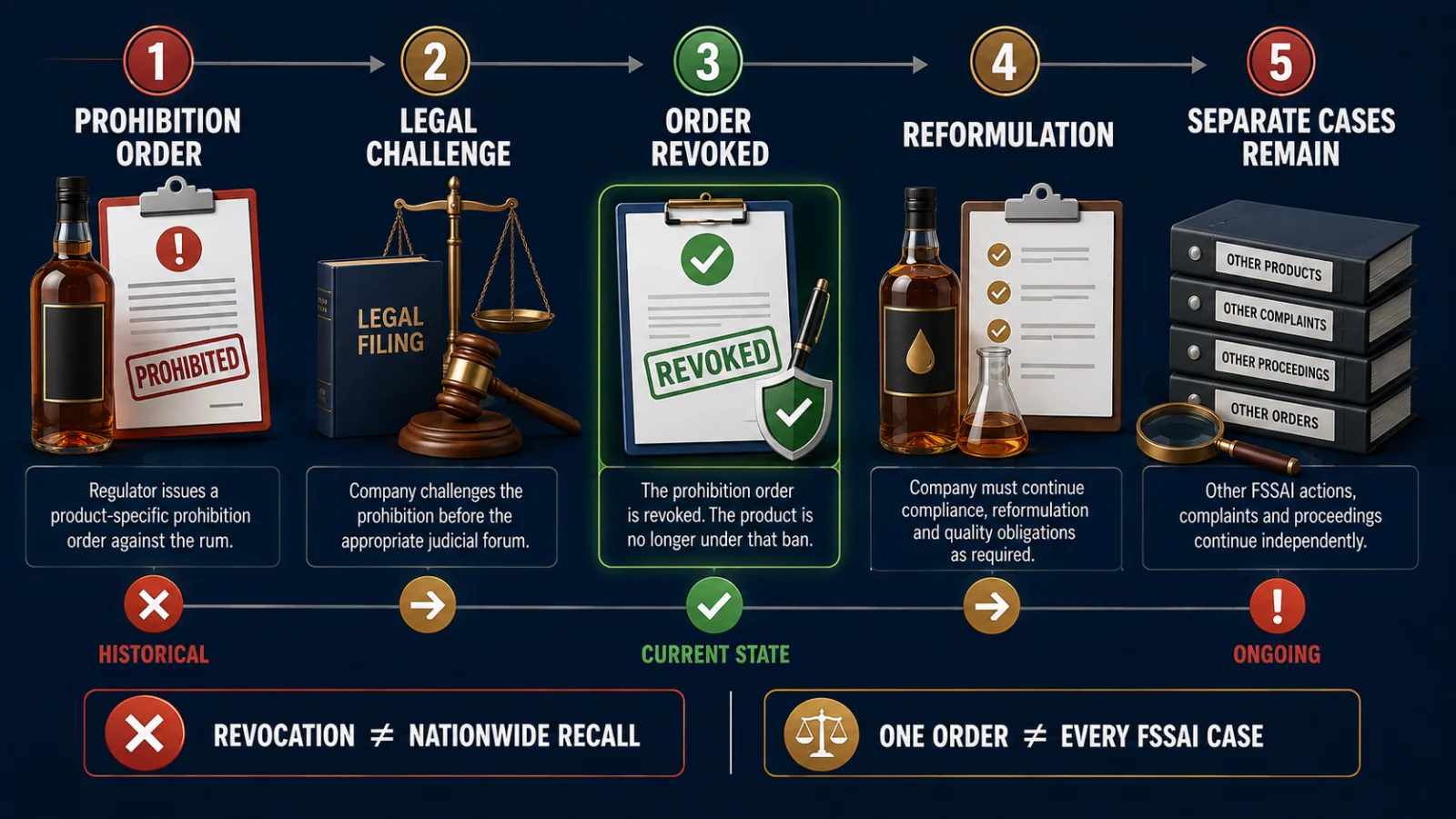
The disclosed revocation concerns the FSSAI order dated June 29, 2026 relating to the sale of McDowell’s No.1 Celebration Matured XXX Rum manufactured at United Spirits’ Baramati facility in Maharashtra.
| Date | What happened |
|---|---|
| June 29, 2026 | FSSAI issued the prohibition order concerning the Baramati product. |
| August 1 | United Spirits filed a Bombay High Court challenge. |
| August 17 | FSSAI issued the revocation order concerning the June 29 Baramati order. |
| August 18 | United Spirits says it received the revocation order. |
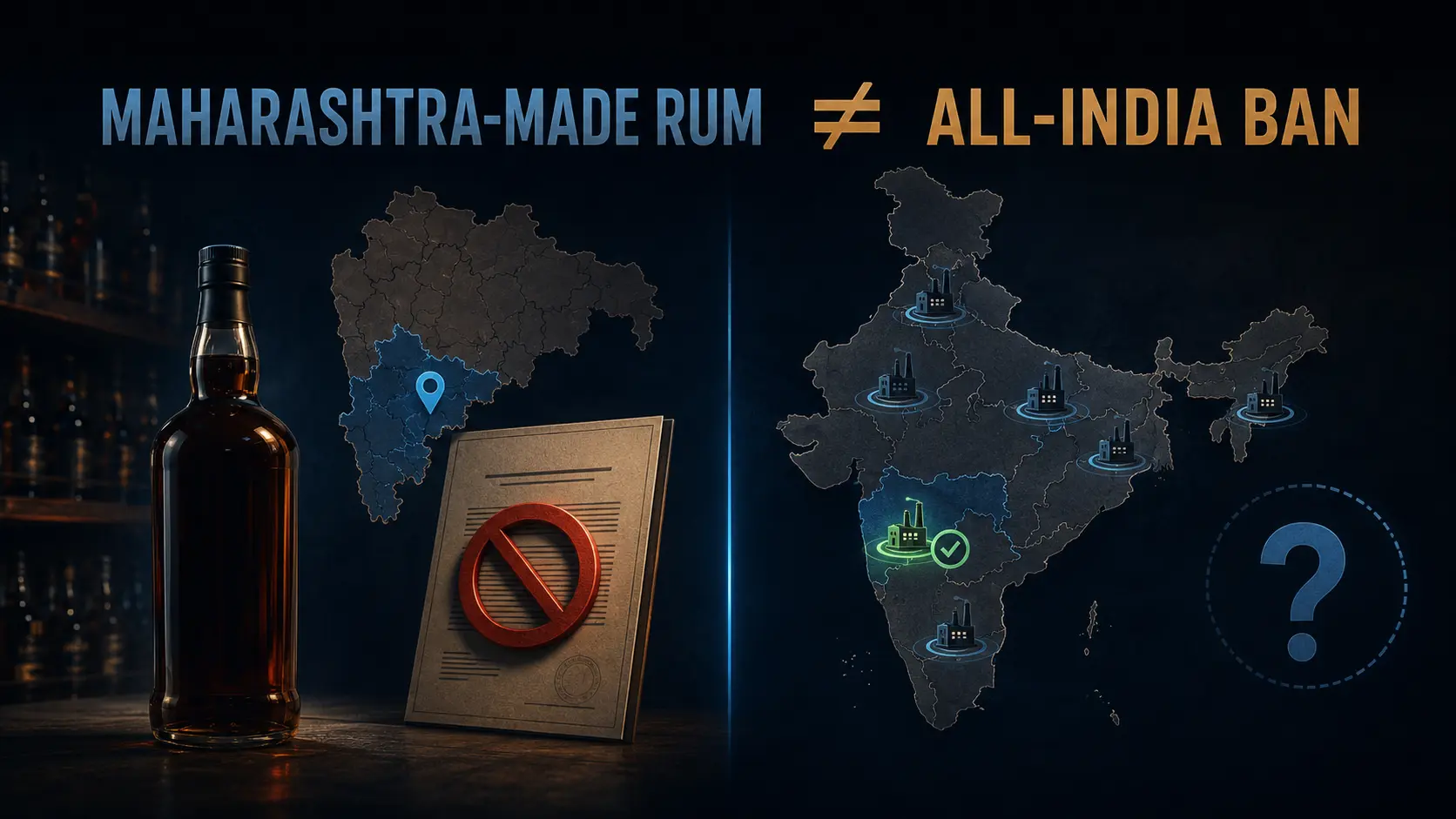
Scope matters. The disclosed revocation concerns the Baramati McDowell’s product/order. Separate FSSAI orders involving other plants, products or manufacturers need their own evidence.
Can McDowell’s No.1 Rum now be sold again?
The revocation removes the June 29 FSSAI prohibition affecting the Baramati product at issue.
That does not guarantee immediate availability at every retail outlet. Actual availability can still depend on:
- state excise registrations and permissions;
- production and dispatch schedules;
- existing distributor and retailer inventory;
- transition to reformulated stock;
- label or compliance changes; and
- commercial distribution decisions.
If a particular shop does not stock the rum, that absence should not automatically be attributed to the revoked June 29 Baramati order.
Why did FSSAI act against McDowell’s No.1 Rum?
The dispute concerned the use of externally added flavouring substances that mimic the characteristic sensory profile of a standardised alcoholic beverage.
FSSAI explained that the characteristic flavour of rum or whisky is expected to arise from ingredients and recognised production processes such as fermentation, distillation and maturation. The regulator objected to adding a flavour that directly mimics the defining character of the same beverage — for example, adding rum flavour to rum.
FSSAI also clarified that this is not a blanket prohibition on every permitted flavouring substance in alcoholic beverages.
Why is Diageo reformulating McDowell’s Rum and other products?
Diageo has agreed to reformulate affected whisky and rum products following engagement with FSSAI over the flavouring issue.
Reports identify McDowell’s No.1 Celebration Matured XXX Rum among the affected products. The reformulation is intended to remove the disputed identical flavour additives and align future production with the regulator’s requirements.
Revocation and reformulation can coexist. FSSAI can revoke a particular prohibition order while the manufacturer separately changes the formulation to comply with the regulator’s position going forward.
Does the FSSAI action mean McDowell’s No.1 Rum was unsafe or poisonous?
The reviewed evidence does not establish that conclusion.
The regulatory dispute concerned flavouring, composition, labelling and compliance standards. It should not automatically be described as evidence that the product was poisonous, contaminated or responsible for a consumer-health incident.
A product-standard violation and a proven food-safety emergency are different regulatory states.
For the distinction between different enforcement actions, see ThePulseSignal’s FSSAI ban vs recall guide.
Was McDowell’s No.1 Rum recalled nationwide?
No nationwide consumer recall directing customers across India to return McDowell’s No.1 Rum bottles was established in the evidence reviewed.
A prohibition affecting a specified product/manufacturing context is not automatically the same as a formal recall involving consumer return, refund or disposal instructions.
What happened to United Spirits’ Bombay High Court challenge?
United Spirits filed a writ petition on August 1 challenging the June 29 FSSAI order.
The company’s arguments included objections to the regulator’s interpretation and the process used to issue the prohibition. Those were legal arguments advanced by the company, not findings that should be attributed to the court.
FSSAI subsequently revoked the June 29 order on August 17.
Revocation is not the same as a final court judgment striking down FSSAI’s rules. The precise procedural disposal of the United Spirits petition after the regulator’s revocation remains a matter for the court record or a later company disclosure.
Which other FSSAI alcohol cases remain separate?
Recent FSSAI alcohol enforcement has involved several products and manufacturers. They should not be treated as one combined case.
Verification notes
FSSAI’s published clarification supports the broader regulatory position on flavouring substances that mimic the defining sensory character of rum or whisky. United Spirits’ regulatory disclosure, as reported by current business-news sources, establishes the company’s statement that the June 29 Baramati order was revoked on August 17 and received on August 18.
Current reporting also supports Diageo’s agreement to reformulate affected whisky and rum products.
No later evidence identified in the September 7 source check reinstates the June 29 Baramati prohibition or establishes a materially different product-specific status.
Sources checked
Limitations and unresolved facts
- The complete signed August 17 revocation order was not independently recovered from an FSSAI public repository during this source check.
- The product-specific revocation is therefore attributed to United Spirits’ regulatory disclosure as reported by current business-news sources.
- The exact procedural disposal of the Bombay High Court petition after revocation remains unresolved.
- The revocation should not be automatically extended to separate FSSAI orders involving other products, plants or manufacturers.
- The timetable for reformulated McDowell’s stock to reach all production and retail channels is not established.
- Retail availability at individual stores or in individual states was not measured.
- No nationwide consumer recall or poisoning finding was established.
McDowell’s No.1 Rum: frequently asked questions
Is McDowell’s No.1 Rum still banned in India?
The June 29 FSSAI order concerning McDowell’s No.1 Celebration Matured XXX Rum manufactured at United Spirits’ Baramati unit has been revoked.
When did FSSAI revoke the Baramati order?
United Spirits says the revocation order is dated August 17, 2026 and was received by the company on August 18.
Can McDowell’s No.1 Rum now be sold again?
The June 29 Baramati prohibition has been revoked. Actual availability can still depend on production, distribution, state excise requirements, inventory and reformulation.
Why did FSSAI act against McDowell’s Rum?
The regulator objected to externally added flavouring that mimicked the inherent characteristic flavour of rum.
Is Diageo changing the formula?
Diageo has agreed to reformulate affected whisky and rum products following discussions with FSSAI.
Did Bombay High Court cancel the FSSAI order?
The verified development is FSSAI’s own revocation. A final court judgment striking down the regulator’s rules has not been established by the evidence reviewed.
Was McDowell’s No.1 Rum recalled nationwide?
No nationwide consumer recall with bottle-return instructions was established.
Was the rum found poisonous?
No such conclusion is established. The dispute concerned flavouring, composition, labelling and regulatory compliance.
Does the revocation automatically apply to Old Monk or Royal Challenge?
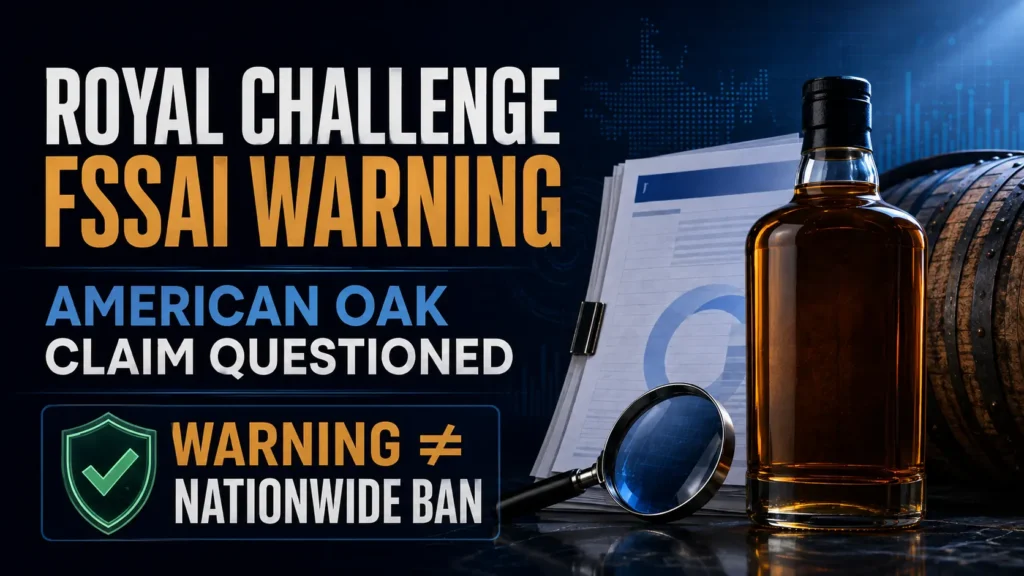
No. Those products and manufacturers have separate regulatory actions and must be checked independently.
Last verified: September 7, 2026.