





Gifting gold tax India questions have two separate stages that should not be confused: first, whether receiving the gold creates taxable income for the recipient; and second, what cost will be used years later if that recipient sells the gold. The answer depends on who gave the gold, why it was given, its value and whether the receipt itself was taxed.
Under the current Income-tax Act, 2025 framework, a lifetime gift of gold from a person who falls within the statutory definition of a relative can fall outside the Section 92 gift charge. Property received on the occasion of an individual’s marriage is also covered by a specific exemption. For a non-exempt gift of covered movable property such as jewellery or bullion, the ₹50,000 aggregate fair-market-value threshold can become important.
1. Identify the donor
First determine whether the donor falls within the statutory definition of a relative. Ordinary family language is not enough; the tax definition controls.
2. Check the occasion
If the gold was received on the occasion of the recipient’s own marriage, a separate statutory exemption can apply even when the donor is not a relative.
3. Test the receipt value
If no exemption applies, determine the relevant fair market value and whether the aggregate statutory threshold is crossed.
4. Preserve the evidence
Keep records showing who gave the gold, when it was received, what was transferred, its relevant value and the donor’s historical acquisition evidence where available.
5. Keep the later-sale branch in mind
An exempt gift and a gift whose value was already taxed under Section 92 can lead to different cost-of-acquisition treatment when the recipient eventually sells the asset.
A gift from a statutory relative can be exempt
Section 92 contains a specific exemption for property received from a relative. That makes the relationship between donor and recipient one of the first facts to establish.
The statutory definition is broader than only parents and children, but it is still a defined list. It includes the individual’s spouse; siblings of the individual; siblings of the spouse; siblings of either parent; lineal ascendants and descendants of the individual or spouse; and spouses of persons covered by the specified relationship categories.
The practical rule is simple: do not write “family gift” in your records and assume that resolves the tax question. Preserve enough information to show the actual relationship if the exemption is being relied upon.
The marriage exception is separate
Property received on the occasion of an individual’s marriage is separately exempt under Section 92. That means a wedding gift from a non-relative is not automatically treated in the same way as an ordinary non-relative gift.
The exception is tied to the individual’s marriage. TPS should not broaden that wording into a general rule that every gift exchanged at any family wedding is automatically exempt for every recipient.
What happens when a non-relative gives gold?
Where no exemption applies, Section 92 covers specified movable property received without consideration. Jewellery and bullion are included within the covered property framework.
For the relevant without-consideration branch, if the aggregate fair market value exceeds ₹50,000, the statutory amount is the whole aggregate fair market value, not merely the portion above ₹50,000.
That makes the ₹50,000 figure a threshold rather than a simple tax-free slab. The result still depends on whether another Section 92 exemption applies.
How is gifted jewellery valued?
The Income-tax Rules, 2026 provide the fair-market-value framework used for Section 92. For jewellery, the rules use open-market value on the valuation date, and the valuation date for a Section 92 receipt is the date on which the property is received.
The notified jewellery rule also provides a registered-valuer route for specified non-purchase receipts above the relevant threshold. That means the tax value of gifted jewellery should not simply be guessed from an old invoice, sentimental value or a jeweller’s informal estimate.
Important limitation: Section 92 also lists bullion as property, but the Rule 57 material reviewed by TPS expressly sets out a Section 92 valuation method for jewellery. TPS did not establish an equivalent bullion-specific row that can safely be applied to every coin or bar. Readers gifting bullion should verify the controlling valuation rule for their exact asset before filing.
The donor’s gift and the recipient’s tax are different questions
For an individual or Hindu Undivided Family, a qualifying transfer of a capital asset by way of gift is generally not treated as a transfer for capital-gains purposes under the current statutory framework.
That donor-side rule does not answer the recipient-side Section 92 question. A transfer can therefore require two separate checks: what happens to the donor when making the gift, and whether the recipient’s receipt is exempt or taxable.
Why the donor’s original purchase records can matter years later
The future cost of acquisition is one of the most important reasons to preserve old documents.
Where the recipient acquires a capital asset by gift and the receipt is in the ordinary gift branch, Section 73 generally carries forward the previous owner’s acquisition cost, subject to the statutory rules applicable to the asset and acquisition history.
This means a parent’s old jewellery invoice, purchase record or other defensible evidence of historical acquisition cost can become relevant years after the jewellery has been gifted.
Do not confuse this with the fair market value measured on the date of gift. The gift-date value may determine receipt-stage taxation, while the later capital-gains cost can follow a different statutory rule.
There is a second cost-basis branch when the gift itself was taxed
Section 73 separately addresses property whose value has already been subjected to tax under Section 92’s property-receipt provision. In that case, the cost of acquisition is the value that was taken into account for Section 92.
This creates a critical two-branch rule:
- Exempt or ordinary gift acquisition: the previous owner’s historical cost generally matters.
- Gift whose value was actually taxed under Section 92: the Section 92 value taken into account becomes relevant as cost under the specific statutory branch.
That is why a reader should preserve both historical donor records and any gift-date valuation or tax records rather than assuming one number will answer every future tax question.
Is the donor’s invoice mandatory for the gift exemption?
TPS did not find a rule in the reviewed Section 92 exemption provisions saying that an original purchase invoice is a universal condition for a relative or marriage exemption.
But that does not make the invoice unimportant. Where future cost of acquisition depends on the previous owner’s cost, the invoice or other acquisition evidence can become valuable proof many years later.
If the gold is old, inherited by the donor, purchased long ago or otherwise lacks a simple invoice trail, preserve whatever lawful acquisition and valuation evidence exists rather than creating a document after the fact.
Do you need a gift deed?
The tax provisions reviewed by TPS do not establish a universal rule that every gold gift must have a notarised gift deed before the Section 92 exemption can apply.
A written gift record is still useful. It can identify the donor, recipient, relationship, date, occasion, description of the item and the fact that the transfer was a gift rather than a sale or loan.
For high-value jewellery or a transaction with legal, succession or family-dispute implications, readers should verify whether separate documentation requirements apply beyond the income-tax rules discussed here.
Documents worth keeping
A practical gold-gift file can include:
- the donor’s original invoice or acquisition record, where available;
- a dated written gift record identifying donor and recipient;
- evidence of the relationship relied upon for a relative exemption;
- evidence of the marriage occasion where that exemption is relevant;
- a clear description of the jewellery or gold transferred;
- weight, purity and hallmark records where available;
- the valuation evidence used for Section 92 where valuation is required;
- any tax-return or assessment record showing that a Section 92 value was actually taxed.
Keeping these records together solves two different future problems: proving why the receipt was exempt or taxable, and establishing the correct acquisition cost when the gold is eventually sold.
Do not merge gifting with inheritance
Lifetime gifting and inheritance are different transfer states. A person who receives gold because someone voluntarily transfers it during life is not answering the same legal and documentation question as a person receiving gold after death.
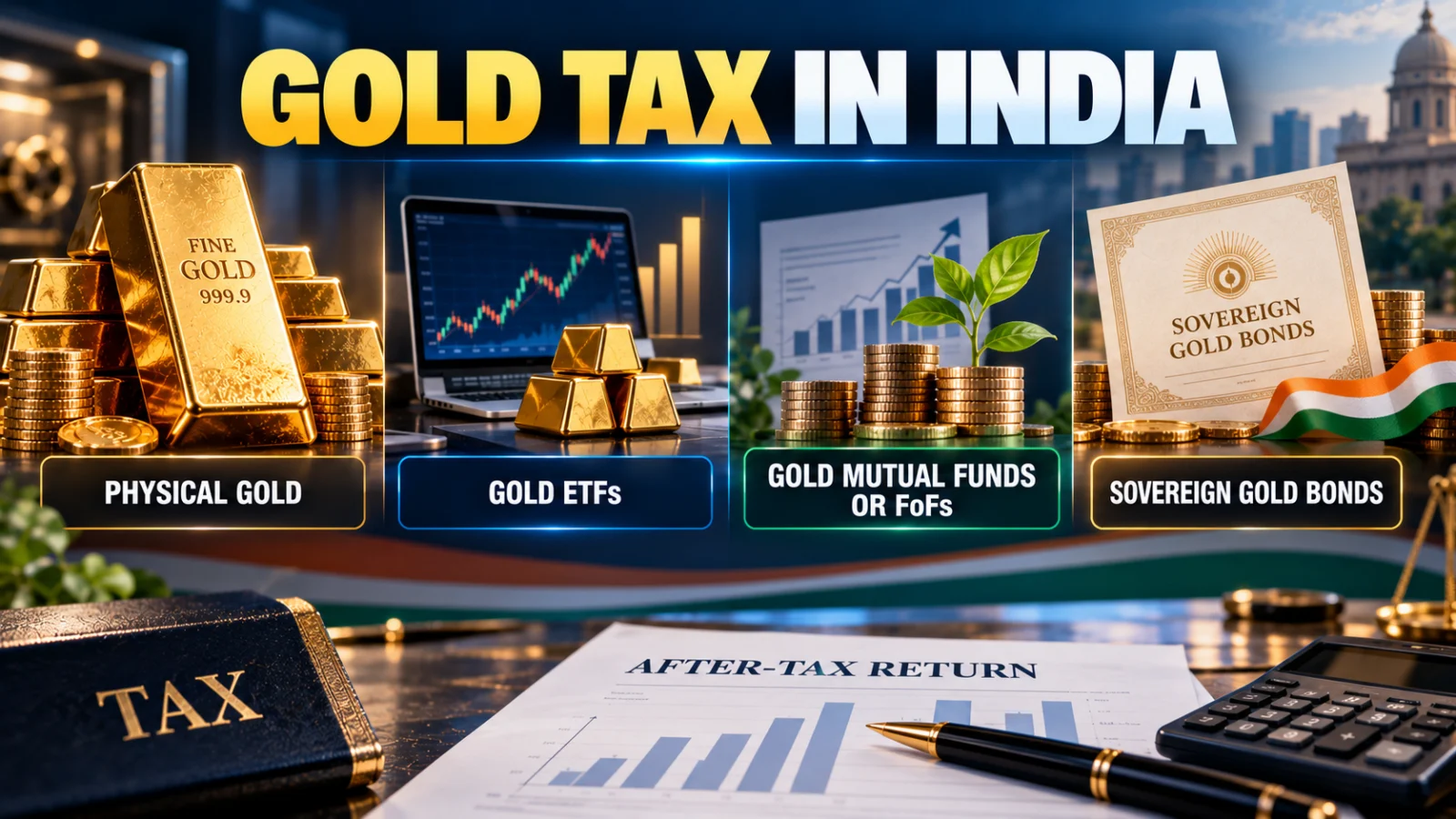
TPS separately explains gold inheritance, wills, nomination and transfer after death in India. General taxation of different gold investment forms is also covered separately in TPS’s gold tax in India guide.
Bottom line
Gifting gold in India is not governed by one universal “gift tax” answer. A gift from a statutory relative or property received on the individual’s marriage can qualify for exemption. A non-exempt receipt can become taxable under Section 92 when the applicable aggregate fair market value exceeds ₹50,000.
The document trail matters beyond the year of the gift. Gift-date fair market value can determine receipt-stage taxation, while the later sale can use either the previous owner’s cost or, where the receipt itself was taxed under Section 92, the value already taken into account under that provision.
For families gifting jewellery, the safest practical approach is therefore to preserve the relationship and occasion evidence, valuation records where required, and the donor’s historical acquisition documents where available.
Verification note
TPS reviewed the current Income-tax Act, 2025 provisions governing property received without or for inadequate consideration and cost of acquisition, together with the notified Income-tax Rules, 2026 jewellery valuation methodology. Current 2026 secondary coverage was used to map recurring reader questions, not to override the statutory text.
Limitations and unresolved facts
The exact tax result depends on relationship, occasion, asset form, value and later disposal facts. TPS did not establish a universal statutory requirement for a notarised gift deed or original donor invoice as a condition of the Section 92 exemption. The reviewed Rule 57 material expressly provides the relevant Section 92 valuation methodology for jewellery, but TPS did not establish an equivalent bullion-specific row that can safely be generalised to every coin or bar. Future law and capital-gains rules can change before the recipient sells the gold.