






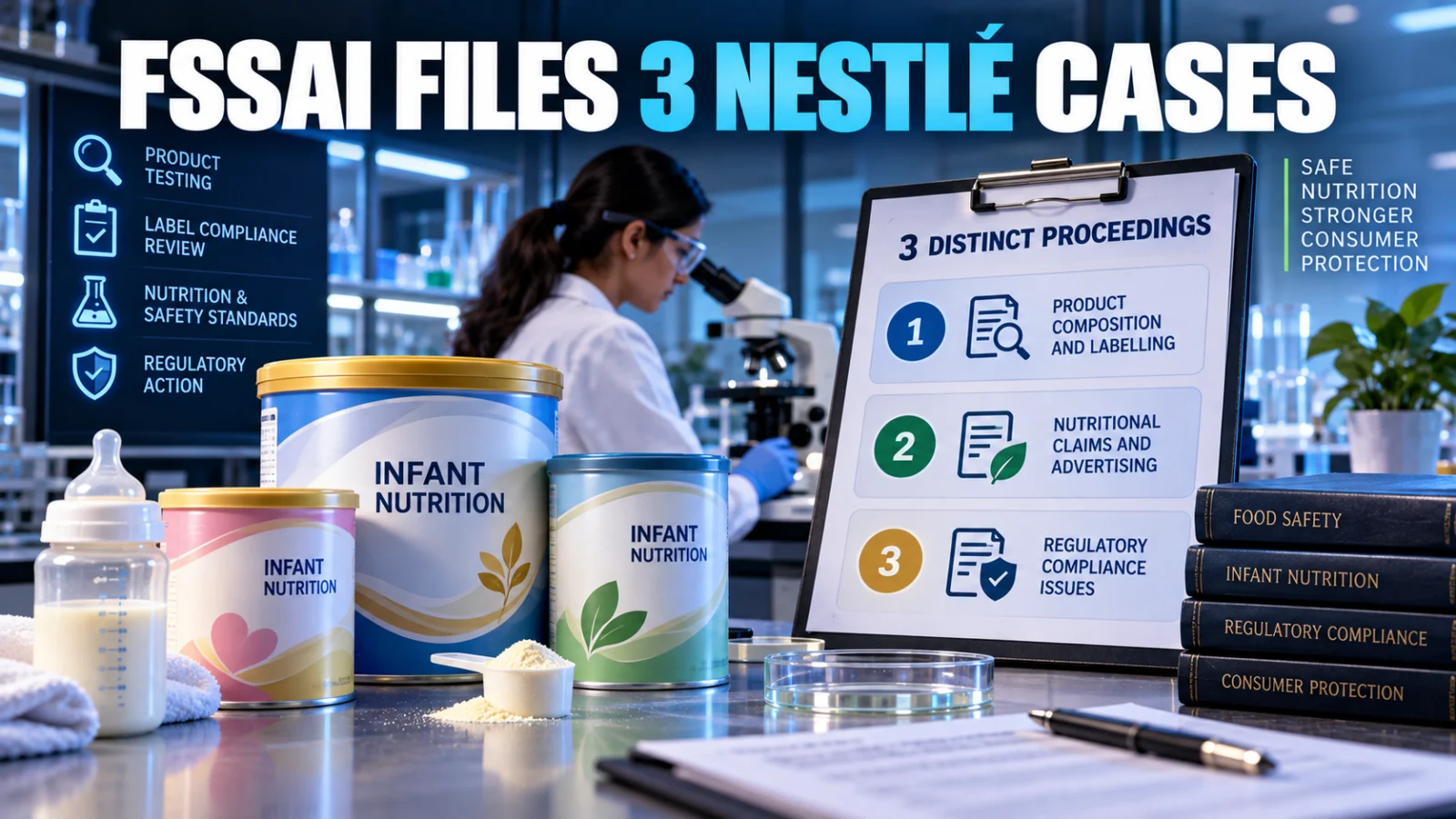
FSSAI Nestle baby food legal action now covers three separate adjudication cases involving Nestlé India infant-nutrition products, but the available evidence does not show a nationwide recall, blanket product ban or final finding that every affected product is unsafe.
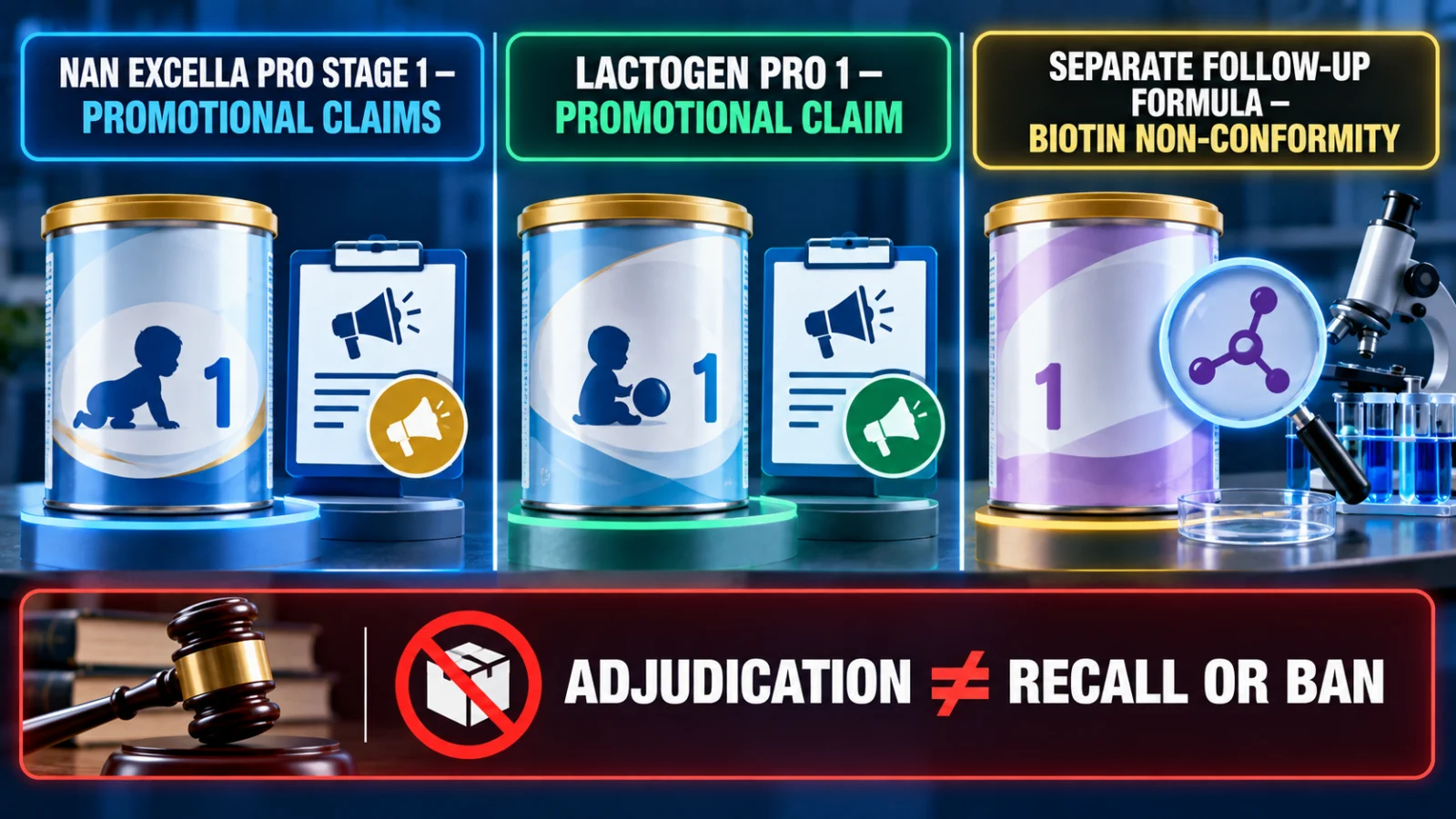
The most important point for consumers is that the three proceedings do not concern the same allegation. Two relate to promotional claims involving named products, while a third concerns a separate follow-up-formula sample that the Food Safety and Standards Authority of India says did not meet the prescribed biotin requirement.
What FSSAI says has happened
FSSAI says three adjudication cases have been filed against Nestlé India. The regulator’s public statement describes two marketing-related cases involving NAN Excella Pro Stage 1 and Lactogen Pro 1, and a separate quality-related case involving a follow-up formula.
For NAN Excella Pro Stage 1, FSSAI flagged promotional references to claims including “5 HMOs” and “Whey Protein”. For Lactogen Pro 1, the regulator cited promotional material describing whey protein as easy to digest. FSSAI linked these proceedings to restrictions governing promotion of infant-nutrition products.
The third case is different. FSSAI says a sample of a Nestlé follow-up formula was found non-conforming for prescribed biotin content in initial testing and was again found non-conforming after referral-laboratory analysis.
NAN Excella Pro Stage 1
Current FSSAI proceeding concerns promotional claims. The reviewed evidence does not establish that this named product was the formula that failed biotin testing.
Lactogen Pro 1
Current FSSAI proceeding concerns a promotional claim about whey protein being easy to digest. The reviewed evidence does not establish a biotin failure for this named product.
Separate follow-up formula
FSSAI says a sample failed the prescribed biotin requirement in both initial and referral testing. The exact SKU and batch were not established in the evidence reviewed by TPS.
Does this mean Nestlé baby food has been banned or recalled?
No such conclusion is supported by the reviewed evidence. Filing an adjudication case is a regulatory enforcement step. It is not, by itself, the same as a product recall, a nationwide prohibition, a final penalty or a final legal finding.
TPS also found no evidence in the reviewed material of a blanket instruction telling parents to stop using all Nestlé infant-nutrition products. Consumers should therefore avoid extending one reported sample finding to every product or batch.
For a broader explanation of how different FSSAI actions differ, see TPS’s existing FSSAI ban vs recall explainer.
What remains unclear
The underlying adjudication notices or complete case documents were not available in the evidence reviewed for this article. That means the exact identity and batch of the follow-up formula, sampling details, case numbers, potential penalties and complete evidentiary record remain unresolved.
TPS also has not treated general Nestlé policy statements as a response to these specific September 18 cases. A case-specific Nestlé response should be added if the company issues one.
What consumers should do now
Readers should check the exact product and batch before drawing conclusions from the enforcement action. In particular, the two named products in the promotional-claim cases should not automatically be described as the formula involved in the biotin-testing case.
If FSSAI later identifies the exact follow-up-formula SKU or batch, issues a recall, imposes a stop-sale direction, publishes an adjudication order or Nestlé announces corrective action, those developments would materially change the consumer answer and should update this same article.
What happens next
The next meaningful evidence could come from publication of the underlying adjudication documents, a formal Nestlé response, identification of the tested follow-up-formula batch, a final adjudication decision, a product-specific corrective measure or court proceedings. Until then, the strongest supported conclusion is narrower: FSSAI says three adjudication cases have been filed, but those cases should not be presented as a recall, nationwide ban or final finding covering all Nestlé infant-nutrition products.