






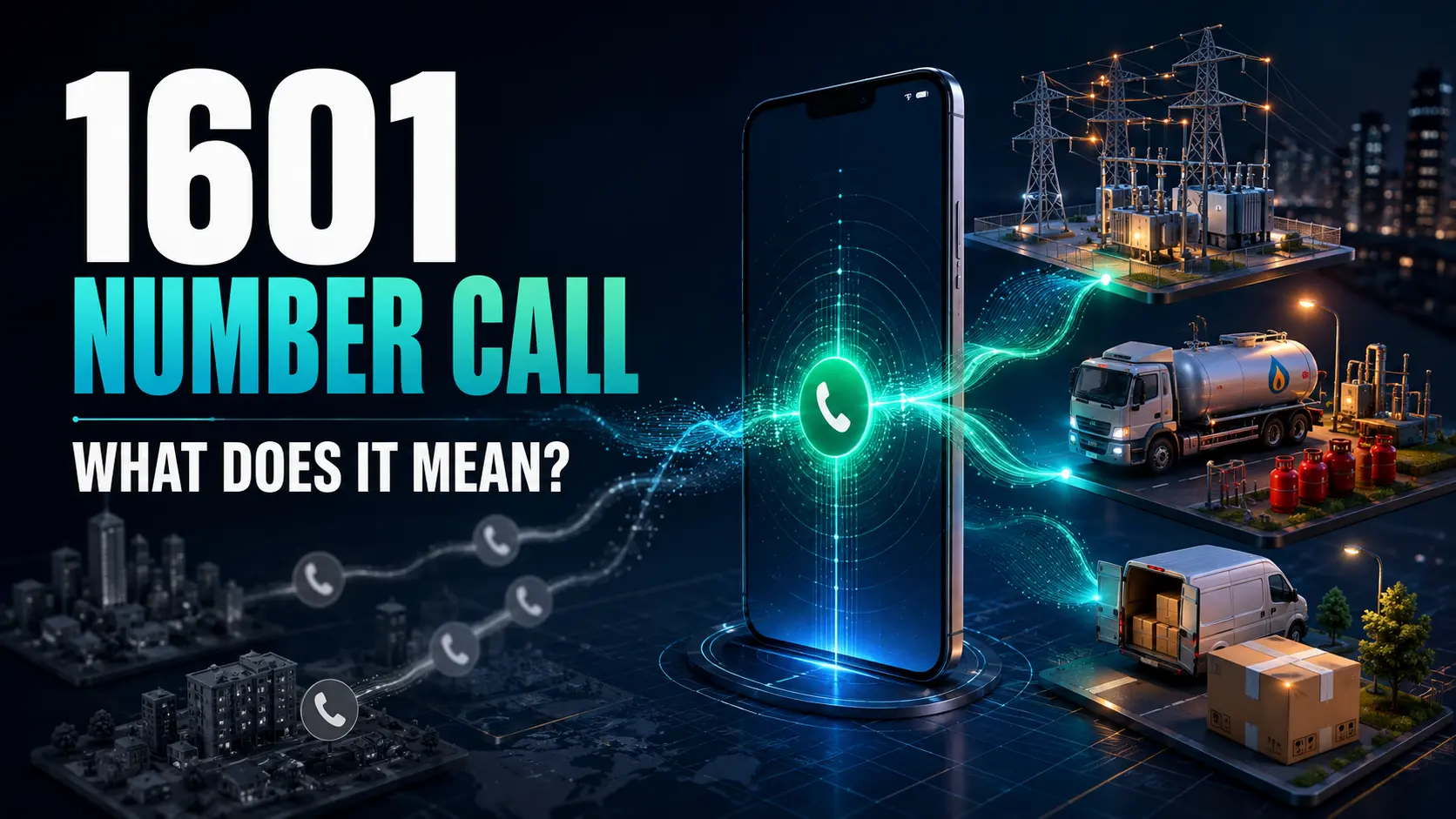
1601 number meaning in India changed materially with TRAI’s August 10, 2026 direction: the 1601 series is being introduced for verified service and transactional calls from sectors other than banking, financial services, insurance and government, beginning with utilities, courier and logistics companies.
That does not mean every electricity company, LPG distributor or courier will start calling from a 1601 number immediately. Telecom service providers have been given 90 days to complete Phase-I migration and onboarding.
Direct answer
A call beginning with 1601 is intended to provide a recognisable numbering identity for eligible non-BFSI, non-government entities making genuine service or transactional calls.
Phase I covers utilities and courier/logistics entities. The number is assigned after verification by the telecom service provider and cannot be used by that entity for promotional voice calls.
What it does not mean
1601 does not mean:
- every 1601 caller should be trusted blindly;
- every genuine courier call must already use 1601;
- a 1601 number can be used for promotional calls;
- ordinary fraud precautions no longer matter.
BFSI + Government
Current trusted-number framework for service and transactional calls from covered BFSI and government entities.
Other sectors
2026 Phase I begins with utilities, courier and logistics service providers.
Promotional ecosystem
1601 numbers cannot be used for promotional voice calls by the entity receiving them.
In this 1601 number guide
- What a 1601 number means
- Who can use 1601
- What calls can come from 1601
- Is a 1601 call safe?
- What “verified” actually means
- The 90-day transition
- Normal 10-digit courier calls
- Why older pages say 1601 means banking
- 1600 vs 1601 vs 140
- Can 1601 be used for promotions?
- Seven checks before trusting a caller
- What to do with a suspicious call
- Verification method
- Limitations
- FAQs
What does a 1601 number mean in India?
The simplest 1601 number meaning in India is this: it is part of a trusted numbering framework intended to make legitimate service and transactional calls easier for consumers to recognise.
TRAI’s August 10, 2026 press release says the 1601 series will be used by eligible entities in sectors other than BFSI and government. The first phase covers utilities, courier and logistics organisations.
Important: TRAI calls this a phase-wise implementation. It is not an overnight switch affecting every eligible caller on August 10.
Who can use 1601 numbers?
Phase I identifies two broad groups.
Utilities
Electricity distribution companies, water utilities, city-gas distribution companies, LPG distribution entities and similar utility-service providers.
Courier and logistics
Courier companies, express-logistics companies, parcel-delivery providers and freight/logistics providers engaged in delivery of consignments.
Direct allocation
The numbers are to be allocated directly to eligible entities after verification — not to intermediaries or aggregators.
This means a 1601 call could eventually relate to matters such as an electricity connection, water service, LPG delivery, city-gas service, parcel delivery or freight/logistics transaction.
It does not mean every business in those industries automatically qualifies for a number.
What kind of call can come from a 1601 number?
The 1601 series is for service and transactional voice calls.
| Possible call type | Why it may fit | Important qualification |
|---|---|---|
| Electricity-service communication | Electricity distribution companies are included in Phase I. | The actual caller must be an eligible verified entity. |
| LPG service communication | LPG distribution entities are expressly included. | A call asking for secret credentials should still be treated cautiously. |
| Courier-delivery communication | Courier and parcel-delivery providers are included. | The 90-day onboarding period means transition is not instantaneous. |
| Freight or logistics communication | Freight/logistics service providers engaged in consignment delivery are included. | Eligibility and allocation remain subject to TSP verification. |
| Promotional sales call | Not an authorised use of the assigned 1601 number. | TRAI says 1601 numbers shall not be used for promotional voice calls. |
Is a 1601 number safe to answer?
A verified numbering system can provide a stronger identity signal than an unfamiliar ordinary 10-digit number, but a phone-number prefix should never replace basic fraud precautions.
The purpose of the 1601 framework is partly to make impersonation harder. TRAI says fraudsters often use ordinary 10-digit numbers while falsely claiming to represent legitimate businesses, and the distinct numbering identity is intended to help consumers distinguish genuine service and transactional calls.
Useful signal: assignment of a 1601 number requires eligibility verification by the telecom service provider, and the number is allocated directly to the eligible entity rather than to an intermediary or aggregator.
But do not treat the prefix as permission to reveal secrets. Never share an OTP, UPI PIN, card PIN, internet-banking password or other authentication credential merely because the displayed number begins with 1601.
A separate TPS safety guide is already reserved at Is a 1601 Number Safe?. That URL will become the detailed fraud-check companion when the rollout produces enough real consumer evidence to justify a separate article.
What does “verified 1601 caller” actually mean?
TRAI’s direction requires telecom service providers to verify the eligibility of an entity before assigning a 1601-series number.
The TSP must also obtain an undertaking that the number will be used exclusively for service and transactional calls.
This is stronger than simply allowing any telemarketer or app intermediary to choose a 1601-looking identity.
However, the official release does not say that consumers should ignore normal anti-fraud checks after seeing the prefix.
Why the 90-day rollout matters
This may be the most important practical detail in understanding the 1601 number meaning in India.
Telecom service providers have been asked to complete migration and onboarding of eligible Phase-I entities within 90 days from the date of the order.
Therefore, consumers should not interpret August 10 as a universal instant cutover.
Wrong conclusion: “My courier called from a normal mobile number, so the call must be fake.”
What the evidence supports: the Phase-I migration/onboarding process has a 90-day window. During rollout, the absence of a 1601 prefix alone does not prove that a service call is fraudulent.
What if a courier or utility still calls from a normal 10-digit number?
Do not automatically classify it as fraud solely because it is not a 1601 call.
The new direction creates a time-bound migration process rather than saying that every legitimate utility and delivery call immediately becomes invalid when made from another number.
A more useful check is whether the call matches a service or transaction you actually expect.
- Are you expecting that parcel?
- Do you have an active electricity, gas, LPG or water-service interaction?
- Can the request be verified independently in the company’s official app, website or customer-care channel?
- Is the caller asking for information that a legitimate service provider should not need?
Why do older websites say 1601 numbers are for banks?
This is where the history matters.
May 30, 2024
DoT introduces the broader 160-series concept
The Department of Telecommunications announced a new 160xxxxxxx numbering series for service and transactional calls.
The 2024 release gave financial entities regulated by bodies such as RBI, SEBI, PFRDA and IRDA as an example and said those service or transactional calls would start from 1601.
2025–2026
1600 framework develops for BFSI and government
TRAI subsequently issued directions for phase-wise adoption of 1600-series numbers by BFSI entities, including regulated financial-sector organisations.
August 10, 2026
TRAI begins 1601 implementation for other sectors
The new TRAI direction says BFSI and government entities are using 1600-series numbers and starts phase-wise implementation of 1601 for sectors other than BFSI and government, beginning with utilities, courier and logistics.
What TPS can safely conclude: the trusted-number framework has evolved. The official documents do not require us to describe this as a simple “1601 was transferred from banks to couriers” reassignment, so this article avoids that unsupported wording.
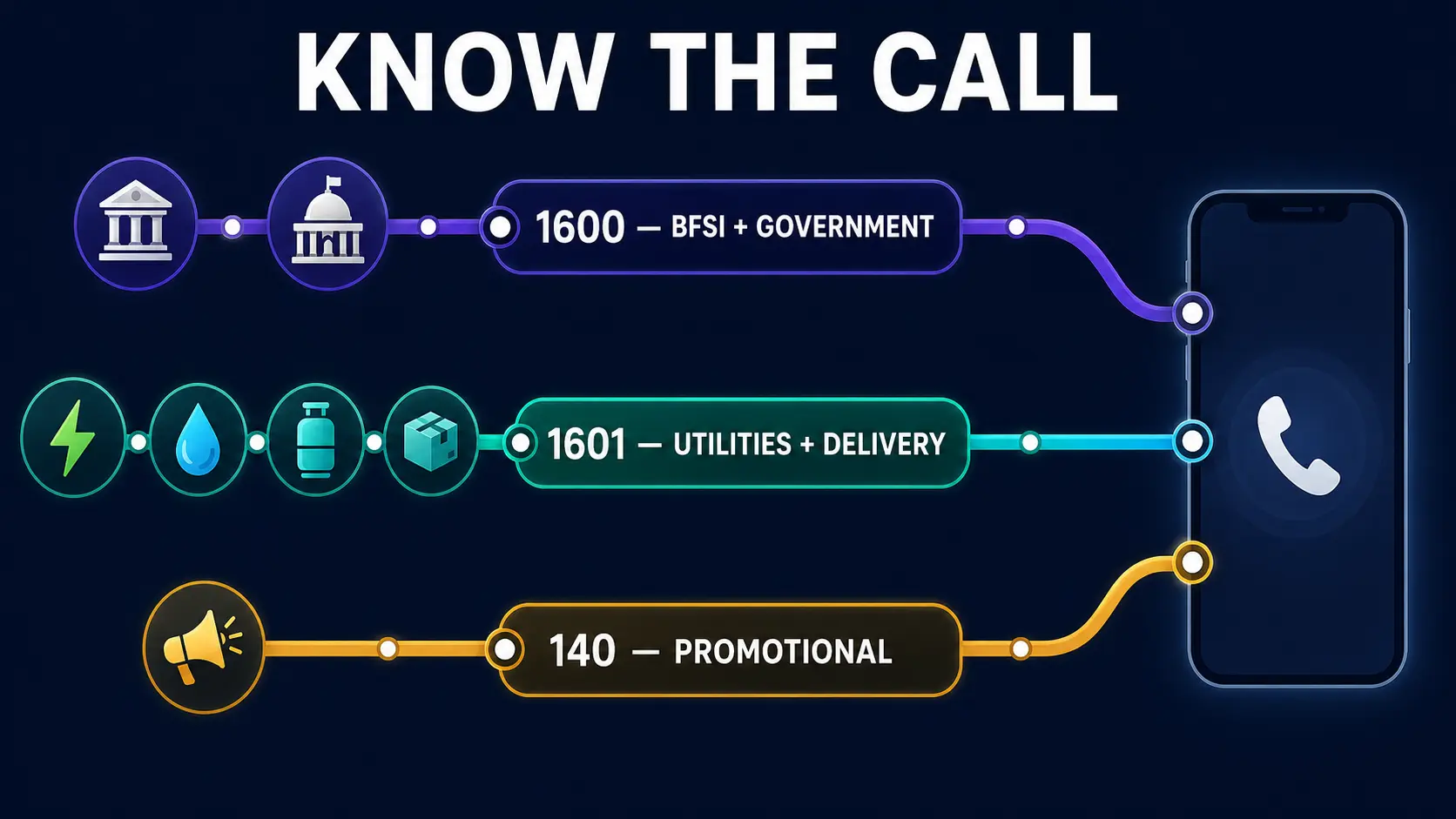
1600 vs 1601 vs 140 numbers: what is the difference?
| Number family | Current role supported by the reviewed official material | Examples | Promotional calls? |
|---|---|---|---|
| 1600 | Trusted service and transactional framework adopted for covered BFSI and government entities. | Banks, financial-sector entities and government communications under the applicable directions. | Not the promotional-use purpose of this trusted series. |
| 1601 | Service and transactional calls from sectors other than BFSI and government, starting with Phase-I utilities, courier and logistics. | Electricity, water, city gas, LPG, courier, parcel delivery and freight/logistics. | No. The 2026 direction expressly prohibits promotional use. |
| 140 | Telemarketing/promotional calling ecosystem under telecom commercial-communication rules. | Promotional commercial communication. | Used for promotional communication under the applicable framework. |
We have reserved a dedicated comparison page at 1600 vs 1601 vs 140 Numbers in India. That page will preserve the numbering history and future changes without overloading this consumer-focused 1601 guide.
Can a company make promotional calls from its 1601 number?
Under the August 2026 direction, no.
TRAI says TSPs must obtain an undertaking regarding exclusive use of assigned 1601-series numbers for service and transactional voice calls, and that the numbers shall not be used for promotional voice calls by any entity.
If a 1601 number is being used to push an unrelated promotional offer, that would not match the use described in the 2026 direction.
7 checks before trusting any 1601 caller
Check whether you expected the call
A genuine delivery or utility call is easier to validate when it corresponds to a real transaction, booking, bill or service request.
Do not disclose OTP or PIN
The prefix does not create a legitimate reason for a caller to demand your OTP, UPI PIN, card PIN or password.
Verify payment requests separately
If money is requested unexpectedly, leave the call and verify through the organisation’s official app, website or published customer-care channel.
Watch for urgency tactics
Threats of immediate disconnection, parcel seizure or account action should be independently verified rather than obeyed under pressure.
Check the service context
A caller claiming to deliver a parcel you never ordered or resolve a utility account you do not have deserves additional scrutiny.
Do not install remote-access apps
A caller identity does not justify giving another person remote control of your phone or computer.
Report suspicious communication
If the call appears fraudulent or misuses commercial communication, preserve evidence and use the appropriate official reporting route.
What should you do if a 1601 call looks suspicious?
Preserve the displayed number, call time, screenshots, message links and any payment request before blocking or deleting evidence.
For suspected fraud communications, DoT has promoted the Chakshu facility on Sanchar Saathi as a reporting route. For unsolicited commercial communication, TRAI also provides complaint mechanisms including 1909 and the DND framework.
For the detailed spam-complaint workflow, see How to Complain About Spam Calls in India.
160-series trusted-call cluster
- 1600 vs 1601 vs 140 Numbers in India — predefined companion explaining which number family applies to which type of call.
- Is a 1601 Number Safe? — predefined safety companion for scam checks once rollout evidence supports a separate page.
- How to Complain About Spam Calls in India — existing complaint and DND workflow.
- CERT-In Cyber Threats 2026 — wider explanation of India’s current cyber-threat environment.
How this 1601 number guide was verified
Verification method
ThePulseSignal compared TRAI’s August 10, 2026 1601-series press release with the earlier DoT announcement that introduced the broader 160-series concept and with TRAI’s subsequent 1600-series directions for BFSI entities.
The August 10, 2026 TRAI release was treated as the controlling source for:
- Phase-I sectors;
- the distinction between BFSI/government and other sectors;
- direct allocation to eligible entities;
- TSP eligibility verification;
- the 90-day migration/onboarding period;
- exclusive service/transactional use;
- the prohibition on promotional calls.
The May 30, 2024 DoT release was used only to explain the earlier numbering description and why older material may associate the 1601 prefix with financial entities.
The article does not claim that the 2026 direction constitutes a technical reassignment of every earlier 1601 number because the reviewed documents do not explicitly describe the change in those terms.
Official sources reviewed
- Telecom Regulatory Authority of India — August 10, 2026 1601-series direction and press release.
- Department of Telecommunications / PIB — May 30, 2024 160-series announcement.
- TRAI — 1600-series adoption direction for regulated BFSI entities.
- TRAI — unsolicited commercial communication and complaint guidance.
Limitations and unresolved facts
The rules are confirmed, but the consumer rollout is just beginning.
- The August 10 direction starts a phase-wise rollout and does not establish that every eligible organisation already has a 1601 number.
- TSPs have a 90-day migration/onboarding window for Phase-I entities.
- The absence of a 1601 prefix during the transition does not by itself establish that a service call is fraudulent.
- The reviewed release does not provide a public searchable directory of every assigned 1601 number.
- The reviewed documents do not explicitly describe the 2026 framework as a simple reassignment of earlier financial-sector 1601 numbers.
- A 1601 prefix is a caller-identity signal; it does not justify sharing OTPs, PINs, passwords or other authentication secrets.
- Future TRAI directions may add more sectors to the 1601 framework.
- The detailed consumer safety article is being held until rollout creates sufficient real consumer evidence for a standalone intent.
1601 number meaning in India: frequently asked questions
What does a 1601 number mean in India?
Under TRAI’s August 2026 direction, 1601-series numbers are being introduced for service and transactional calls from eligible sectors other than BFSI and government, beginning with utilities, courier and logistics.
Is 1601 a bank number?
Older official material used financial entities as an example for calls beginning with 1601. The current August 2026 TRAI framework says BFSI and government entities are using 1600-series numbers and begins 1601 implementation for other sectors.
Which companies can use 1601 numbers first?
Phase I covers electricity distribution, water utilities, city-gas distribution, LPG distribution, courier, express logistics, parcel delivery and freight/logistics service providers.
Can a 1601 number be used for promotional calls?
No. TRAI’s 2026 direction says assigned 1601 numbers shall not be used for promotional voice calls.
Does TRAI verify every 1601 caller?
The direction requires telecom service providers to verify the eligibility of an entity before assigning a 1601-series number. The number is allocated directly to the eligible entity rather than an intermediary or aggregator.
Is every call from a 1601 number automatically safe?
The verified allocation provides a stronger identity signal, but consumers should still avoid sharing OTPs, PINs, passwords or other authentication credentials merely because of the prefix.
Why is my courier still calling from a regular mobile number?
The Phase-I rollout is not instantaneous. Telecom service providers have 90 days from the order to complete migration and onboarding of eligible entities.
Does a normal 10-digit call mean the courier is fake?
Not on that fact alone during the transition. Verify the parcel or transaction independently using the company’s official channel.
What is the difference between 1600 and 1601 numbers?
Current official material places covered BFSI and government service/transactional calls within the 1600 framework, while the August 2026 direction begins 1601 implementation for other sectors, starting with utilities and courier/logistics.
What is the difference between 1601 and 140?
1601 is intended for eligible service and transactional calls under the new framework. The 140-series is associated with commercial telemarketing/promotional communication; the 2026 direction expressly prohibits promotional use of 1601 numbers.
Where can I report a suspicious call?
Suspected fraud communications can be reported through applicable DoT/Sanchar Saathi mechanisms such as Chakshu. Unsolicited commercial communication can also be reported through TRAI’s DND/1909 framework where applicable.
Last verified: August 10, 2026.