






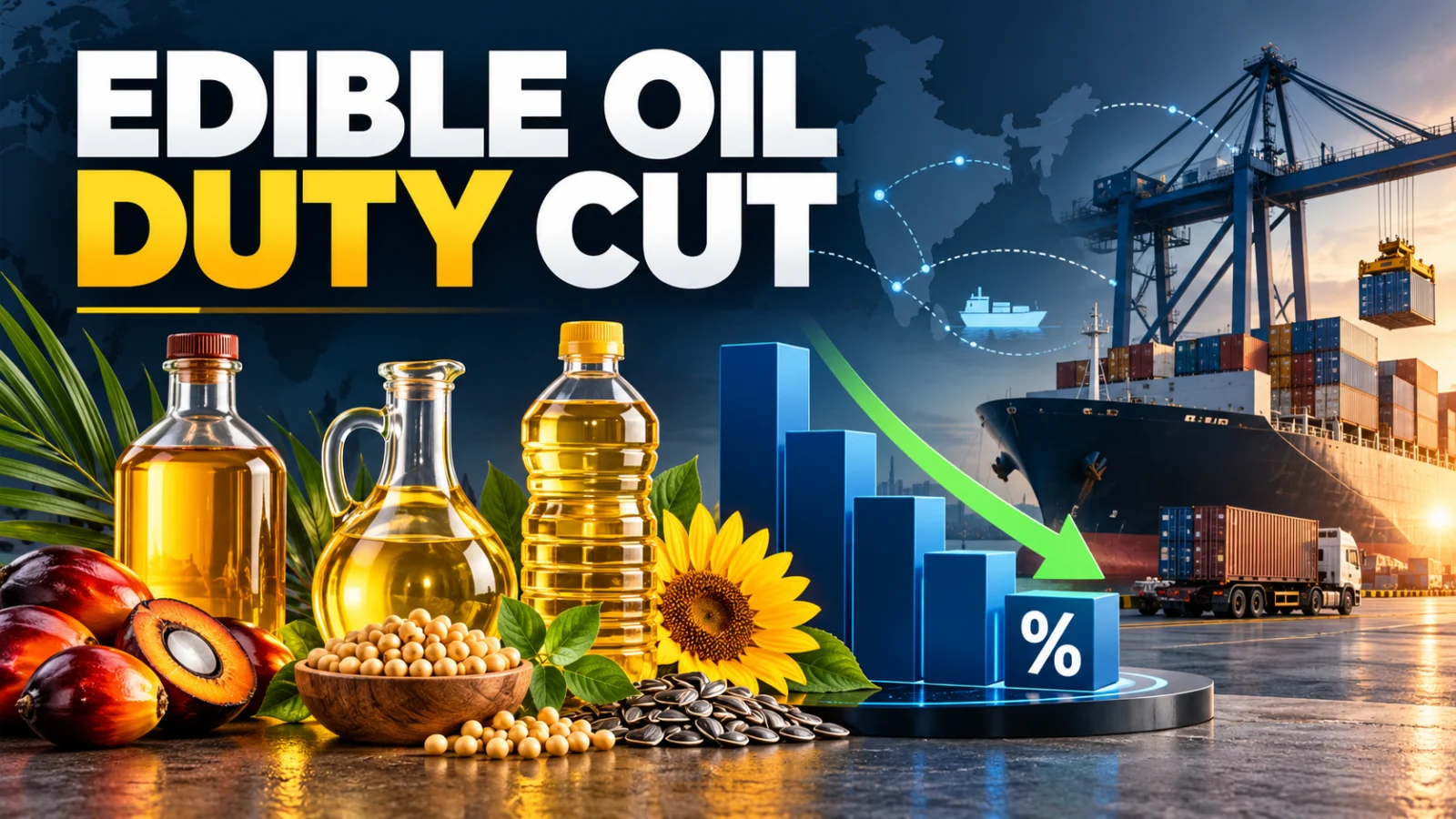
India edible oil import duty cut rates took effect on September 24, 2026, after the Department of Revenue issued Notification No. 31/2026-Customs on September 23. The government reduced Basic Customs Duty, or BCD, on specified crude and refined palm, soybean and sunflower oils. The legal rate change is confirmed; an immediate retail cooking-oil price cut is not.
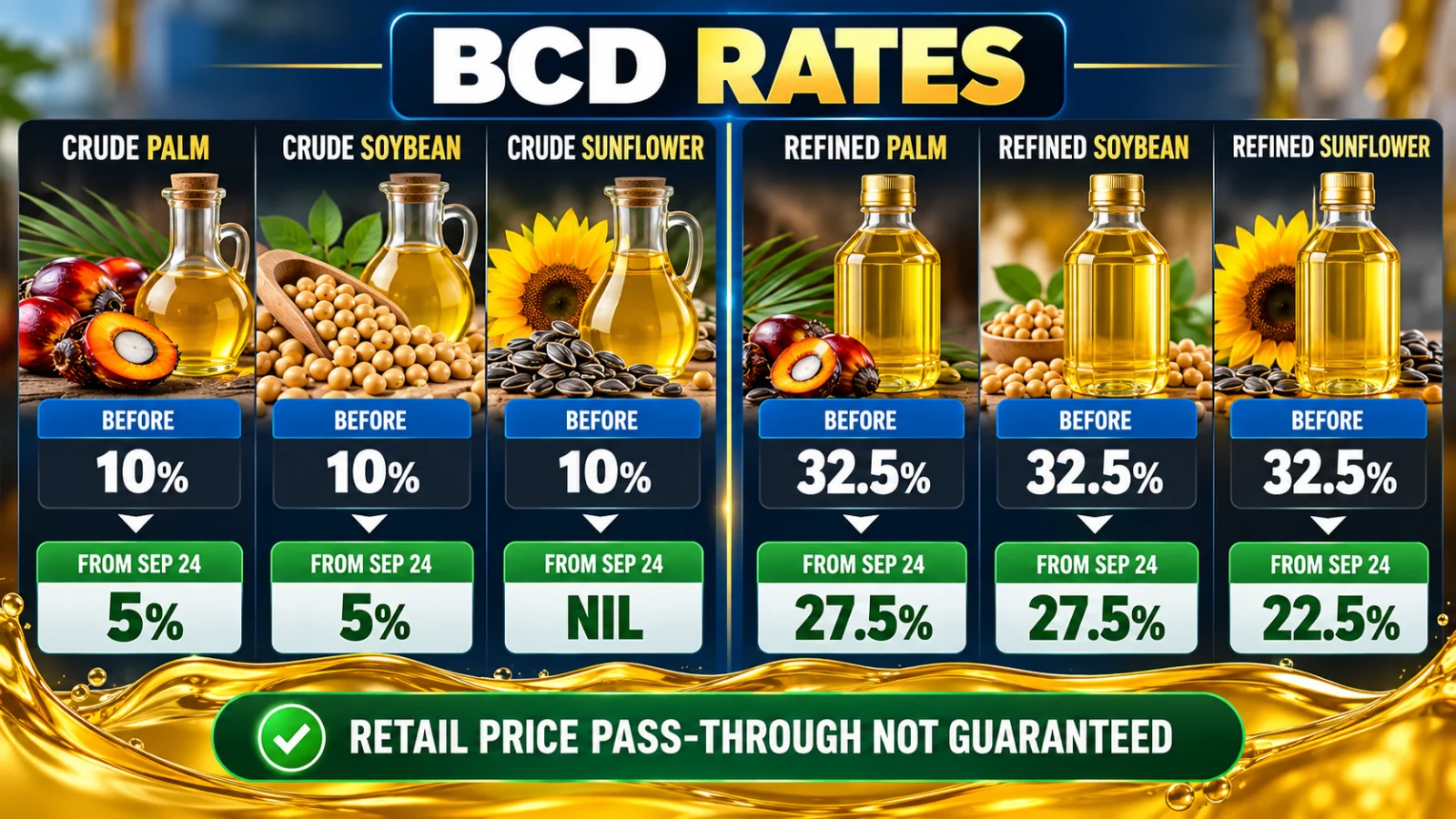
Direct answer: Crude palm and soybean oil BCD has fallen from 10% to 5%, crude sunflower oil from 10% to Nil, refined palm and soybean oil from 32.5% to 27.5%, and refined sunflower oil from 32.5% to 22.5%. These are Basic Customs Duty rates. Lower BCD can reduce one component of import cost, but it does not by itself determine the final retail price paid by consumers.
India edible oil import duty cut: old and new BCD rates
| Imported edible oil | BCD before | BCD from September 24 | Change |
|---|---|---|---|
| Crude palm oil | 10% | 5% | Down 5 percentage points |
| Crude soybean oil | 10% | 5% | Down 5 percentage points |
| Crude sunflower oil | 10% | Nil | Down 10 percentage points |
| Refined palm oil | 32.5% | 27.5% | Down 5 percentage points |
| Refined soybean oil | 32.5% | 27.5% | Down 5 percentage points |
| Refined sunflower oil | 32.5% | 22.5% | Down 10 percentage points |
The notification expressly states that the amendments come into force on September 24, 2026. That means the previous listed BCD rates became stale for the specified tariff entries from that date.
What exactly did the government cut?
The confirmed change is to Basic Customs Duty. That distinction matters because a BCD rate should not automatically be described as the complete all-in import tax or customs incidence on a shipment. Other levies or customs components must be checked separately under the current rules applicable to the specific import.
For the same reason, saying that crude sunflower oil now has Nil BCD is accurate. Saying that crude sunflower imports are completely free of every possible import levy would go beyond what Notification 31/2026-Customs establishes.
Which edible-oil duty cuts are the largest?
The largest BCD reductions in percentage-point terms are for crude and refined sunflower oil. Crude sunflower falls by 10 percentage points, from 10% to Nil, while refined sunflower falls by 10 percentage points, from 32.5% to 22.5%.
Crude palm, crude soybean, refined palm and refined soybean each fall by 5 percentage points.
What happened to the crude-versus-refined duty gap?
The listed BCD difference between crude and refined forms remains 22.5 percentage points for all three oil families after the change. Palm moves from 10% versus 32.5% to 5% versus 27.5%. Soybean follows the same structure. Sunflower moves from 10% versus 32.5% to Nil versus 22.5%.
This is a comparison of the notified BCD rates only. It should not be treated as a calculation of the complete effective import-duty differential unless every other applicable levy has also been verified.
Will cooking oil prices fall immediately?
Not necessarily. A lower import duty can reduce landed-cost pressure for imported edible oil, but several steps sit between a customs-rate change and the price on a retail shelf.
Importers may hold inventory purchased under earlier cost conditions. Global palm, soybean and sunflower oil prices can move independently. The rupee, freight costs, refining economics and commercial margins can offset or amplify the customs saving. Brands and distributors also decide when and how much of a lower cost is passed through.
That means the September 24 notification supports the statement that import BCD is lower. It does not support a claim that cooking-oil MRP has already fallen by the same percentage.
How the duty cut can reach consumers
The practical transmission chain is: lower BCD reduces one component of import landed cost; importers and refiners then reprice new supplies; distributors and packaged-food or edible-oil companies adjust procurement and selling prices; and only after those changes flow through the supply chain can retail prices reflect the benefit.
Government experience with earlier edible-oil duty changes also shows why this distinction matters. Authorities have previously monitored industry pricing and urged companies to pass customs-duty savings through to consumers rather than assuming that the statutory change alone guaranteed an equivalent MRP reduction.
What does the change mean for importers and refiners?
The immediate confirmed effect is a lower BCD burden on the specified imports cleared under the new rates. That changes the economics of bringing crude and refined palm, soybean and sunflower oils into India.
The final commercial impact for an individual importer, refiner or FMCG company still depends on its sourcing mix, inventory position, currency exposure, freight costs, global edible-oil prices and the amount of any cost saving passed downstream. The notification alone does not prove higher margins or a particular import-volume increase.
Does the duty cut prove domestic oilseed prices will fall?
No. Lower import costs can increase competitive pressure from imported edible oils, but the effect on domestic soybean, sunflower and other oilseed prices depends on crop conditions, procurement, minimum support prices, global markets, crushing economics and government policy. A quantified farmer-price outcome is not established by this customs notification alone.
What would prove that consumers received the benefit?
The strongest evidence would be actual post-change retail and trade data: packaged-oil MRP or price-to-distributor reductions, government or industry pass-through information, sustained market-price movements after new lower-duty imports enter the supply chain, and importer or refiner pricing responses.
Until that evidence appears, the safest current conclusion is narrower: India’s BCD on the specified edible oils is lower from September 24, while the size and timing of any consumer-price benefit remain to be observed.
What happens next?
TPS will watch for any Department of Food and Public Distribution guidance on price pass-through, changes in brand MRP or distributor pricing, importer and refiner responses, fresh import-volume data, major global edible-oil price moves and any further customs notification affecting the duty structure.
Verification note: TPS reconciled Notification No. 31/2026-Customs with the preceding tariff entries used for the affected crude and refined edible oils and reviewed government context on earlier edible-oil duty pass-through. The statutory BCD changes and September 24 effective date are confirmed; the eventual retail-price effect remains unverified.