






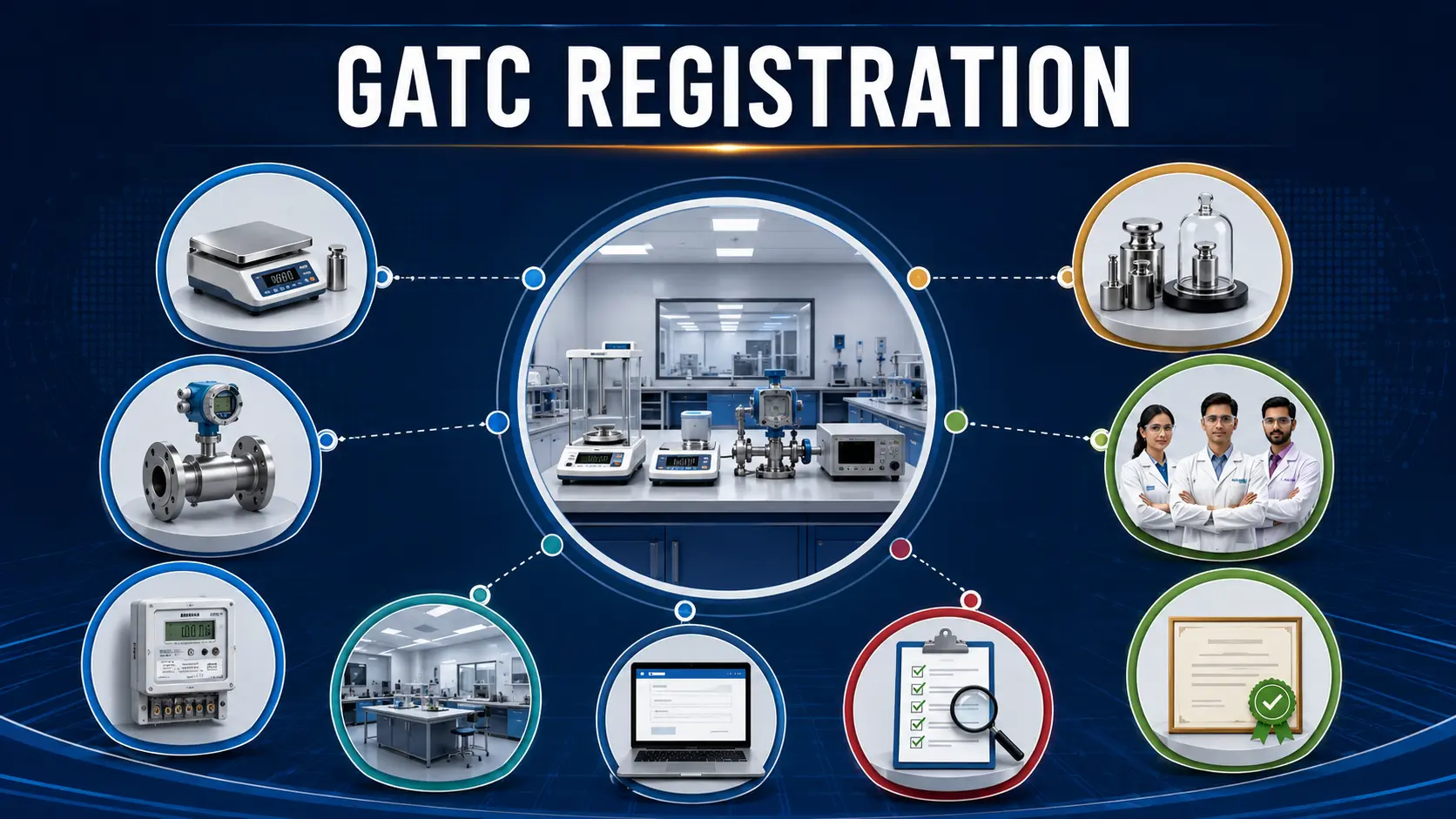
Government Approved Test Centre registration is a continuing Legal Metrology recognition process for eligible laboratories, manufacturers, technical institutions and testing facilities that want authority to verify specified weights or measuring instruments. The special August 17–31, 2026 invitation has closed, but the underlying GATC framework remains active under the Legal Metrology (Government Approved Test Centre) Rules, 2013 and subsequent amendments.
The practical challenge is not simply finding an online form. An applicant must prove that it has the correct instrument-category scope, traceable standards, testing equipment, technical personnel, premises and compliance controls for the verification work it wants to perform.
Direct answer
How Government Approved Test Centre recognition works
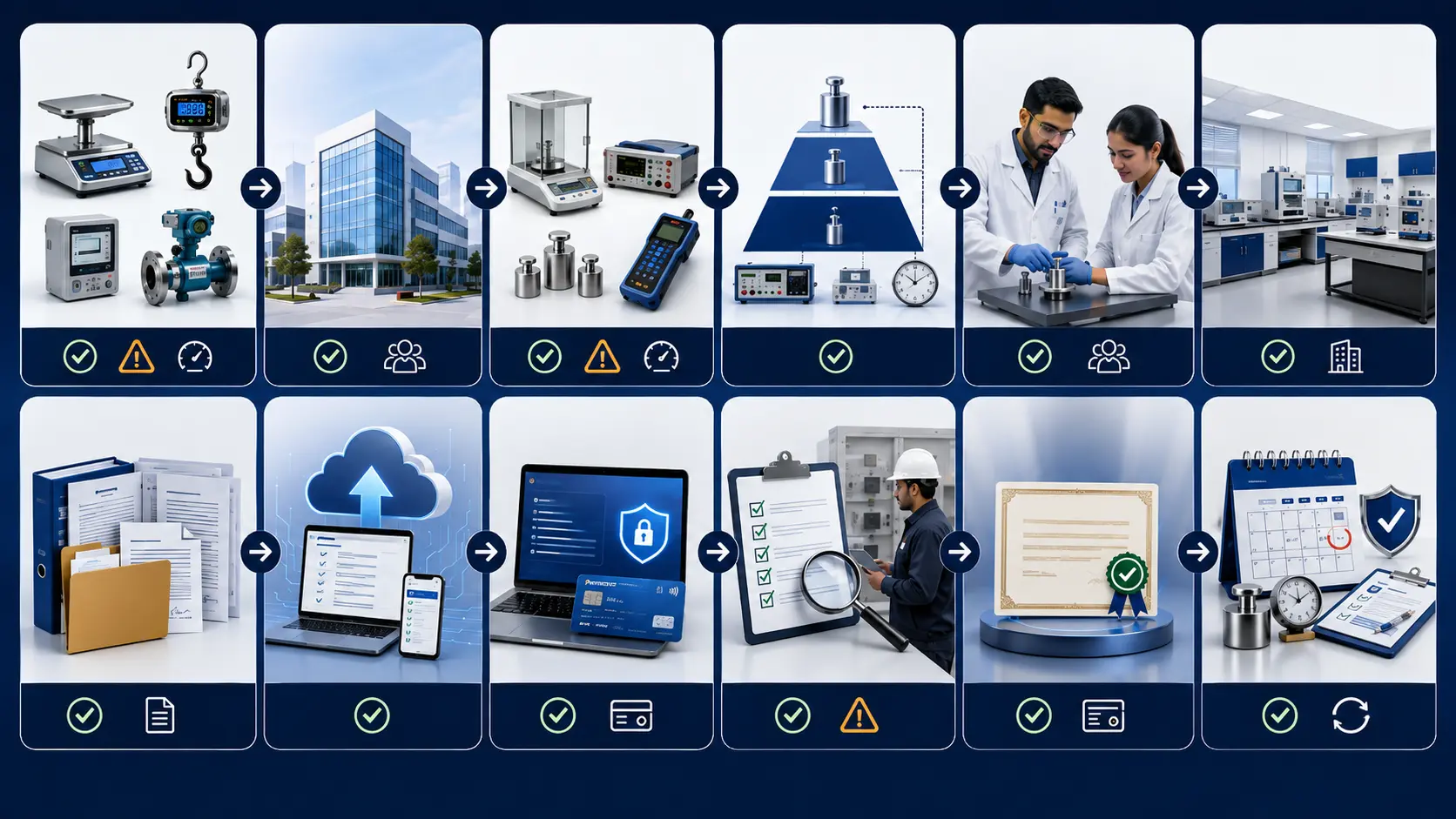
Choose the instrument or equipment category, assemble technical and organisational evidence, use the official eMaap GATC route when an application facility is available, pay the amount shown by the controlling workflow, respond to scrutiny or inspection and obtain category-specific recognition before performing statutory verification as a GATC.
Current status
The August 2026 invitation is closed
The Department’s August invitation accepted applications from August 17 through August 31, 2026, with a 5:00 PM cutoff on August 31. That deadline has passed. The recognition framework itself continues, so organisations should use the current Department rules and live eMaap state rather than treating the expired August window as permanently controlling.
Confirmed framework
- GATCs operate under the Legal Metrology (Government Approved Test Centre) Rules, 2013 and amendments.
- Recognition is category-specific rather than a blanket authority to verify every instrument.
- Testing and calibration equipment must satisfy the applicable technical and traceability requirements.
- Qualified technical personnel and suitable infrastructure are required.
- Recognition can involve scrutiny, inspection, continuing conditions and later suspension or revocation for non-compliance.
Verify in the current workflow
- Whether a fresh application window is presently available.
- The exact portal upload fields for the selected category.
- The live payable fee or category-based amount.
- The current deficiency-response and inspection sequence.
- The recognition or renewal period applicable to the certificate.
Table of contents
What does Government Approved Test Centre registration mean?
A Government Approved Test Centre is a facility recognised under the Legal Metrology framework to perform verification or re-verification of specified weights, measures or measuring instruments within its approved scope.
Recognition is not a general licence to test every measuring instrument. The certificate and applicable rules determine the approved category, range and conditions. An applicant should therefore seek only the scope for which it can prove technical capability.
Important boundary
Laboratory capability and statutory verification authority are not the same thing. A facility should not represent itself as a Government Approved Test Centre for a category unless its recognition covers that work.
Who can apply for Government Approved Test Centre recognition?
The Department’s 2026 invitation identified industries, manufacturers, laboratories, engineering colleges, polytechnics, ITIs and other testing facilities as potential applicants, subject to the applicable technical requirements.
Industry and manufacturers
Manufacturers or industrial facilities with suitable verification infrastructure may seek recognition for relevant categories.
Independent laboratories
Testing or calibration laboratories may apply where equipment, personnel, premises and systems meet the applicable rules.
Technical institutions
Engineering colleges, polytechnics and ITIs may qualify where their laboratories can support statutory verification rather than academic demonstration alone.
Readiness questions before filing
- Is the applicant a legally identifiable entity or institution?
- Does it control the proposed test-centre premises?
- Does it have the required reference standards and test equipment?
- Are calibration and traceability records current?
- Are technically competent personnel available for the requested category?
- Can the centre maintain records and support official inspection?
- Can it comply with certificate conditions and continuing supervision?
Which instruments can a GATC verify?
The Department’s August 2026 invitation said the framework had expanded to 23 categories. Examples cited in official material include weighing instruments, water and energy meters, medical measuring devices, vehicle speed meters, breath analysers, flow meters and dispensers used for fuels including petrol, diesel, CNG, LPG, LNG and hydrogen.
Editorial interpretation
Category selection is the central technical decision. Adding scope can increase equipment, range, personnel, calibration, inspection and fee requirements. Applying for a category without supporting capability may create a deficiency rather than strengthen the application.
| Category question | What to verify | Risk if ignored |
|---|---|---|
| Exact instrument type | Match the current rule or portal category wording | Wrong recognition scope |
| Verification range | Confirm minimum and maximum capacity or measurement range | Equipment cannot support requested work |
| Reference standards | Check applicable standards, calibration and traceability | Technical evidence is incomplete |
| Site suitability | Confirm environmental, space, safety and operational needs | Inspection reveals unsuitable infrastructure |
| Technical staff | Map qualifications and experience to the selected category | Applicant cannot demonstrate competence |
Equipment, calibration and traceability requirements
The Department’s public invitation requires prescribed testing and calibration equipment traceable to national standards. The applicant should be able to document the calibration and traceability chain for the reference equipment used in the requested scope.
Evidence to prepare
- equipment register;
- manufacturer, model, serial number and measurement range;
- current calibration certificates;
- calibration due dates and maintenance status;
- measurement uncertainty or accuracy data where applicable;
- traceability and calibration-provider records;
- environmental monitoring where required;
- equipment failure, repair and re-calibration procedures.
Evidence-readiness guide
The exact upload list must come from the current eMaap application workflow and applicable rules. This preparation list should not be treated as a universal official upload checklist.
What technical personnel should the centre have?
The GATC framework requires competent technical personnel appropriate to the verification work. Applicant records may need to establish the responsible officer, technical staff, qualifications, experience, training and authority within the centre.
Responsible officer
Prepare appointment, authority, qualification and experience records for the person responsible for the centre.
Technical operators
Map each operator’s education, training and practical competence to the instrument categories they will handle.
Quality responsibility
Assign ownership of calibration status, procedures, record control, certificate handling and corrective action.
What documents should an applicant prepare?
| Evidence group | Records to keep ready | Boundary |
|---|---|---|
| Applicant identity | Constitution, registration, address and authorised-person records | Use current portal fields |
| Premises | Site-control evidence, layout and relevant facility records | Exact uploads may vary |
| Equipment | Inventory, ranges, specifications and calibration certificates | Core technical evidence |
| Traceability | Calibration chain and national-standard traceability evidence | Core technical evidence |
| Personnel | Qualifications, experience, appointment and training records | Match requested scope |
| Procedures | Verification, recordkeeping, maintenance and corrective-action procedures | Confirm current rule requirements |
| Accreditation records | NABL or other certificates where applicable | Do not assume universal requirement |
| Insurance or liability records | Where required by the applicable rules or certificate conditions | Confirm before filing |
How does the eMaap GATC workflow work?
Choose the scope
Identify the instrument category and requested verification range.
Check current application availability
Use the official eMaap GATC portal and current Department notice rather than assuming the August 2026 window is still open.
Complete applicant details
Provide organisation, premises, responsible-person and technical-personnel information required by the live workflow.
Upload technical evidence
Provide the equipment, calibration, traceability, infrastructure and supporting records requested.
Use the controlling fee
Pay the amount generated or required by the current applicable workflow and rules.
Track scrutiny and inspection
Monitor the application for deficiency, clarification, inspection and recognition communication.
Preserve the final submitted form, payment receipt, attachment set, acknowledgement and subsequent communication. Submission does not itself prove recognition.
What is the current GATC application fee?
Do not rely on an old static amount without reconciling it against the current rules and live application state. Historical versions and later amendments have used different fee structures, and the August 2026 invitation confirmed online fee payment without publishing a universal amount for every application in the press release.
Fee boundary
Use the controlling amount applicable to the selected category and current application. A historical ₹10,000 figure or another past category-based amount should not automatically be treated as the current payable fee.
What happens after submission?
An application may move through document scrutiny, clarification and physical or technical inspection before recognition. Inspecting authorities may examine whether the declared equipment, personnel, procedures, premises and technical conditions actually support the requested scope.
Prepare the site to demonstrate
- physical availability and identification of equipment;
- valid calibration status;
- measurement range and suitability;
- premises and environmental controls;
- technical competence;
- verification procedures and records;
- safety and handling arrangements;
- ability to maintain statutory and technical records.
If recognition is granted, check the issued certificate for its category, range, validity and conditions. The public GATC certificate-list route can be used to verify recognised centres.
What must a centre do after recognition?
Work within scope
Perform statutory verification only for categories, ranges and conditions covered by the certificate.
Maintain competence
Keep standards calibrated, personnel competent, premises suitable and records available for inspection.
Manage validity and renewal
Follow the current renewal process and applicable fee before the recognition expires.
Recognition can be suspended or revoked where the centre breaches applicable rules, works outside its scope, supplies incorrect information or fails to maintain required technical conditions.
Government Approved Test Centre preparation checklist
Lock the intended scope
Choose the instrument category and range before building the evidence file.
Audit technical equipment
Check availability, condition, calibration validity and traceability of required standards.
Map technical personnel
Connect each person to the category-specific work they will perform.
Prepare the premises
Confirm space, environmental control, safety and equipment installation.
Reconcile rules and fee
Use the current notified amendment and live application state.
Preserve the evidence package
Keep submissions, attachments, payments, acknowledgements and scrutiny responses.
Official resources
- eMaap GATC portal
- Public GATC certificate list
- Department of Consumer Affairs Legal Metrology rules and amendments
How this was verified
The Department of Consumer Affairs Legal Metrology rules page was checked on September 8, 2026. It continues to list the GATC Rules, 2013 and the 2016, 2021, 2025 and 2026 amendments. The Department’s August 2026 PIB notices were used to distinguish the closed August 17–31 invitation from the continuing recognition framework and eMaap process.
Last verified: September 8, 2026.
Limitations and unresolved facts
- The August 17–31, 2026 application invitation is over.
- No fresh post-August general application window was identified in the current public evidence reviewed.
- The live application workflow may expose category-specific fields, payable amounts, deficiency steps and tracking statuses not fully described in public press releases.
- Public material does not support a blanket claim that NABL accreditation is mandatory for every applicant and category.
- Recognition scope, range, validity and special conditions depend on the issued certificate and applicable current rules.
- The article cannot determine whether a specific organisation will pass technical scrutiny.
Frequently asked questions
Is the August 2026 GATC application window still open?
No. The official invitation ran through August 31, 2026 at 5:00 PM.
Does the GATC framework still exist after August 31?
Yes. The Department’s current Legal Metrology rules page continues to list the GATC Rules and subsequent amendments. The expired August invitation should not be confused with the existence of the recognition framework itself.
Who can seek GATC recognition?
The Department’s 2026 invitation included industries, manufacturers, laboratories, engineering colleges, polytechnics, ITIs and other technically competent testing facilities, subject to applicable requirements.
Where is the GATC process handled?
The Department directs applicants to the official eMaap GATC system when an application route is available.
Is NABL accreditation compulsory?
The current public material reviewed does not support a universal yes for every applicant and category. Check the applicable rules and current application requirements.
What is the GATC fee?
Use the controlling current rule and live application amount for the selected scope. Older public sources contain different historical amounts.
Does application submission mean recognition is granted?
No. Recognition can require scrutiny, clarification and inspection before a certificate is issued.
Can a GATC verify every measuring instrument?
No. The centre should work only within the scope, range and conditions covered by its recognition.
How can I verify a recognised GATC?
Use the public GATC certificate list and check the centre’s certificate scope and validity.