





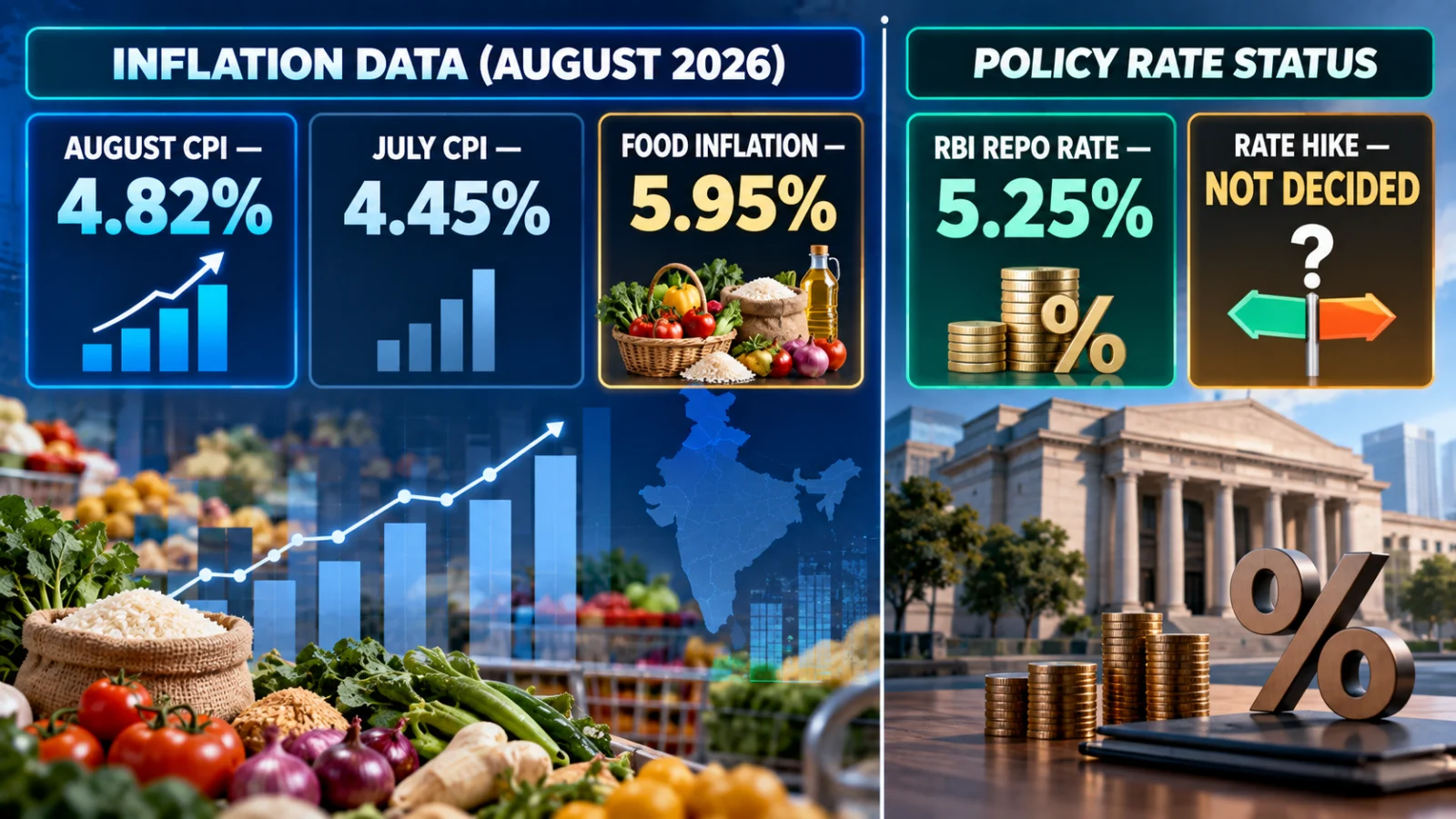
India CPI inflation for August 2026 rose to 4.82% year-on-year, from 4.45% in July, according to government data reported on September 14. Food inflation also increased to 5.95% from 5.52%, adding to the evidence that retail price pressures strengthened during the month.
The higher inflation print matters for households, borrowers, businesses and investors because the Reserve Bank of India uses CPI inflation as the central measure in its monetary-policy framework. But one distinction is essential: a higher CPI reading does not itself mean the RBI has decided to raise the repo rate.
Direct answer: August CPI inflation rose to 4.82%, moving further above the RBI’s 4% inflation target while remaining below the 6% upper tolerance level. That increases pressure on the inflation outlook, but the RBI’s policy repo rate remains 5.25% and no future rate hike has yet been decided.
What is India CPI inflation for August 2026?
The latest reported national CPI-based retail inflation rate is 4.82% year-on-year for August 2026.
That compares with 4.45% in July. The headline rate therefore increased by 0.37 percentage point between the two monthly releases.
The 4.82% figure is a year-on-year inflation rate. It compares the price level in August 2026 with August 2025. It does not mean consumer prices rose 4.82% during August alone.
What happened to food inflation?
Food inflation was reported at 5.95% in August, up from 5.52% in July.
That matters because food occupies a large share of household spending, particularly for lower- and middle-income consumers. A rise in food inflation can therefore make the inflation experience of many households feel different from the headline national average.
Current reporting also points to broader price pressure beyond food. However, TPS had not recovered the stable direct August MoSPI/NSO release and complete underlying division tables at publication preparation, so category-level August details should remain tied to the reviewed reporting until that primary release is recovered.
Is 4.82% above the RBI inflation target?
Yes. India’s monetary-policy framework is centred on a CPI inflation target of 4%, with a tolerance band of two percentage points on either side.
That means 4.82% is above the central 4% target, but it is still below the 6% upper tolerance level.
This distinction matters. An inflation reading above 4% can increase policy concern, but crossing 4% does not mechanically trigger a repo-rate increase.
Has the RBI decided to raise interest rates?
No. The RBI has not announced a new repo-rate increase merely because August CPI reached 4.82%.
The policy repo rate remains 5.25% at the current checked state.
Some economists quoted in current reporting believe the higher inflation trajectory increases the possibility of a future rate increase, including scenarios involving the RBI’s October or December policy meetings. Those are forecasts and analytical expectations, not decisions already taken by the Monetary Policy Committee.
Why can higher CPI influence RBI rates?
The RBI uses monetary policy partly to keep inflation aligned with its target while supporting economic growth and financial stability.
If inflation becomes broader, more persistent or moves materially above the desired path, tighter monetary policy can become more likely. A higher repo rate can make borrowing more expensive and can reduce demand over time, which may help moderate inflation pressure.
But the RBI does not respond to one number in isolation. Policymakers can also consider food-price persistence, energy costs, the rupee, global commodity prices, domestic growth, liquidity, inflation expectations and forward projections.
Will home-loan or car-loan EMIs rise now?
Not automatically. The August CPI print itself does not change a borrower’s EMI.
For many floating-rate loans, an EMI or loan tenure may change only after an applicable benchmark or lender rate changes and that change is transmitted to the borrower’s loan contract.
That means the sequence is important:
- inflation data changes;
- the RBI evaluates the inflation and growth outlook;
- the Monetary Policy Committee makes an actual policy decision;
- banks or lenders may adjust applicable rates;
- the borrower’s loan structure determines the eventual EMI or tenure effect.
The first step has happened. The later steps should not be assumed in advance.
How is CPI different from India’s August WPI inflation?
CPI and WPI answer different questions.
CPI, or the Consumer Price Index, measures retail prices faced by consumers. It is the inflation measure at the centre of the RBI’s inflation-targeting framework.
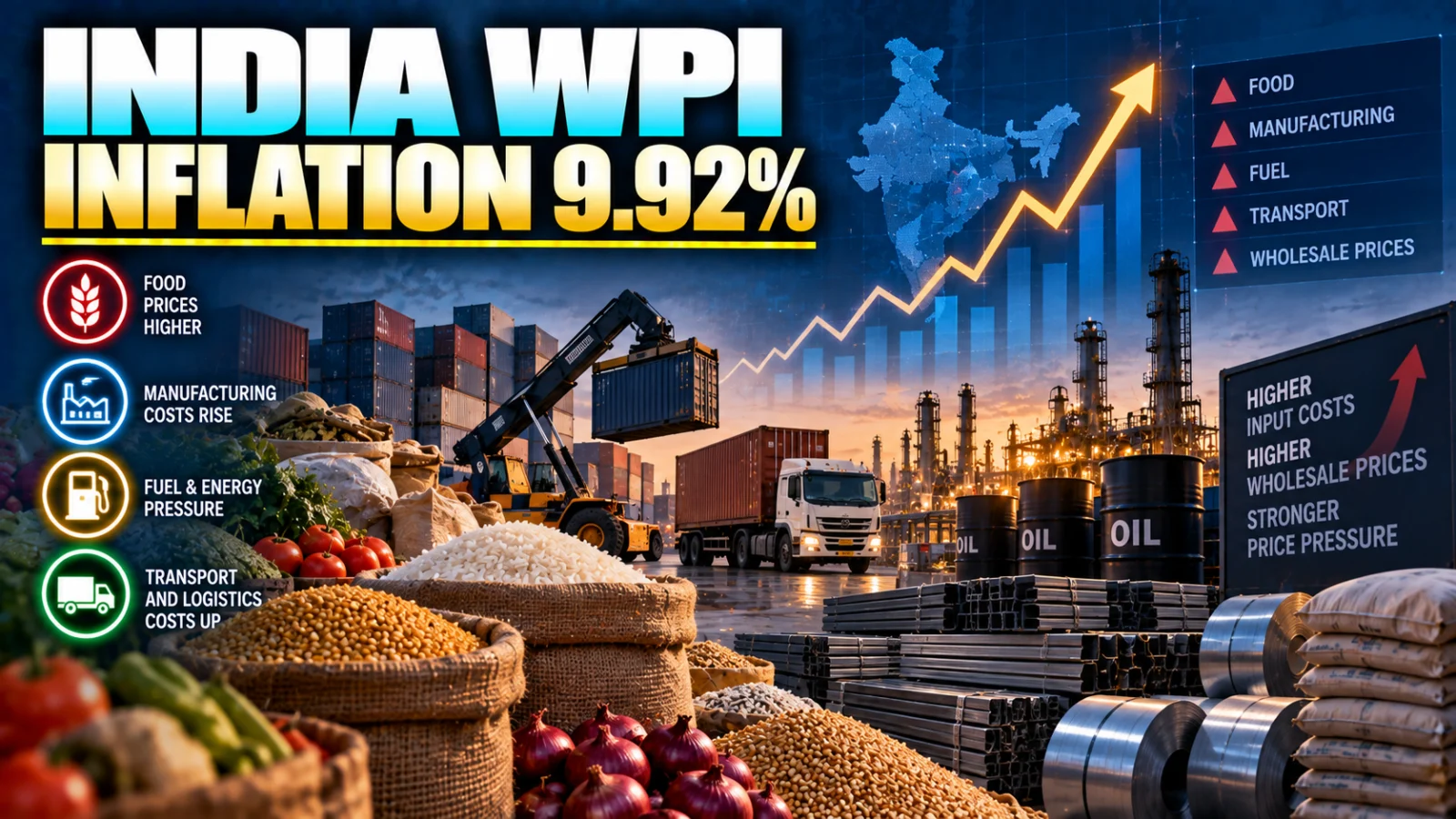
WPI, or the Wholesale Price Index, measures price changes at the wholesale level. India’s August WPI was separately reported at 9.92%.
The two figures should not be combined or substituted for one another. A 9.92% WPI reading does not mean households experienced 9.92% retail inflation, and the 4.82% CPI reading does not describe wholesale producer-price conditions.
Why did the August CPI number matter to markets and borrowers?
The immediate significance is not that a rate decision has already changed. The significance is that the inflation evidence available to the RBI has become less comfortable than it was after July’s 4.45% reading.
For borrowers, that can affect expectations about how long current rates remain unchanged and whether future borrowing costs may rise.
For businesses, persistent retail inflation can influence wage expectations, pricing decisions, demand and financing assumptions.
For investors, the CPI path can affect expectations for interest rates, bond yields, the rupee and rate-sensitive sectors. Those market consequences remain expectations until actual policy and market moves occur.
Does every household experience exactly 4.82% inflation?
No. The national CPI is an aggregate statistical measure based on a representative consumption basket.
A household spending a larger share on food, rent, education, transport or another category can experience a different personal inflation rate from the national headline figure.
The 4.82% number is therefore useful for national policy and broad economic comparison, but it should not be interpreted as the exact price increase experienced by every individual household.
What should readers watch next?
- recovery of the direct August 2026 MoSPI/NSO CPI release and complete category tables;
- the RBI’s next monetary-policy assessment and repo-rate decision;
- September CPI inflation;
- whether food inflation remains elevated;
- changes in crude oil, the rupee and other imported-cost pressures;
- any revision to the RBI’s inflation projections.
Verification method
ThePulseSignal reviewed multiple current reports carrying the August 4.82% CPI figure as Government of India data, compared it with the official July CPI release showing 4.45%, and checked the current RBI policy-rate framework. The stable direct August MoSPI/NSO CPI release was not recovered during publication preparation.
Limitations & unresolved facts
The direct August CPI primary release remains unrecovered, so some August component-level details remain based on corroborated current reporting. The RBI’s next policy decision is unknown, economist rate-hike forecasts are not official policy, and future EMI changes depend on actual RBI and lender actions rather than the CPI release alone.
Bottom line
India CPI inflation rose to 4.82% in August from 4.45% in July, while food inflation rose to 5.95%. The increase makes inflation a more important constraint for the RBI, but it does not mean a repo-rate increase has already been decided. The correct current state is higher inflation pressure, unchanged 5.25% repo rate, and greater uncertainty around the next monetary-policy move.