




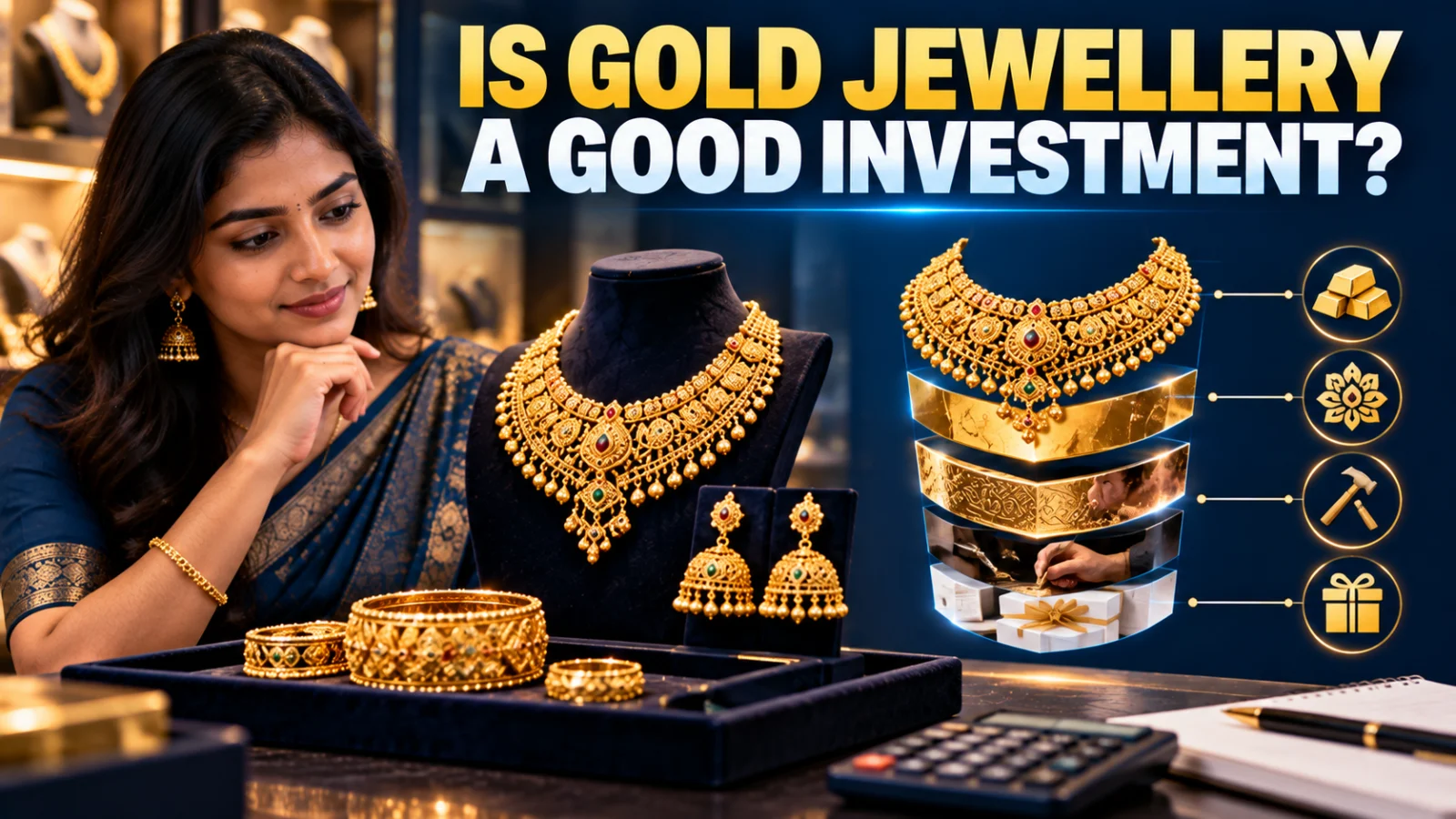
Is gold jewellery a good investment? It can store and grow meaningful wealth because part of what you buy is real gold whose market value can rise. But the entire jewellery bill is not the same thing as an investment in gold.
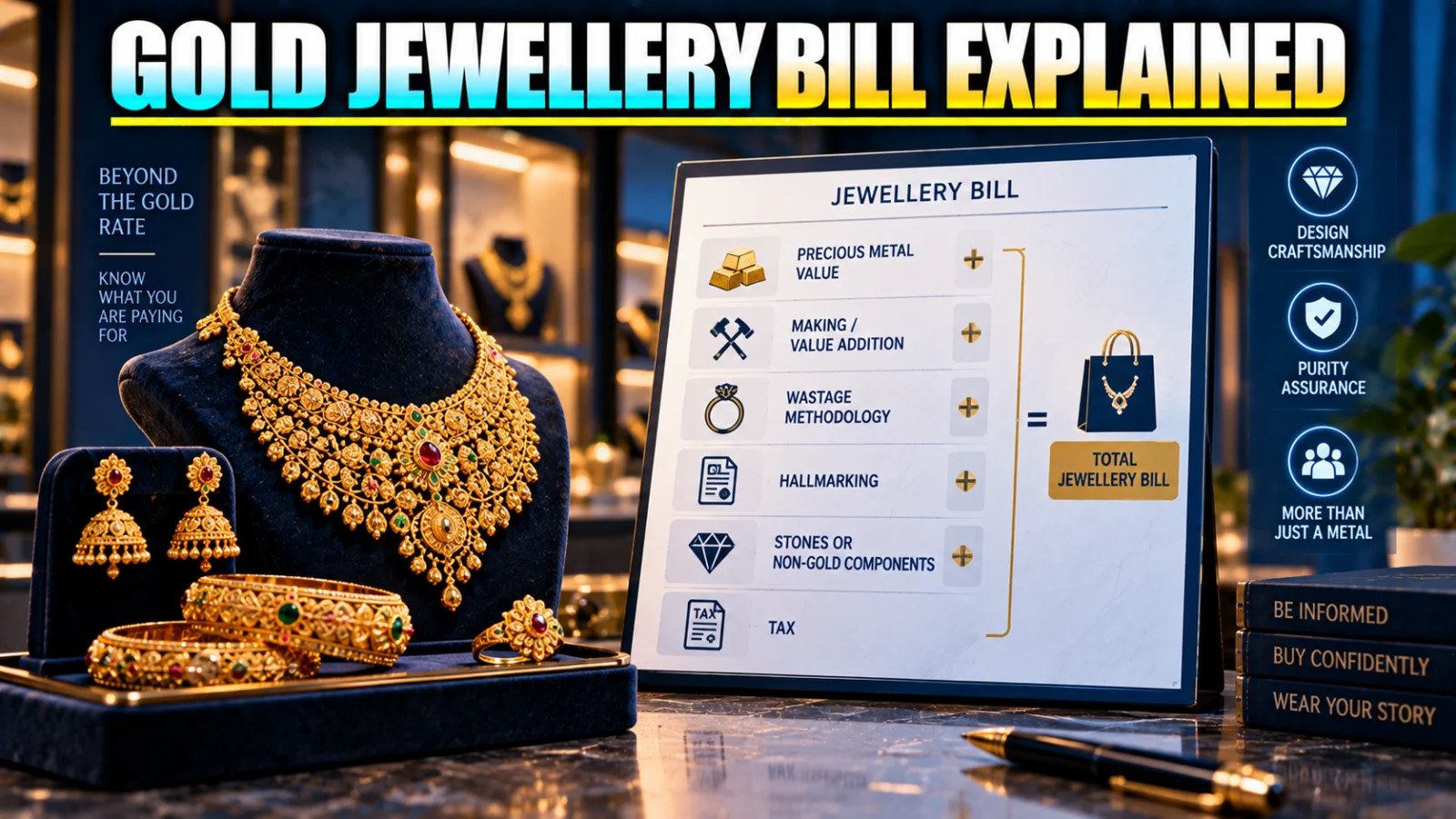
A jewellery purchase can combine several things at once: the value of the gold itself, craftsmanship and design, stones or other non-gold components, taxes and transaction costs, plus the personal value of wearing, gifting or keeping the piece. That mixed purpose is why jewellery can be sensible for one buyer and inefficient for another.
The key decision is not simply whether gold prices may rise. It is how much of the money you pay is actually exposed to gold, how much is consumption or design value, and what can realistically be recovered when you sell or exchange the item later.
When does gold jewellery fit the purpose?
You want jewellery and wealth storage
If you genuinely value the piece for wearing, gifting, cultural use or design, the non-gold portion of the bill is not automatically an investment loss. You are deliberately buying utility as well as stored gold value.
You want mainly gold-price exposure
If your objective is to put as much of your capital as possible into gold itself, jewellery is usually less direct because part of the purchase price may pay for craftsmanship, stones, taxes and other costs rather than additional gold exposure.
You may need to sell or exchange later
Check the seller’s written buyback or exchange terms before buying. The future outcome can depend on net gold content, purity verification and the policy that applies when you exit.
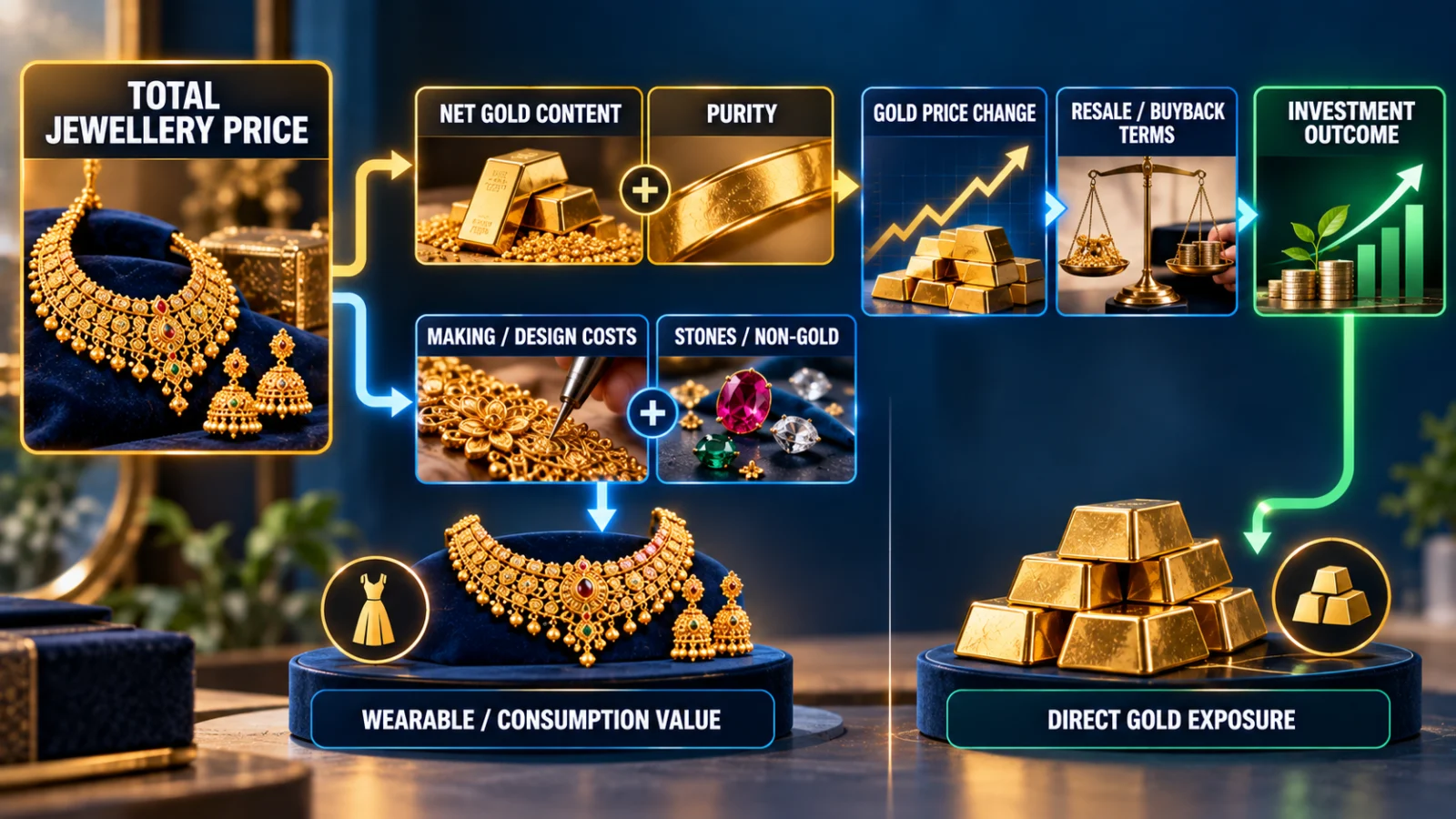
Jewellery purchase price is not the same as gold value
BIS consumer guidance requires a hallmarked-jewellery invoice to identify the article, the net weight of precious metal and its purity in carat and fineness. That distinction matters because the net precious-metal content is the part of the purchase most directly connected to the gold price.
The total amount you pay can be higher than that metal value because jewellery also involves manufacturing and retail economics. BIS separately distinguishes hallmarking charges from making or wastage charges, reinforcing the point that purity certification and jewellery-production costs are different parts of the transaction.
TPS explains those cost components in detail in Gold Making Charges and Wastage Charges: What You Are Actually Paying For. For the investment decision, the important question is simpler: does that extra spend create more gold exposure, or does it buy a service, design or consumption benefit?
What part of your jewellery bill actually tracks gold?
Conceptually, the direct gold exposure comes from the item’s net gold content after accounting for purity. A 22K piece, for example, contains a different proportion of pure gold from an 18K piece, and the jewellery may also contain alloy metals or non-gold components.
That does not mean you need to value every atom yourself. It means you should avoid treating the full invoice amount as though every rupee automatically rises and falls with the gold market.
If a piece contains stones, gems or other components, the gross weight can be even less useful as an investment measure. The BIS framework’s emphasis on net precious-metal weight helps separate the gold portion from the rest of the article.
Can gold jewellery still preserve wealth?
Yes. Jewellery can preserve substantial wealth because the gold content remains an asset whose market value can appreciate. A family that has held high-purity jewellery for many years may find that the underlying gold is worth far more than when the piece was bought.
That does not mean the purchase was as efficient as buying a form designed mainly for investment. It means two different statements can both be true:
- the gold inside the jewellery can grow materially in value;
- the total return on the original jewellery bill can be lower because not every purchase-cost component appreciates with gold or returns fully at exit.
The broader mechanics of how gold itself can create wealth are covered separately in Can Gold Make You Rich? How Wealth Actually Builds with Gold Over Time.
Why jewellery can lag cleaner gold exposure even when gold rises
Imagine two buyers both spend money because they expect gold to appreciate. One puts nearly all of the investment amount into gold exposure. The other buys jewellery and uses part of the same budget on craftsmanship, design and possibly stones.
If gold rises, the second buyer still benefits from the gold inside the jewellery. But a smaller share of the original outlay may have been exposed directly to the gold-price increase.
This is the main reason jewellery can underperform an investment vehicle designed primarily to track gold, even when the underlying metal performs well. It is not because jewellery somehow stops being gold. It is because the economic denominator is the full amount paid, while the appreciating gold component may be only part of that amount.
TPS compares the structural differences between market-linked Gold ETFs and physical gold in Gold ETF vs Physical Gold: What Is Actually Different?. This article does not assume an ETF will outperform every piece of jewellery over every period; it uses that distinction only to explain investment efficiency.
Why holding period matters
A longer holding period can give the underlying gold price more time to rise enough to offset the effect of upfront and exit costs. That is one reason old family jewellery may still represent substantial wealth despite having included making charges when purchased.
But there is no universal breakeven period. No responsible rule can say jewellery becomes a good investment after exactly three, five or ten years.
The result depends on:
- the gold price when you buy;
- the gold price when you exit;
- the item’s purity and net gold content;
- the amount paid for craftsmanship, design and non-gold components;
- the tax and transaction costs that apply;
- the resale or exchange terms available at exit.
A longer holding period may improve the economics, but it cannot guarantee recovery of every rupee originally paid.
Resale and buyback can change the outcome
The investment result is not determined only on the purchase date. It also depends on how the jewellery can be converted back into money or exchanged later.
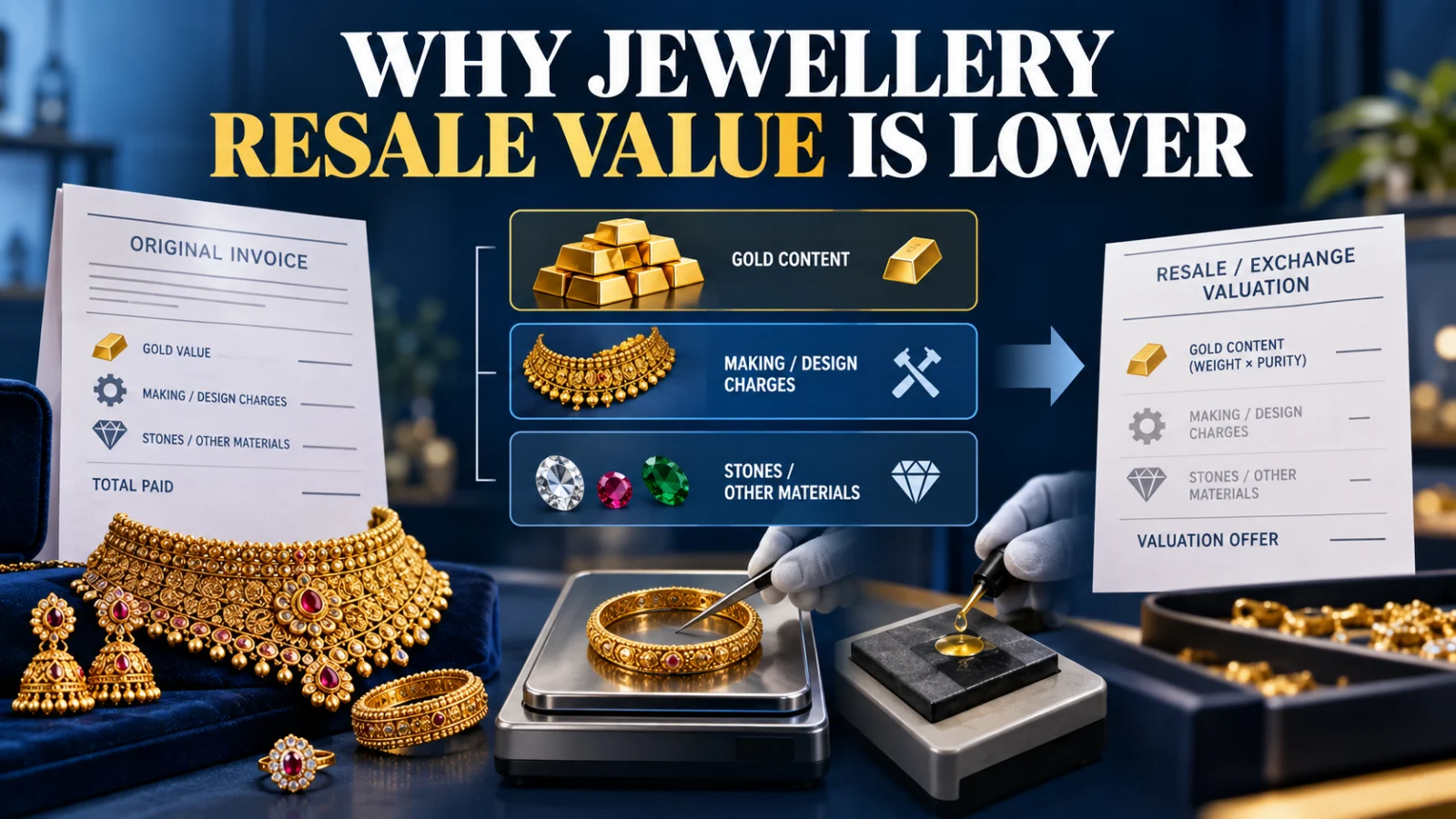
Jewellers can have different cash-buyback and exchange policies. Some terms may be more favourable when old gold is exchanged for another jewellery purchase than when the customer wants cash. Purity testing, net gold weight and other policy conditions can also affect the final amount.
That is why a buyer who cares about investment value should inspect the exit terms before purchase rather than assuming the full invoice will later be recoverable. TPS covers this mechanism separately in Why Gold Jewellery Resale Value Is Lower Than the Purchase Price.
Does a BIS hallmark make jewellery a good investment?
No. A BIS hallmark is extremely important, but it answers a different question.
Hallmarking provides evidence about the purity or fineness of the precious metal. It helps the buyer verify what kind of gold is being purchased. It does not determine whether the making charge is economically worthwhile, whether a stone will retain value, what future gold prices will be or how favourable the seller’s eventual buyback policy will be.
In other words, purity is necessary investment information, but purity alone does not make a purchase investment-efficient.
For the verification task itself, TPS explains the process in How to Check Gold Purity and HUID in India Before You Buy.
What about stones and non-gold components?
If jewellery contains diamonds, gemstones, enamel or other non-gold material, do not assume those components will appreciate in line with gold.
The economic treatment of stones can depend on their quality, certification, seller policy and resale market. TPS therefore does not assign a universal recovery percentage to them.
For a gold-investment decision, the practical rule is to separate the net precious-metal value from everything else rather than using the gross jewellery weight or full invoice as a proxy for gold exposure.
When gold jewellery can make economic sense
Jewellery can be completely rational when your objective is mixed.
For example, you may want an item for a wedding, family tradition, regular wearing or gifting while also preferring that part of the purchase remains stored in gold rather than being spent on a product with little recoverable material value.
In that case, the correct comparison is not necessarily “jewellery versus the highest-return investment.” Part of the purchase is deliberately buying personal utility.
If you value that use, a making or design charge is not automatically wasted money. It is the price of the jewellery function you intentionally chose.
When jewellery is poorly matched to the goal
Jewellery is less aligned with the objective when your only goal is efficient financial exposure to gold and you do not value the item’s wear, design or cultural utility.
For that reader, every rupee directed to non-gold purchase costs reduces the share of the initial capital directly exposed to the gold price. Future resale friction can increase the difference further.
That does not make jewellery universally inferior. It means the product and the objective are mismatched.
A simple decision test before you buy
Ask what you actually want
If you want a wearable object plus stored gold value, jewellery may fit. If you want primarily financial gold exposure, compare alternatives designed for that purpose.
Separate the gold from the rest of the bill
Check net precious-metal weight, purity and the other charges or non-gold components so you know how much of the purchase is actually linked to gold.
Check the exit before the entry
Read the current buyback or exchange policy and understand whether cash sale and jewellery exchange are treated differently.
Do not assume time guarantees recovery
A long holding period can help if gold appreciates, but there is no fixed breakeven year and no guaranteed return.
Bottom line
Gold jewellery can be both consumption and wealth storage. That is why the answer to whether it is a good investment cannot be reduced to yes or no.
If you genuinely want the jewellery itself, the design and use value are part of what you intended to buy, while the gold content can still preserve or grow wealth over time.
If your only objective is efficient exposure to the gold price, jewellery is generally less direct because the full purchase price does not necessarily become gold exposure and the exit may include additional friction.
The useful decision is therefore not “Should nobody buy jewellery?” It is: How much of this purchase is gold investment, how much is consumption value, and does that combination match what I actually want?