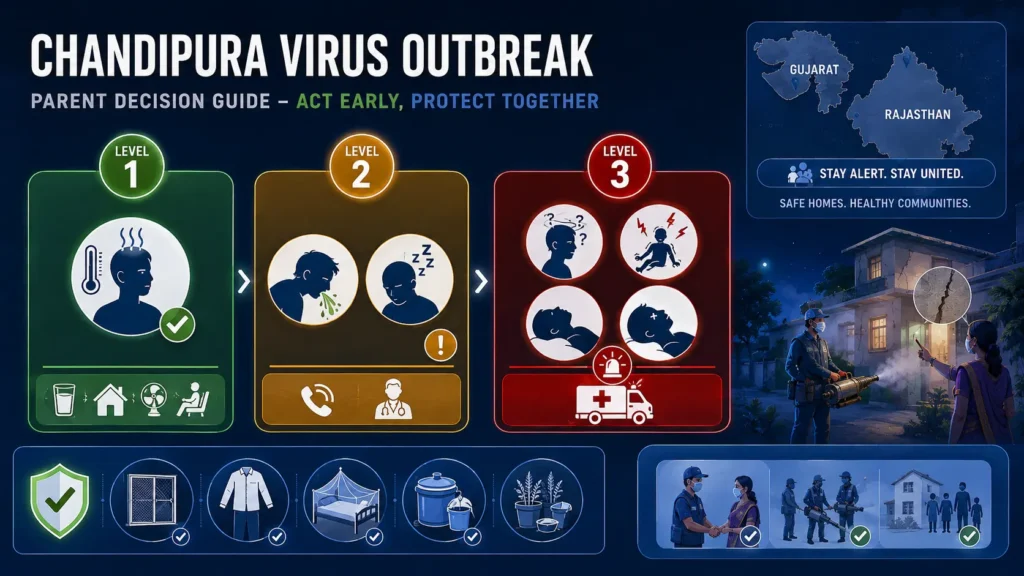





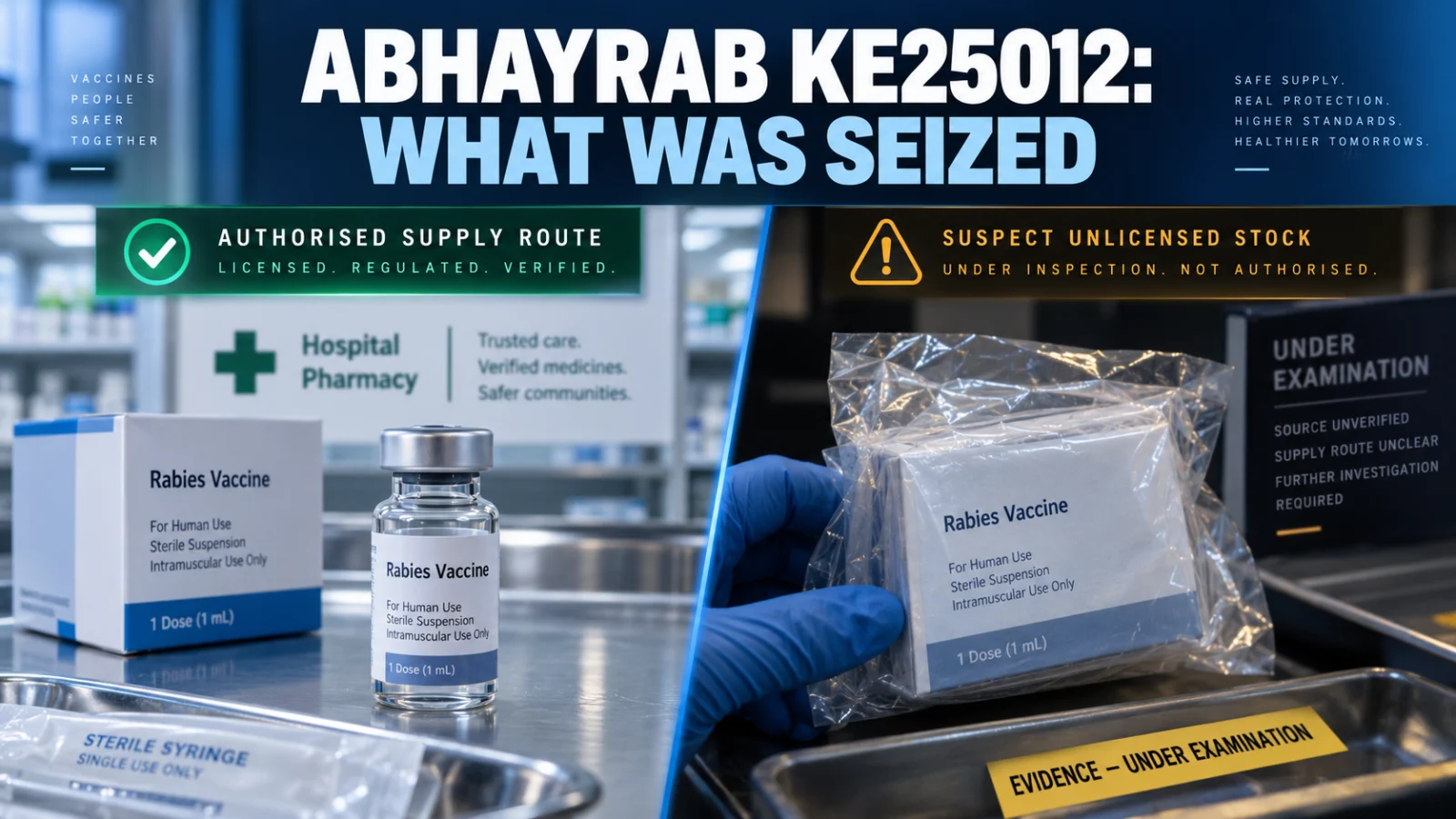
Abhayrab batch KE25012 is at the centre of a CDSCO drug-safety warning, but the evidence does not support the conclusion that every genuine dose carrying that batch number was defective. The regulator’s September 5 notice concerns vials seized from an unlicensed premises in Delhi that were labelled as Abhayrab KE25012 and were later classified as misbranded and Not of Standard Quality.
What CDSCO confirmed about Abhayrab batch KE25012
According to the CDSCO public notice, Delhi Police seized vials carrying the Abhayrab name and batch number KE25012 from an unlicensed premises. Laboratory examination by the Central Drugs Laboratory at Kasauli found the seized product to be misbranded and Not of Standard Quality. CDSCO also stated that the seized product was not manufactured by Indian Immunologicals Ltd.
The regulator had already asked State and Union Territory drug-control authorities to maintain strict vigilance over the movement, distribution and availability of the implicated stock. The reviewed notice also states that no part of the seized batch was exported.
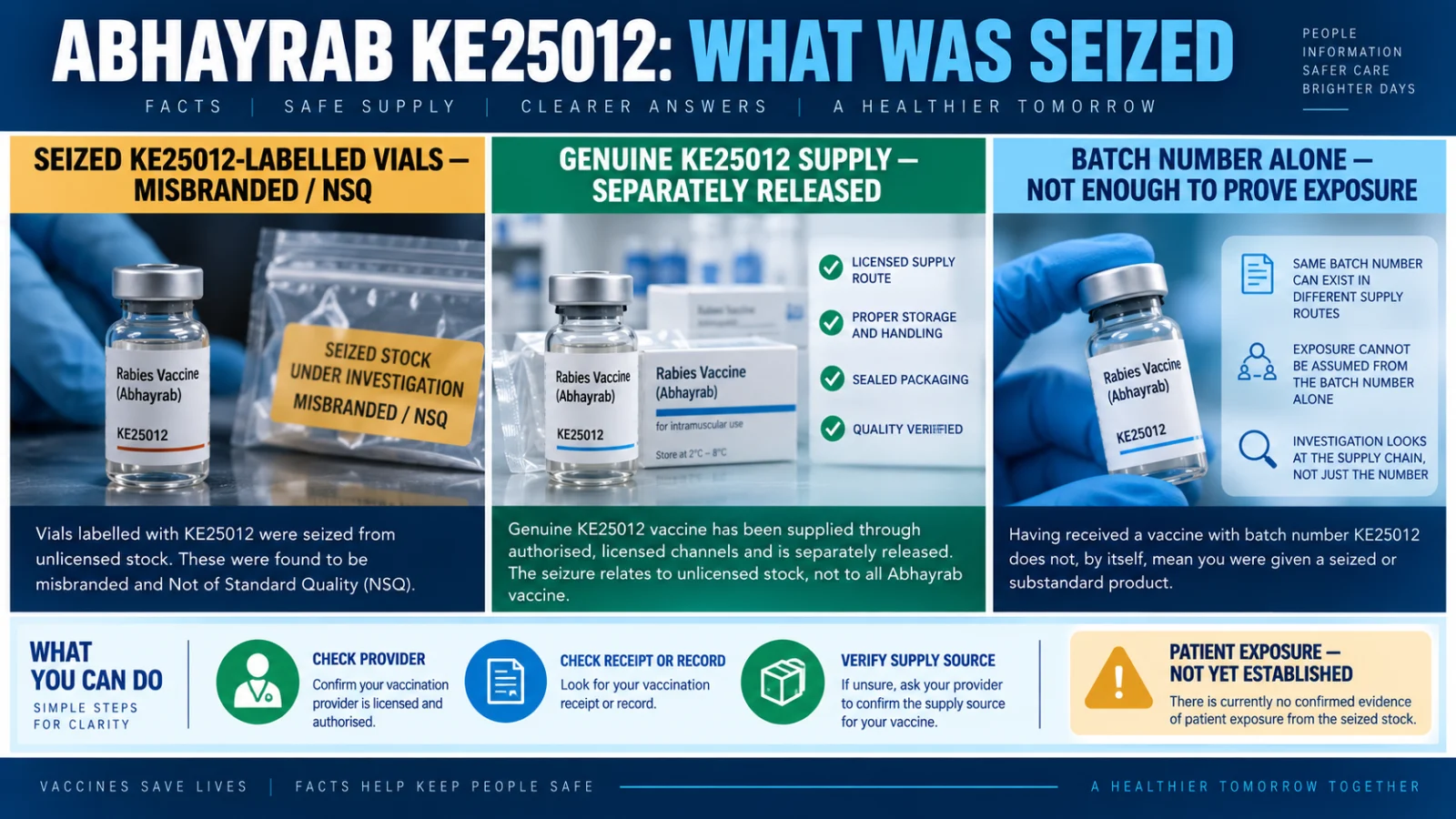
Does KE25012 on your record mean your vaccine was affected?
No, not from the batch number alone. This is the most important distinction in the current evidence. Indian Immunologicals has said that the seized KE25012-labelled vials were not its manufactured product. The company also said the genuine KE25012 batch had been independently released by the Central Drugs Laboratory and supplied through authorised distribution channels.
That means two different states must not be mixed together: suspect vials carrying the KE25012 identity were seized and failed regulatory testing, while genuine manufacturer stock carrying the same batch identity was separately released through the regulated supply chain. A vaccination record showing KE25012 therefore does not, by itself, prove that a person received the seized suspect product.
Why the source of the vaccine matters
The strongest current clue is provenance rather than the batch number in isolation. The regulator’s case centres on stock seized from an unlicensed premises. Indian Immunologicals says genuine released stock was supplied through authorised channels.
If you are trying to establish where your dose came from, useful records may include the name of the hospital, clinic or licensed pharmacy, the vaccination record, receipt or invoice, and any available packaging or dispensing documentation. These records can help the treating provider or authorised supplier establish provenance. TPS did not verify a universal public serial-number or QR-code lookup that can conclusively authenticate every individual Abhayrab dose.
What the warning does not establish
- It does not establish that every Abhayrab vaccine is unsafe.
- It does not establish that every genuine KE25012 dose failed quality testing.
- It does not establish that all authorised hospitals, clinics or pharmacies received suspect stock.
- It does not establish how many patients, if any, received the seized misbranded product.
- TPS has not verified a universal CDSCO recall of all Abhayrab stock.
- TPS has not verified a universal CDSCO instruction telling every KE25012 recipient to repeat vaccination.
If you previously received Abhayrab KE25012
First identify where the vaccine was obtained and preserve any available vaccination record, receipt, invoice or product documentation. If the source is uncertain, ask the treating hospital, clinic or licensed pharmacy whether it can establish the supply route for the dose.
Because rabies post-exposure prophylaxis is a high-consequence medical treatment, do not make a repeat-dose or treatment decision solely from a news report or batch number. If there is a genuine concern that your vaccine may have come from suspect stock, seek current guidance from the treating healthcare professional and the relevant public-health or drug-control authority.
What remains unresolved
The reviewed evidence does not establish the full geographic distribution of the suspect vials, the number of vials that may have circulated before seizure, whether any patient received them, or whether additional batches are implicated. Those questions remain important because they determine whether this develops from a batch-authenticity investigation into a broader patient-facing recall or treatment issue.
What happens next
The next material update would be a CDSCO or State Drugs Controller notice identifying additional distribution points, more affected stock, a recall or stop-use instruction, patient-specific guidance, further seizures, or an official authentication process. Until then, the safest reading of the evidence is narrow: the warning concerns seized misbranded KE25012-labelled vials and should not be generalised to every genuine Abhayrab dose.
Verification note
TPS reviewed the September 5 CDSCO public notice and compared its findings with current reporting of Indian Immunologicals’ clarification about the seized vials and genuine KE25012 supply. Confirmed regulatory findings are separated from manufacturer-reported claims and from questions that remain unresolved.