







If you are considering a gold loan balance transfer, do not assume it works like moving an ordinary unsecured loan from one account to another. Your existing loan is secured by physical jewellery that is already pledged to the old lender, so switching lenders involves both a debt-settlement process and a collateral transition.
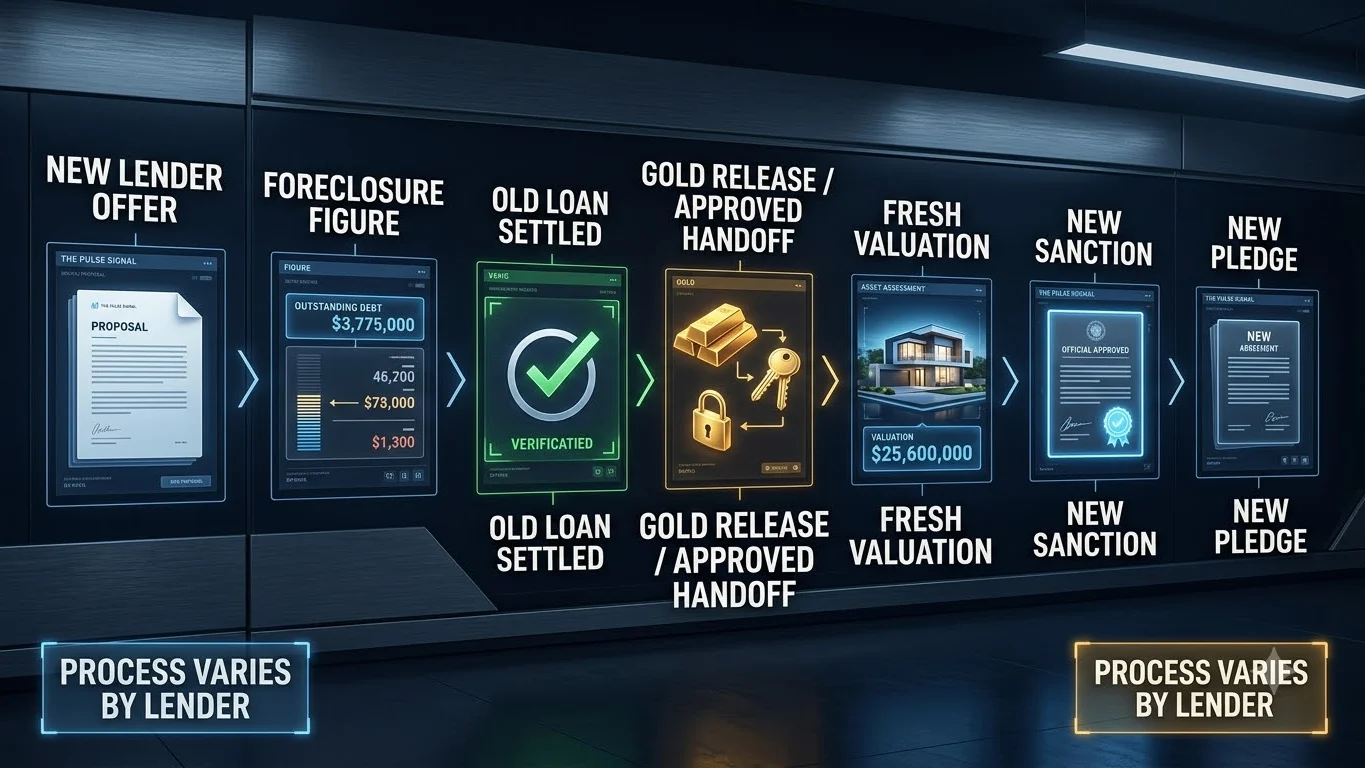
Some banks and NBFCs offer gold-loan takeover or balance-transfer facilities. But the reviewed evidence does not establish one universal lender-to-lender transfer mechanism. Representative processes involve confirming the old outstanding amount, assessing eligibility with the new lender, settling the old loan, releasing or transferring custody of the jewellery through the permitted process, carrying out a fresh valuation and creating a new pledge and loan agreement.
Gold loan balance transfer: the practical switching path
1. Compare the new offer before closing anything
Ask the proposed new lender for written or in-principle terms covering eligibility, indicative rate, applicable charges, repayment structure and how its takeover process works.
2. Obtain the exact old-loan settlement figure
Get the outstanding or foreclosure amount from the current lender, including any applicable charges and the amount required for full settlement.
3. Confirm how the old lender will be paid
Representative takeover products allow the new lender to facilitate settlement, but the exact payment route varies. Do not assume every lender uses the same mechanism.
4. Confirm the jewellery-release and custody process
Understand when the old lender releases the pledged jewellery, who will take possession during the transition and how the new lender’s approved pledge process begins.
5. Expect a fresh valuation
The new lender can reassess purity, eligible gold content, current valuation and applicable LTV rather than simply copying the old lender’s valuation.
6. Check the final new sanction
The new loan amount may differ from the old outstanding balance. Know in advance how any shortfall would be funded and whether any additional amount is actually approved.
7. Complete the fresh pledge and agreement
The switching process ends with a new lending relationship, new documentation and the new lender holding the collateral under its own approved terms.
Can you transfer a gold loan to another lender?
Yes. Some regulated lenders advertise gold-loan takeover or balance-transfer facilities for borrowers who already have an active loan elsewhere.
However, availability is lender-specific. A borrower should not assume that every bank or NBFC offers a takeover facility or that every existing gold loan will qualify.
Is there one RBI-standard gold loan balance-transfer process?
No single universal retail takeover workflow was established in the evidence reviewed.
The RBI provides the regulatory foundation for loans against pledged gold, including valuation, LTV, collateral handling, settlement and release protections. Individual lenders then operate their takeover products within that framework.
That is why two lenders can both offer a gold-loan balance transfer but use different documentation, payment, custody and operational steps.
Does the old gold loan have to be closed?
Representative lender takeover processes involve settlement of the existing lender’s outstanding balance before the borrower continues under the new lender’s loan.
This matters because the same jewellery should not be described as if it can simply remain simultaneously pledged as collateral for two independent gold loans. The old secured obligation and its collateral relationship have to be resolved as part of the switch.
What should you get from the old lender before starting?
Ask for the exact amount needed to settle or foreclose the existing gold loan. That figure should include the outstanding principal, accrued interest and any applicable disclosed closure or other charges.
Do not compare the new lender’s offer only with the original loan amount. The relevant number for the switch is the amount required to close the loan now.
Should you get new-lender approval before closing the old loan?
You should understand the new lender’s likely eligibility, takeover procedure and written or in-principle terms before initiating closure of the existing loan.
A preliminary indication is not the same as a guaranteed final sanction. The new lender may still need to inspect and value the jewellery before fixing the loan amount it is willing to provide.
This is one of the most important risks in a gold loan balance transfer: closing the old loan without understanding how the fresh valuation and any funding shortfall will be handled can leave the borrower with an unexpected cash requirement.
What happens to the pledged gold during the transfer?
The jewellery remains part of the old lender’s secured loan relationship until the relevant settlement and release conditions are completed.
After settlement, the gold must enter the new lender’s approved custody and pledge process before it can secure the new loan.
The exact physical handoff is not universal. Some lender programmes may coordinate settlement and collateral movement, while others may use a different closure-and-repledge process. TPS did not establish one RBI-mandated method requiring every borrower or every lender pair to move the jewellery in the same way.
Do you always have to collect and carry the gold yourself?
No universal answer was established.
Do not assume that you will always personally carry the jewellery between branches, but do not assume the lenders will always move it directly between themselves either. Ask the new lender to explain the custody chain before you authorise settlement of the old loan.
You should know who will possess the jewellery at every stage, where the fresh valuation occurs and when the new lender’s pledge formally begins.
Will the new lender accept the old lender’s valuation?
Do not rely on that assumption. Representative takeover products describe a fresh valuation by the new lender.
The new lender can assess eligible net gold content, purity and current value under the applicable regulatory framework and its permitted lending parameters. The result can therefore differ from the value recorded when the old loan was originally sanctioned.
Can the new sanction be lower than your old outstanding balance?
Yes, that risk should be considered before the transfer begins.
The final new sanction can depend on the fresh valuation, applicable LTV ceiling, product eligibility and the lender’s internal lending margin. A takeover offer or marketing estimate should not be treated as a guarantee that the new lender will fund the entire amount needed to close the old loan.
Ask in advance what happens if the fresh sanction is lower than the foreclosure figure. You may need to provide the difference yourself before the old loan can be fully settled.
Can you get additional money during a balance transfer?
Some lenders advertise additional funding or top-up potential when the fresh eligible value supports it.
That is not a universal right. Any additional amount depends on the fresh valuation, applicable LTV, lender product and borrower eligibility. The switch should still make sense without assuming that a top-up will be approved.
What charges should you compare?
A lower interest rate alone does not establish that the transfer will save money.
Check the full switching cost, including where applicable:
- old-lender foreclosure or prepayment charges,
- accrued interest required for settlement,
- new-lender processing fees,
- valuation or appraisal charges,
- documentation or service charges,
- renewal or other product-specific charges, and
- any cash shortfall created by a lower fresh sanction.
Then compare those costs with the expected saving over the remaining period you actually intend to keep the new loan.
Is a lower interest rate enough to justify switching?
No.
The decision should compare the new loan’s effective cost and repayment structure with the cost of simply continuing the existing loan. A modest rate reduction may not recover the switching costs if little time remains on the existing loan or if the new loan introduces additional fees.
Repayment structure also matters. A different bullet, EMI or other repayment design can change the borrower’s cash-flow burden even when the advertised interest rate looks attractive.
How quickly should the old lender return the pledged gold after settlement?
The RBI’s current harmonised gold-collateral framework includes borrower protections for release of pledged collateral after full repayment or settlement. The reviewed framework provides a prescribed release period rather than allowing collateral to remain indefinitely with a lender after the obligation has been discharged.
TPS’s completed research identified a maximum seven-working-day release timeline under the current framework, subject to the controlling RBI provisions and the facts of the individual case.
Keep evidence of full settlement and all closure documentation because the release obligation depends on establishing that the loan has actually been repaid or settled.
What if the old lender delays releasing the jewellery?
The current RBI framework includes borrower-protection provisions for lender-attributable delay in returning pledged collateral after full repayment or settlement.
If a delay occurs, preserve the settlement receipt, closure confirmation and correspondence, use the lender’s formal grievance route and verify the current RBI grievance or escalation framework applicable to that regulated entity.
What documents can the new lender ask for?
Representative takeover products request KYC and information or documentation relating to the existing gold loan. The exact list varies by lender and product.
Do not rely on a generic internet checklist as proof that your application is complete. Ask the new lender for its current takeover-document list before beginning the closure process.
What should you verify about jewellery custody?
Before agreeing to the transfer, get clear answers to these questions:
- Who sends the settlement amount to the old lender?
- What evidence proves the old loan has been fully closed?
- When is the jewellery released?
- Who has custody immediately after release?
- Where is the fresh valuation performed?
- When does the new pledge legally and operationally begin?
- What happens if the fresh valuation produces a lower sanction?
The objective is to eliminate an undefined custody or funding gap rather than assuming that the word “transfer” answers those questions.
Gold loan balance transfer checklist
| Check | What you need before proceeding |
|---|---|
| Old-loan settlement | Exact foreclosure or settlement amount and applicable charges. |
| New-lender eligibility | Written or in-principle takeover terms before old-loan closure. |
| Total cost | Rate plus old and new lender charges, not headline interest alone. |
| Fresh valuation | Understand that the new lender will assess the jewellery again. |
| Sanction shortfall | Know who funds any difference if the new sanction is below the old settlement amount. |
| Collateral custody | Know exactly how release, handoff and new pledge will occur. |
| Repayment | Compare tenure, payment frequency, prepayment and renewal terms. |
| Proof | Retain old-loan closure evidence, jewellery-release records, fresh valuation and new pledge documents. |
How is this different from choosing between a bank and an NBFC?
The lender-selection question comes earlier in the borrowing lifecycle. If you are deciding where to take a new gold loan, TPS’s separate guide on bank versus NBFC gold loans in India explains which regulatory rules are common and which rates, fees, repayment structures and servicing terms still vary by lender.
A balance transfer starts from a different state: your jewellery is already pledged and an outstanding secured loan already exists. The article therefore focuses on closing that relationship safely and creating a new one.
Verification note
ThePulseSignal reviewed the RBI’s current gold-collateral framework together with representative current lender takeover and balance-transfer disclosures. The evidence confirms that takeover products exist and commonly involve old-loan settlement, fresh valuation and a new loan relationship, but it does not establish one universal custody or lender-to-lender transfer workflow.
Limitations and unresolved facts
Exact balance-transfer mechanics vary by lender. TPS did not establish one universal process for who physically moves the jewellery, whether the borrower personally carries it, how each lender pair coordinates settlement, how long every transfer takes, what fees will apply or whether a borrower will receive the same or a higher sanction. These points must be verified from the current written process and terms of the specific lenders involved.
Bottom line
A gold loan balance transfer can allow an existing borrower to switch lenders, but it should not be treated as a simple electronic transfer of the debt while the pledged gold stays untouched.
The practical sequence is to understand the new lender’s takeover terms, obtain the exact old-loan settlement amount, confirm the collateral-release and custody process, complete a fresh valuation and verify the final new sanction before relying on the switch.
The safest comparison is therefore not only “old rate versus new rate.” It is the complete cost and transition: foreclosure, release, custody, fresh valuation, any funding shortfall, new repayment terms and the evidence proving that the old pledge ended and the new one began correctly.