






The India 6G Call to Action changes India’s international policy position on 6G, but it does not by itself create a new spectrum allocation, binding telecom-operator rule, final technical standard or commercial rollout mandate. India has formally endorsed the Call to Action for 6G Leadership and Security, and the Department of Telecommunications will coordinate the country’s follow-up.
The important distinction is between a policy commitment and an operative Indian regulatory or deployment decision. The September 9 announcement establishes the former. Future DoT, spectrum, standards, security or deployment measures would be separate implementation steps.
What India actually endorsed
The initiative is an international effort focused on future 6G networks that are open, interoperable, secure and resilient. India’s endorsement places the country inside that coordination process and gives DoT a role in taking the initiative forward with government, industry, academia and other stakeholders.
The official Indian announcement also preserves an important boundary: participation does not replace India’s independent positions in international standardisation and spectrum forums. That means the endorsement should not be read as evidence that India has already adopted a particular 6G spectrum plan or final technical standard.
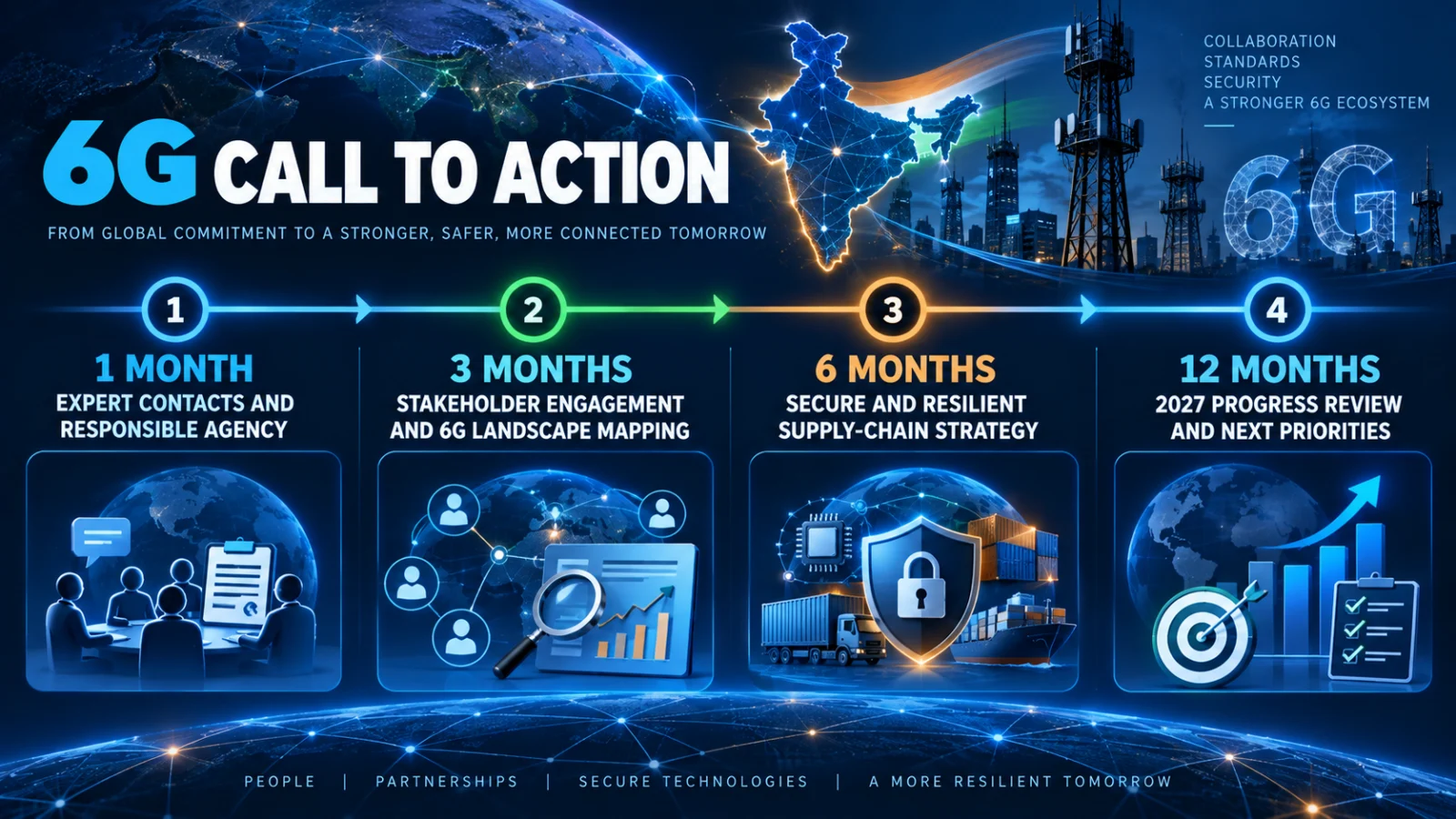
What changed immediately
The immediate change is institutional and strategic. India is now formally participating in this specific 6G leadership and security initiative, and DoT is expected to coordinate India’s contribution and follow-up work.
For telecom operators, vendors, researchers and policy stakeholders, that creates a clearer international coordination path. It does not yet create a new mandatory compliance checklist for operators or a consumer-facing 6G service change.
What did not change
The reviewed official material does not establish a new Indian 6G spectrum allocation. It does not announce a commercial 6G launch date. It does not impose a new binding cybersecurity or interoperability obligation on telecom operators. It also does not establish a final Indian technical standard for 6G.
Those distinctions matter because terms such as leadership, security, standards and spectrum appear in the initiative’s policy context, but each requires separate implementation through the relevant Indian institutions and processes before it becomes an operative rule or deployment state.
What happens over the next 1, 3, 6 and 12 months
The Call to Action describes a staged follow-up programme rather than a one-day policy switch.
- Within one month: participating governments are expected to identify expert 6G contacts, designate the responsible communications-management agency and prepare a preliminary list of stakeholders.
- Within three months: governments are expected to engage telecom stakeholders, map the secure and interoperable 6G landscape, identify barriers and consider relevant resources.
- Within six months: participants are expected to consider strategies for secure, resilient and sustainable 6G supply chains.
- Within twelve months: participants plan an in-person 2027 review of progress and future priorities.
These are programme milestones. They should not be presented as proof that India has already completed each step or adopted a binding domestic measure.
Does this change India’s 6G spectrum position?
Not on the evidence reviewed for this article. The announcement explicitly says India’s engagement is without prejudice to its independent positions in international spectrum and standardisation forums. Any future allocation, consultation, band decision or auction-related action would need to be assessed separately when the relevant Indian authority publishes it.
Does this create new rules for telecom operators?
No new binding operator obligation is established by the September 9 endorsement itself. The initiative anticipates future engagement with telecom stakeholders and work on security, interoperability, standards and supply chains, but the exact Indian implementation instruments remain unknown.
Has commercial 6G rollout started in India?
The announcement does not establish commercial 6G availability or a consumer rollout date. A later trial, deployment programme, spectrum decision or operator launch could materially change that answer and should be treated as a new lifecycle state.
Who is affected now?
The immediate audience is primarily institutional: DoT, relevant government bodies, telecom operators and vendors, standards organisations, researchers, cybersecurity stakeholders and academia. Broader commercial or consumer consequences depend on the concrete measures that follow.
What remains unknown
The official announcement does not yet establish which Indian agencies and organisations will participate in each stage, what specific funding or resources will be committed, whether new spectrum measures will follow, what security requirements may be proposed, or when any deployment programme will begin.
Those unknowns are not reasons to treat the endorsement as unimportant. They define the next evidence checkpoints for this page.
What would materially change this article next
The next meaningful changes would include DoT naming the responsible contacts or stakeholder group, a three-month landscape or barriers assessment, a formal supply-chain or security strategy, an India-specific standards position, a spectrum consultation or allocation decision, or a funded trial or deployment programme.
If those developments answer the same underlying question—what India’s 6G policy commitment means in practice—they should update this same canonical page. A separate page is justified only when a later development creates a materially different reader task, such as complying with a binding operator rule or understanding a specific spectrum allocation.
Verification note
ThePulseSignal reviewed the September 9 Department of Telecommunications/PIB announcement and corroborating current government and institutional coverage. The confirmed state is India’s endorsement and staged follow-up commitment. No reviewed source established a new Indian 6G spectrum allocation, binding operator obligation, final technical standard or commercial deployment mandate at the time of verification.