






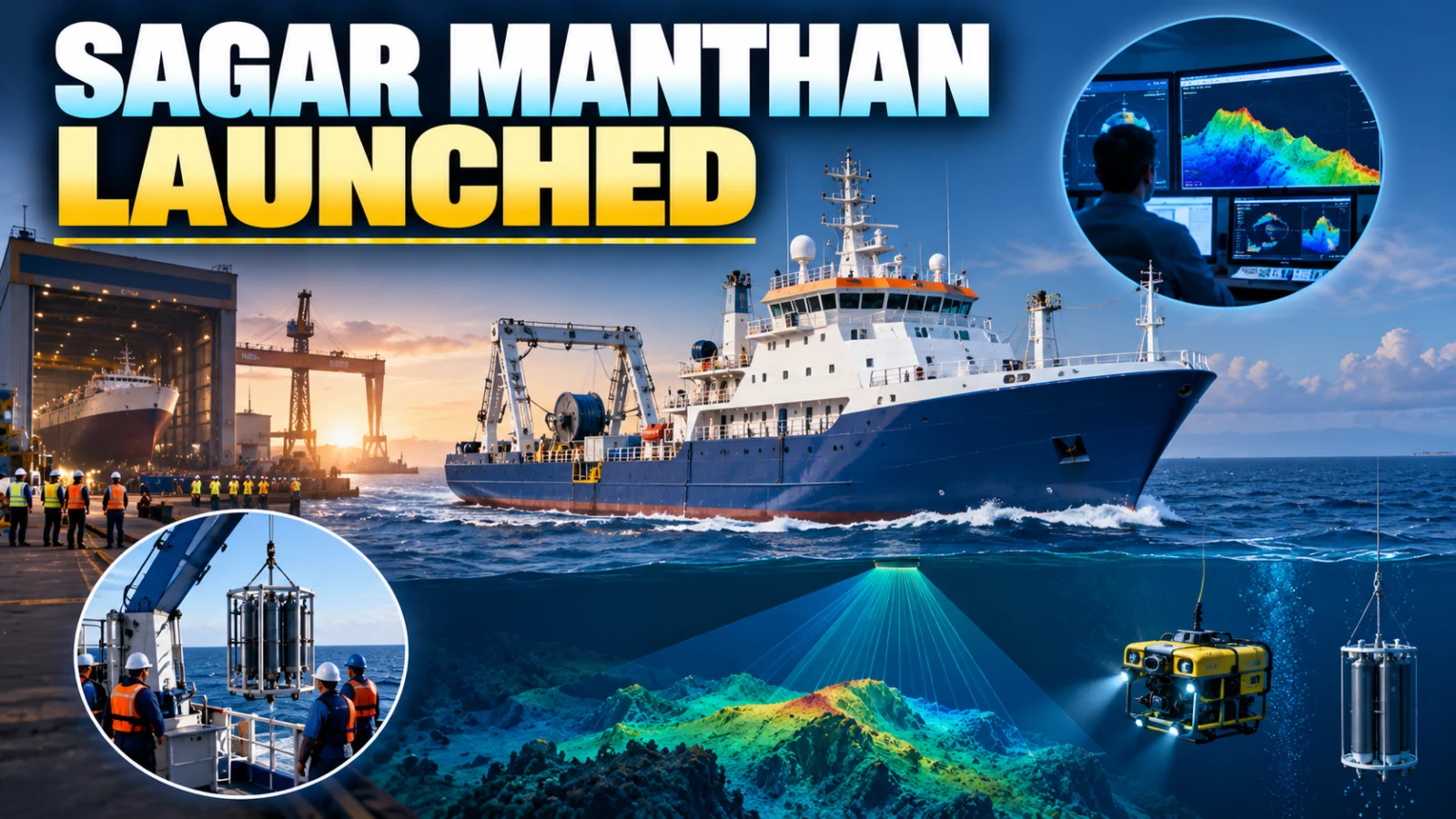
ORV Sagar Manthan was officially launched in Kolkata on September 9, 2026, marking a major construction milestone for India’s next-generation ocean-research capability. But the key distinction is that launched does not mean operational. The vessel still has to move through post-launch integration, sea trials, delivery and commissioning before it can enter regular scientific service.
The Ministry of Earth Sciences says the vessel, previously known as Yard 3041, has been designed and built by Garden Reach Shipbuilders & Engineers for the National Centre for Polar and Ocean Research. It is being developed under the Deep Ocean Mission as a multidisciplinary research platform for work in the Indian Ocean and other demanding environments, including the Southern Ocean.
What exactly happened on September 9?
The September 9 event established two things that are now confirmed: Yard 3041 received the name ORV Sagar Manthan, and the vessel was launched into the water from the Rishi Bankim Shipyard in Kolkata.
A ship launch is an important construction milestone, but it is not the same as delivery or commissioning. At launch, a vessel can still require significant systems integration, outfitting, testing and sea trials before the customer accepts it for operational use.
Is ORV Sagar Manthan operational now?
No operational commissioning has been established by the evidence reviewed for this article. The confirmed current state is that the vessel has been launched. Current reporting says additional construction and systems work, trials and delivery remain ahead before it enters operational service.
Reporting around the launch points to readiness around early 2028. That should be treated as an expected project timeline rather than a guaranteed commissioning date. The exact sea-trial, delivery and commissioning dates have not been confirmed in the evidence reviewed by TPS.
What will ORV Sagar Manthan be used for?
The vessel is being built as a multidisciplinary oceanographic research platform for NCPOR. According to the Ministry of Earth Sciences, its planned capabilities include seabed and water-column research, geophysical and seismic surveys, atmospheric observations and deployment of underwater research systems.
Its stated scientific roles include multibeam bathymetric surveys, sub-bottom and seismic profiling, water-column sampling and ocean-atmosphere observations. The design also supports deployment of remotely operated vehicles and autonomous underwater vehicles.
These are planned vessel capabilities. They should not be described as missions already completed by ORV Sagar Manthan because the vessel has not yet been evidenced as commissioned into research service.
How does Sagar Manthan fit into the Deep Ocean Mission?
ORV Sagar Manthan is part of the Ministry of Earth Sciences’ Deep Ocean Mission and is intended to strengthen India’s ability to conduct long-duration marine scientific research. The vessel is expected to support work ranging from seabed mapping and geological studies to biological, chemical and atmospheric observations.
The government has described the project cost as approximately ₹840 crore and the vessel’s projected service life as about 30 years. Those figures underline that this is intended as a long-term national scientific asset rather than a single-mission ship.
Will ORV Sagar Manthan replace Sagar Kanya?
The Ministry of Earth Sciences has said Sagar Manthan is intended to gradually replace ORV Sagar Kanya, the older ocean-research vessel that has supported Indian marine science for decades. The word “gradually” matters: the September launch does not itself establish that Sagar Kanya has been immediately withdrawn or that Sagar Manthan has already taken over its operational work.
What happens between launch and commissioning?
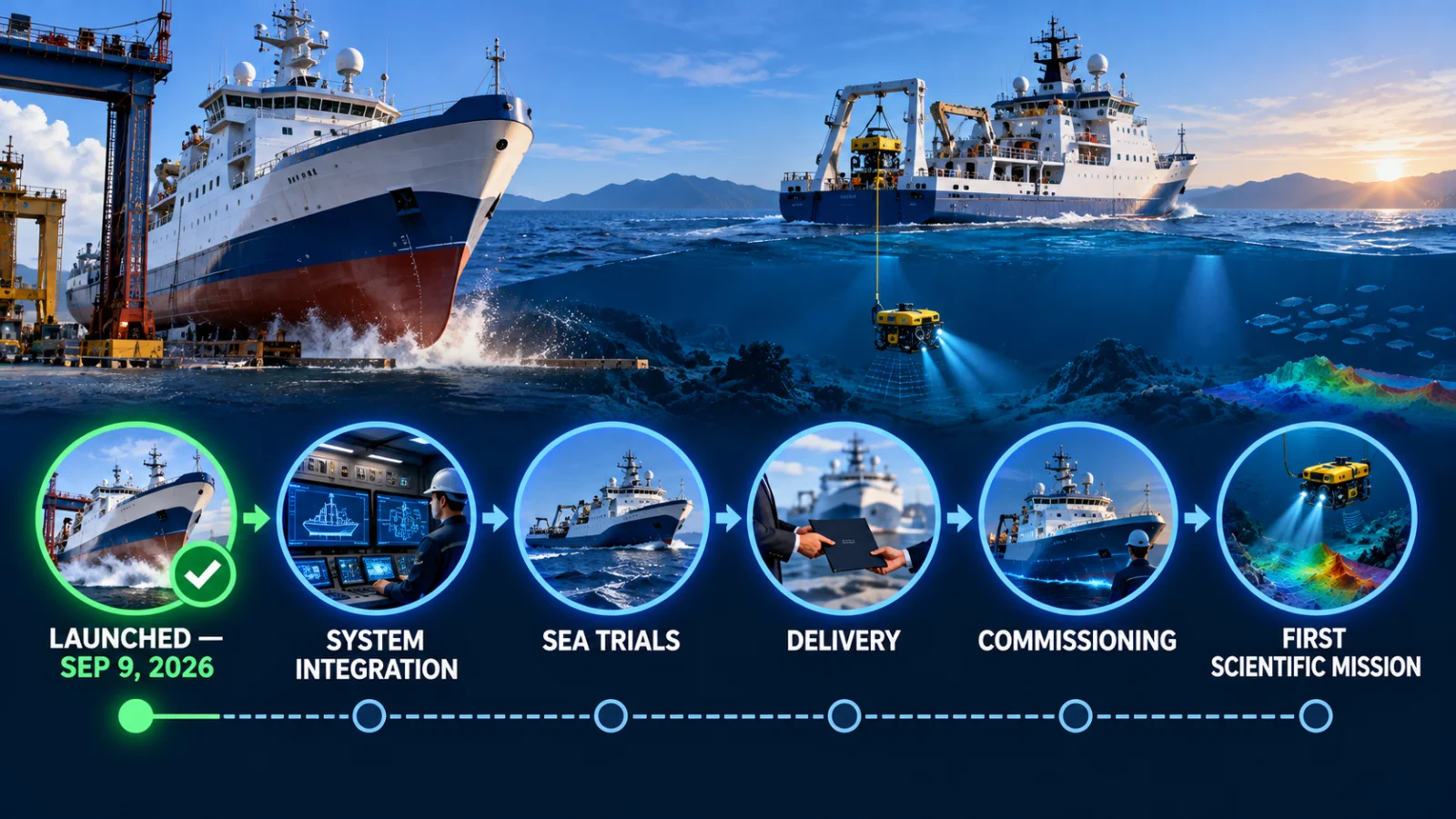
The current lifecycle can be understood as a sequence rather than a single launch event:
- Launch: completed on September 9, 2026.
- Post-launch integration and outfitting: systems and equipment work continues.
- Sea trials: the vessel must demonstrate performance and systems readiness.
- Delivery and acceptance: the completed ship is handed over for operational use.
- Commissioning: the vessel formally enters service.
- First scientific mission: operational research begins after commissioning and mission preparation.
The exact dates for those later stages remain unresolved. A future official announcement from the Ministry of Earth Sciences, NCPOR or GRSE should be treated as the controlling evidence when the vessel advances to its next state.
Why the launch-versus-operational distinction matters
Launch coverage often lists the vessel’s technical capabilities immediately, which can make it appear that those capabilities are already being used at sea. That would overstate the current evidence. The September 9 milestone confirms the vessel’s launch and intended research role; it does not confirm completed sea trials, operational commissioning or a completed scientific expedition.
For readers tracking the project, the most useful question is therefore not simply whether Sagar Manthan exists. It is which lifecycle stage the vessel has actually reached.
What could change this article next?
This same page should be updated when GRSE, NCPOR or the Ministry of Earth Sciences confirms a material state change such as the start or completion of sea trials, delivery to NCPOR, formal commissioning, a revised readiness timeline or the vessel’s first scientific deployment.
Those milestones belong to the same reader problem and should strengthen this canonical rather than create separate pages simply for different wording such as “Sagar Manthan commissioned” or “Sagar Manthan operational date.” A separate article would make sense only when a future mission or discovery creates a genuinely different information need.
Verification note
ThePulseSignal reviewed the Ministry of Earth Sciences/PIB launch announcement for the vessel’s identity, launch date, builder, operator, Deep Ocean Mission role and stated capabilities, then compared current reporting on the expected operational timeline. The September 9 launch is confirmed. Exact sea-trial, delivery, commissioning and first-mission dates remain unresolved, while early-2028 readiness should be treated as an expected timeline rather than a fixed commissioning date.