





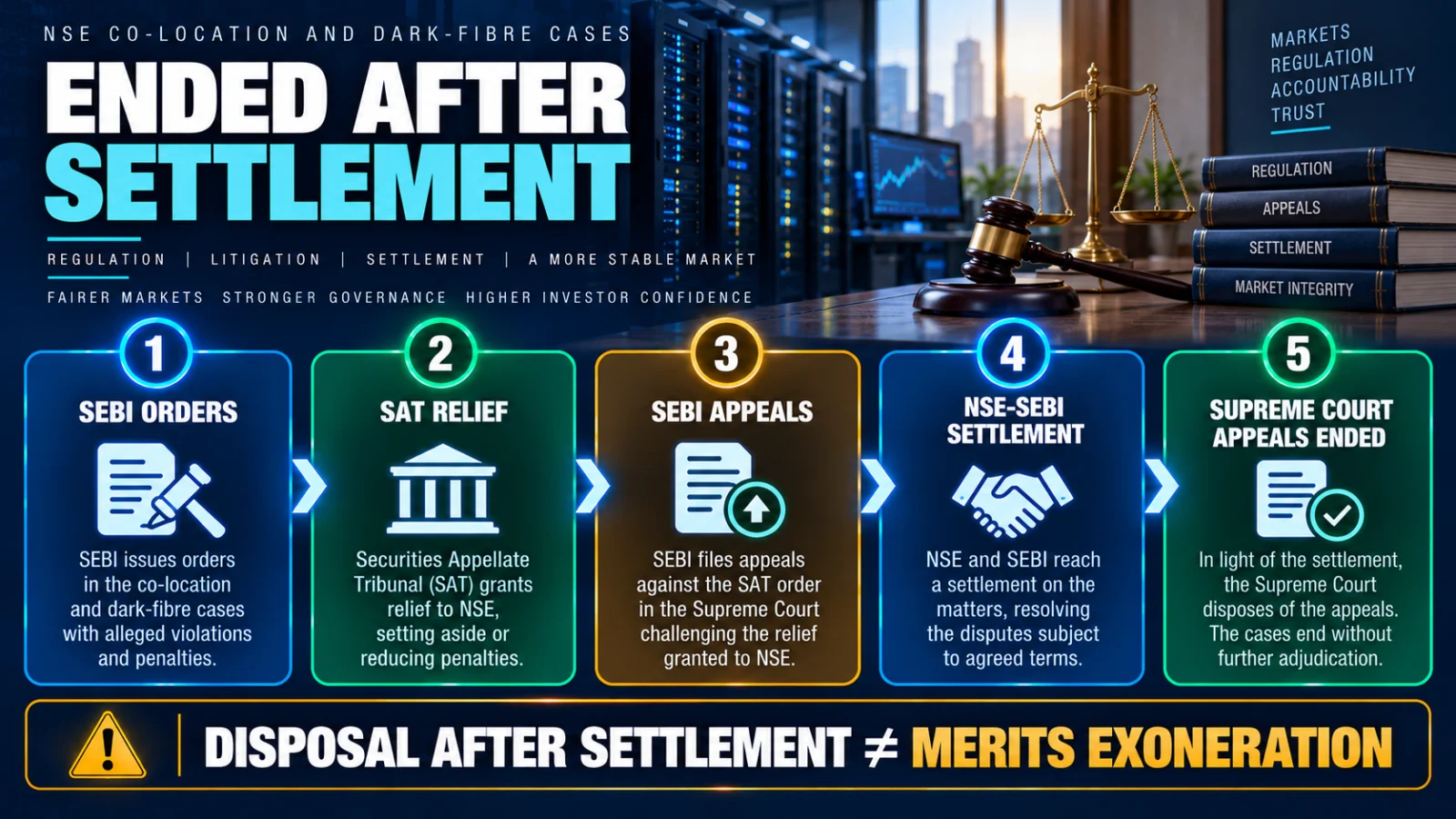
The NSE co-location case has reached a new Supreme Court procedural state, but the outcome should not be read as a merits ruling that NSE was cleared of every underlying allegation. Current reporting says the Supreme Court disposed of or dismissed SEBI’s appeals in the National Stock Exchange’s co-location and dark-fibre matters after the regulator and exchange moved through a settlement process.
Current answer: the specific SEBI appeals before the Supreme Court are no longer pending after settlement. That removes an important legal overhang for NSE. However, the evidence reviewed by TPS does not establish that the Supreme Court ruled the original allegations were false, that every related proceeding is closed, or that an NSE IPO date is now guaranteed.
What changed in the NSE co-location case?
SEBI had taken appeals to the Supreme Court after the Securities Appellate Tribunal granted NSE relief from parts of earlier enforcement action connected with the co-location and dark-fibre matters. Current September 2026 reporting says those Supreme Court appeals have now been disposed of or dismissed following settlement between NSE and SEBI.
The practical change is therefore procedural and regulatory: these particular appeals are no longer a pending Supreme Court dispute.
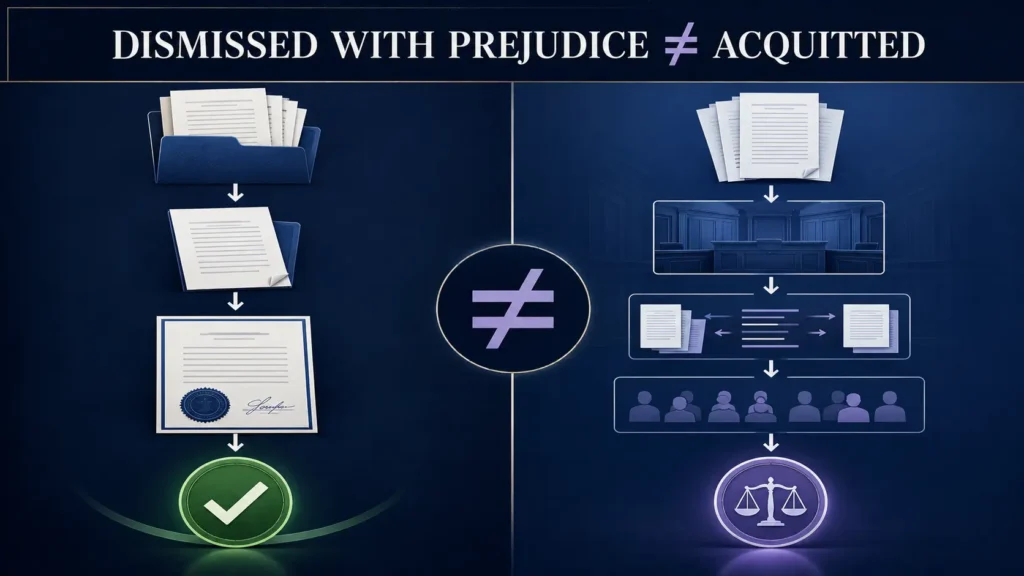
Does the Supreme Court dismissal mean NSE was cleared on the merits?
No such merits finding has been established in the evidence reviewed by TPS. This distinction is important. A matter ending after settlement is not the same thing as a court independently deciding that every underlying allegation was incorrect.
TPS has not recovered the controlling Supreme Court order text and therefore will not attribute language or findings to the Court that have not been directly verified.
What is confirmed: SEBI’s Supreme Court appeals in the co-location and dark-fibre matters are reported as disposed of or dismissed after settlement.
What that changes: this specific Supreme Court legal overhang is no longer pending.
What it does not prove: TPS has not established a Supreme Court merits finding exonerating NSE from every underlying allegation.
What remains separate: the exact IPO timetable and the status of any other related proceedings require their own controlling evidence.
What was the co-location and dark-fibre dispute about?
The long-running NSE matter concerned allegations around preferential or unfair access to exchange infrastructure and trading systems. SEBI issued enforcement orders, NSE obtained relief on important parts of those orders from the Securities Appellate Tribunal, and SEBI then pursued appeals before the Supreme Court.
The current development closes that Supreme Court appeal stage following settlement rather than extending the litigation further.
How much did NSE agree to pay in settlement?
NSE disclosed revised settlement terms aggregating about ₹1,491.21 crore for the co-location and dark-fibre matters. That amount should be described as part of the settlement process, not as a Supreme Court fine imposed by the current dismissal or disposal.
What does this mean for the NSE IPO?
The co-location dispute has been repeatedly treated as a major regulatory and legal overhang for NSE’s long-awaited public listing. Ending these Supreme Court appeals therefore removes one significant obstacle from that history.
But this event does not by itself establish an IPO subscription date, listing date, valuation, issue size or guarantee that the offer will proceed on a particular timetable. Those require separate regulatory and company disclosures.
Are all NSE co-location-related proceedings now over?
TPS cannot safely make that broader claim from the evidence reviewed. The current material establishes the changed status of the Supreme Court appeals, but the complete status of every historical regulatory, enforcement, criminal or other related proceeding has not been independently reconciled.
Readers should therefore distinguish between these appeals ending and every matter connected with the wider controversy being extinguished.
What should readers watch next?
The strongest next evidence would be the direct Supreme Court order, final SEBI settlement documentation and any NSE or regulatory disclosure clarifying remaining proceedings. A material NSE IPO filing or regulatory approval would also change the practical significance of this legal milestone.
TPS will update this same URL as those states become verifiable rather than creating separate pages for each procedural step.
What remains unresolved?
- The exact Supreme Court case numbers and operative order wording.
- Whether every proceeding connected with the broader co-location controversy is closed.
- The complete final settlement conditions beyond the disclosed aggregate amount.
- The exact timing and regulatory path for NSE’s proposed IPO.
Verification note: ThePulseSignal reviewed NSE’s earlier settlement disclosures and current Reuters, Informist and financial-market reporting on the Supreme Court disposition. Because the direct Court order was not recovered, TPS limits the article to the corroborated procedural state and preserves the unresolved scope explicitly.