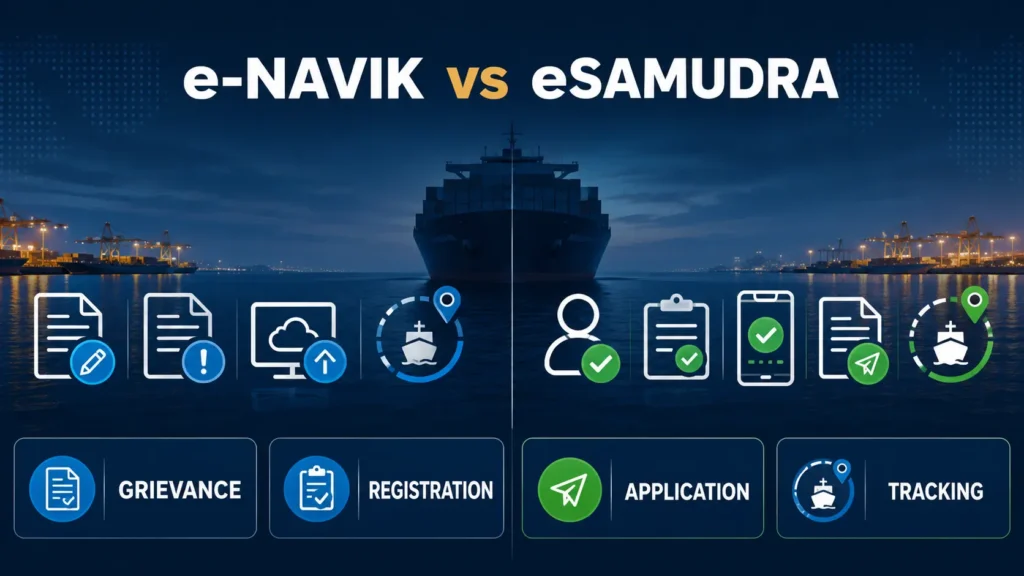





DGS medical fitness certificate e-Samudra issuance is now part of the current seafarer-certification state. The Directorate General of Maritime Administration has listed Circular 57 of 2026, dated September 7, on the issuance of Medical Fitness Certificates through the e-Samudra Portal.
What does DGS Circular 57 change?
The confirmed change is that DGMA has formally issued a circular governing Medical Fitness Certificate issuance through e-Samudra. That means older guidance describing the medical-certificate process only as an offline or paper workflow may now be incomplete.
What TPS cannot yet confirm is equally important: the operative circular text was not recovered during this review, so there is not enough evidence to say that every existing paper certificate is invalid, that every seafarer must immediately obtain a new certificate or that the seafarer personally performs a new upload step.
Do seafarers still need a valid medical fitness certificate?
Yes. DGMA’s current maritime-health guidance says seafarers require a current Medical Certificate of Physical Fitness issued by a DGS-approved Medical Examiner for applicable engagement and certification purposes.
Circular 57 changes the digital issuance state; it does not remove the underlying medical-fitness requirement.
Who can issue a valid DGS medical certificate?
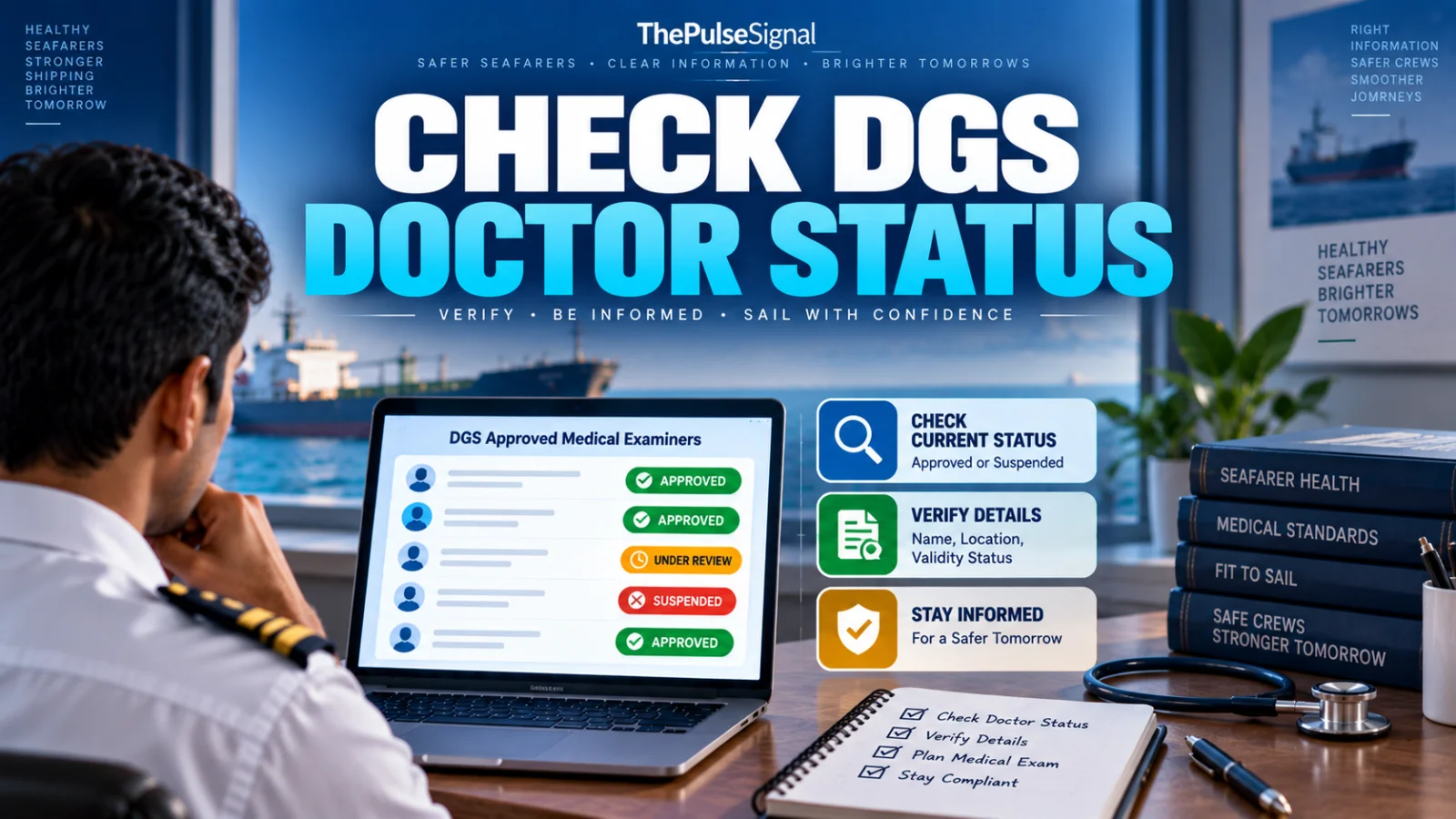
The existing DGS framework requires the examination and certificate to come from a DGS-approved Medical Examiner. Seafarers should therefore verify that the doctor is currently approved under the Directorate’s medical-examiner system rather than relying on an ordinary hospital or general fitness certificate.
Doctor approval status matters separately from the new e-Samudra workflow. A certificate should not be assumed valid for DGS purposes simply because it was issued by a registered medical practitioner who is not on the relevant approved list.
Does an existing valid certificate need to be replaced?
TPS has not found evidence that Circular 57 automatically cancels every existing valid medical certificate. Existing DGMA FAQ guidance has previously recognised the continued use of a still-valid Medical Fitness Certificate in certain revalidation contexts.
Because the Circular 57 transition provisions have not yet been recovered, seafarers should not obtain a replacement examination solely on the assumption that all earlier certificates became invalid on September 7.
Does the seafarer upload the certificate to e-Samudra?
The exact new portal procedure remains unresolved. Existing DGS material shows that approved medical professionals and the INDoS/e-Samudra digital ecosystem already interact with seafarer medical-fitness data, but TPS has not recovered enough evidence to publish a new step-by-step Circular 57 workflow.
For now, the safe distinction is that e-Samudra is part of the official issuance and record environment, while the exact responsibility split between the approved Medical Examiner and the seafarer must come from the operative circular or subsequent DGMA guidance.
How long is a DGS medical fitness certificate valid?
DGMA’s existing maritime-health guidance generally describes Medical Fitness Certificate validity as two years, with shorter validity applying to certain age groups and other rule-based exceptions.
Circular 57 should not be read as changing those validity rules unless the operative text specifically does so.
What should seafarers verify now?
- Confirm that the examining doctor is currently DGS-approved.
- Keep the existing Medical Fitness Certificate and related records available.
- Check the correctness of medical and identity information reflected in the DGS digital record environment.
- Do not assume an old certificate has been cancelled merely because Circular 57 mentions e-Samudra issuance.
- Do not follow unofficial screenshots, agents or fabricated portal steps that are not supported by current DGMA guidance.
What is still unresolved about the e-Samudra workflow?
TPS has not yet verified the exact effective implementation date beyond the circular’s September 7 issue date, whether e-Samudra issuance is mandatory for every approved Medical Examiner immediately, whether a grace period exists, how previously issued paper certificates are treated or what exact steps apply to corrections and reissues.
The exact doctor-side workflow, seafarer-side workflow and portal-failure process also remain unresolved.
Why the distinction matters
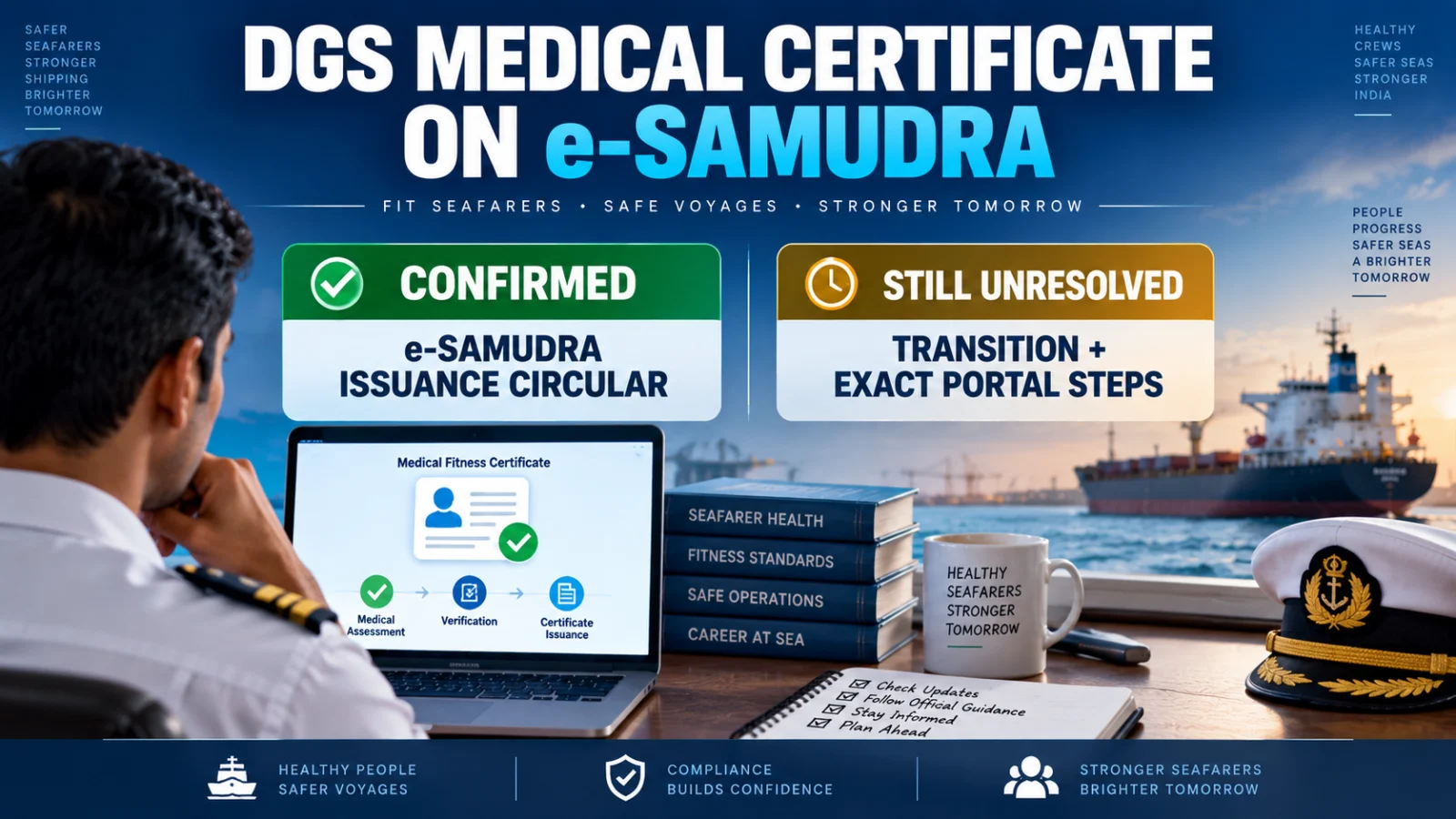
There are two different questions here. The first is whether DGS medical certification now has an official e-Samudra issuance workflow. That is confirmed. The second is exactly how every existing or new certificate must transition into that workflow. That is not yet established from the evidence TPS recovered.
Keeping those states separate helps avoid unnecessary medical examinations, unsupported claims about paper-certificate validity and incorrect assumptions about who must enter or upload certificate information.
What happens next?
The next important evidence is the operative text of Circular 57 of 2026 or a DGMA implementation clarification. Once the mandatory scope, transition treatment, doctor steps, seafarer steps and correction process are verified, TPS will update this same URL rather than creating another overlapping e-Samudra medical-certificate page.
Verification note
TPS verified Circular 57 of 2026 through DGMA’s official Nautical Wing circular register and compared the new e-Samudra issuance state with current DGMA maritime-health, examination and FAQ material. The circular’s existence and subject are confirmed; its detailed implementation and transition rules remain unresolved.