




Maersk Gulf booking restrictions currently vary by cargo type, origin, destination and shipment state. Maersk is still moving selected Gulf cargo through contingency routes, but some landside and ocean-booking flows remain paused, while Emergency Freight, storage and other charges can apply depending on how the cargo moves.
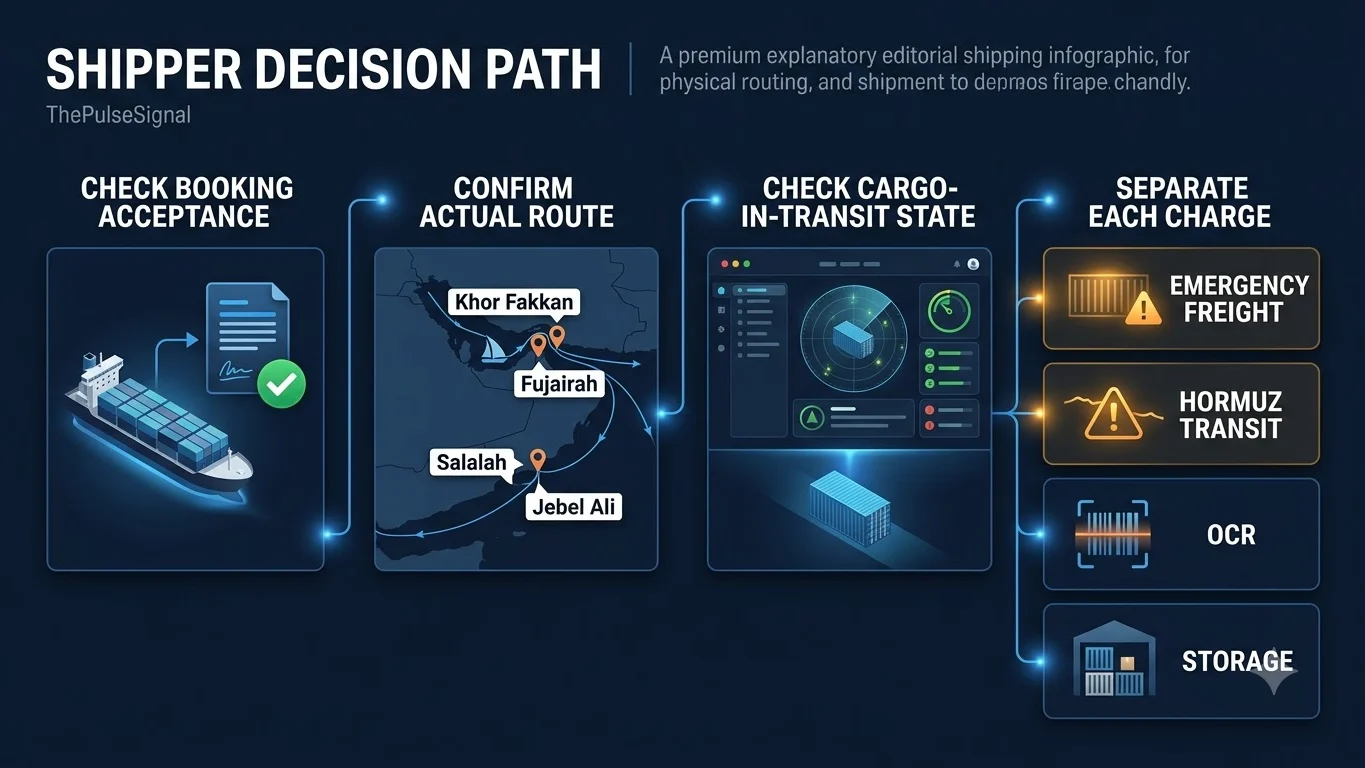
The key point for shippers is that this is not a single blanket Gulf shutdown. You need to check four separate questions: whether Maersk can accept the booking, where the cargo will actually route, whether it is already in transit, and which disruption-related charge applies.
Direct answer: Check your cargo type and origin/destination against Maersk’s current Middle East operating matrix before booking or changing destination. Then confirm the shipment-specific route and quotation. Do not assume Emergency Freight, the additional Strait of Hormuz charge, OCR, storage and local demurrage or detention are one combined fee.
Maersk Gulf booking restrictions depend on cargo type and corridor
Maersk’s current operating matrix treats reefer, dangerous goods, out-of-gauge, in-gauge and dry cargo separately. Some Gulf corridors remain temporarily paused while selected alternatives continue to operate.
Current Maersk guidance also lists temporary pauses on several landside combinations involving the UAE, Qatar, Jeddah, Oman, Salalah and Sohar. The exact status therefore needs to be checked by cargo type and origin-destination pair rather than from a general statement that Gulf bookings are open or closed.
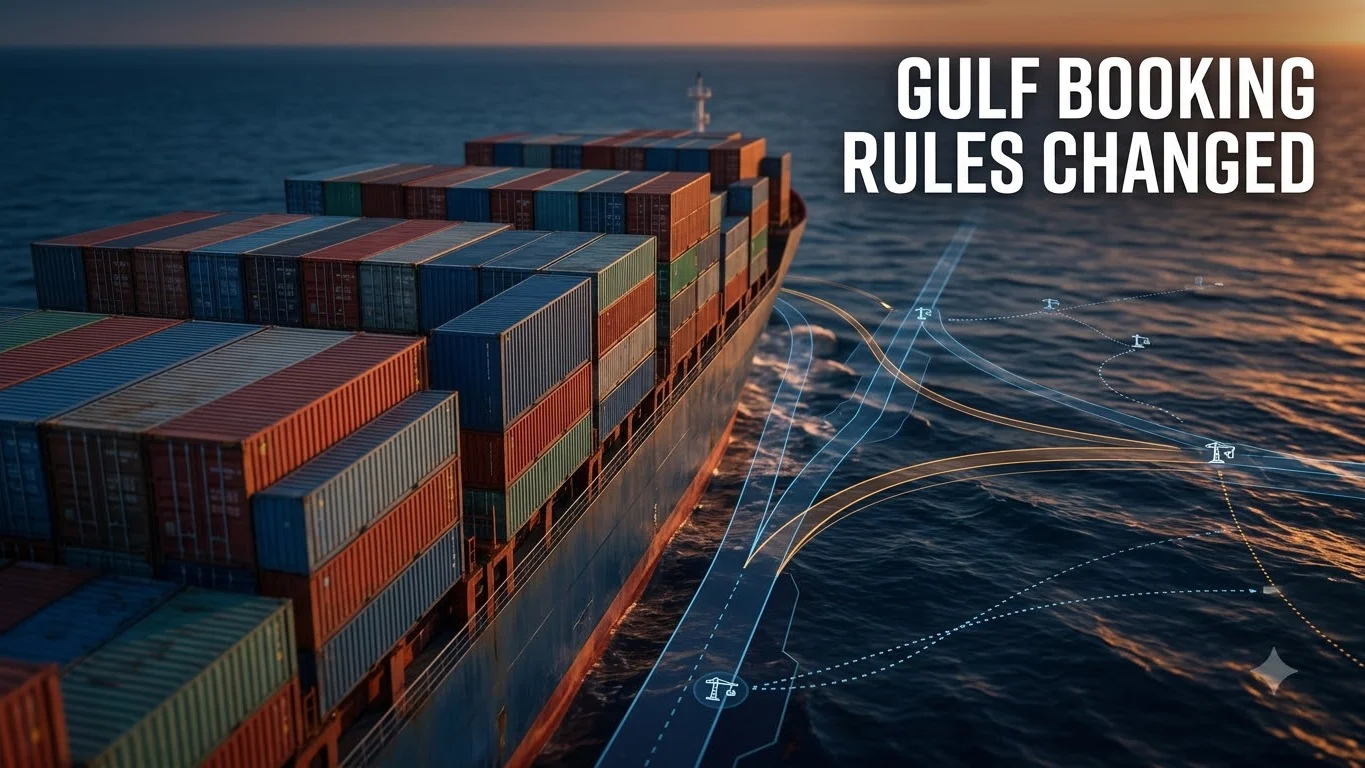
How Maersk is routing Upper Gulf cargo
For current Upper Gulf contingency flows, Maersk says cargo for Kuwait, Iraq, Qatar, Bahrain and the UAE is routed through hubs including Salalah and Khor Fakkan, with landside and intra-Gulf feeder connections used where applicable instead of relying on one normal routing pattern.
Saudi cargo has a different operating path. Maersk’s current guidance continues to use Jeddah for selected Saudi flows, including landbridge connections toward Riyadh and Dammam.
What is happening to selected Khor Fakkan cargo?
Selected shipments associated with Khor Fakkan can be discharged at Fujairah and moved under bonded landside arrangements toward Jebel Ali. This does not mean every Khor Fakkan shipment follows that route. Maersk says affected customers receive shipment-specific information.
Current Maersk Emergency Freight rates
For the affected Gulf scope described by Maersk, the current Emergency Freight schedule is:
| Equipment | Emergency Freight |
|---|---|
| 20-foot dry | USD 1,800 per container |
| 40-foot dry | USD 3,000 per container |
| Reefer / Special / DG | USD 3,800 per container |
| Vessel transiting Strait of Hormuz | Additional USD 1,000 per container |
Maersk states that these Emergency Freight rates may be adjusted as operating conditions change.
These Emergency Freight rates were not all introduced in Update 47
The current rate structure was already present in earlier Maersk Middle East operational updates. Update 47 should therefore be read as the latest operating state rather than as evidence that every listed fee was newly introduced on September 16.
This distinction matters because a shipper comparing older and newer advisories could otherwise mistake an existing disruption charge for a newly imposed surcharge.
Emergency Freight and OCR are different charges
Maersk has separately announced an Emergency Operational Cost Recovery surcharge for certain contract bookings to Bahrain, Qatar, Kuwait and Iraq. That OCR notice uses its own origin scope and effective dates and should not be merged with the Strait of Hormuz Emergency Freight structure.
The practical check is to identify the exact charge shown in the booking or quotation and then match it to the relevant Maersk advisory rather than assuming every disruption-related line item is the same surcharge.
What if your cargo is already in transit?
Maersk’s current contingency framework includes options for completing the planned voyage with temporary storage, returning cargo to origin or requesting a change of destination, subject to operational feasibility and applicable costs.
For the complete-voyage-with-storage option, Maersk states that the applicable Emergency Freight includes 14 days of storage in transit. After that period, it lists a storage charge of USD 25 per TEU per day, with additional reefer monitoring or plug-in charges where relevant.
Verify the current Maersk status for your cargo type, origin and destination before committing cargo.
Use the shipment-specific Maersk instruction or tracking state rather than assuming all Upper Gulf cargo follows the same contingency route.
Check Emergency Freight, the additional Hormuz-transit charge, OCR, storage and any local demurrage, detention or empty-return terms separately.
Determine whether the shipment is continuing, being stored, returning to origin or moving under an approved change of destination.
Confirm operational feasibility and the latest quotation before requesting COD or rerouting.
Carrier conditions are changing quickly, so current Maersk guidance should control over older mirrored or republished copies.
Why current Maersk guidance should control over mirrored copies
A September 16 republication of Operational Update 47 states that dangerous-goods bookings for certain Jeddah local-consignee cargo were accepted with Emergency Freight. Maersk’s current live operating text now says dangerous-goods bookings to and from Saudi Arabia are suspended, while selected Sohar acceptance remains available under stated conditions.
Because those two surfaces do not fully agree, TPS treats Maersk’s current live advisory as controlling for the present reader decision. Shippers should not rely on an older mirror where Maersk has since changed the live operating matrix.
Does this apply to every shipping line?
No. These are Maersk-specific booking, routing and pricing conditions. Other carriers are using their own Gulf contingency routes, acceptance rules and commercial terms. Do not apply Maersk’s Emergency Freight or routing matrix to another carrier without checking that carrier’s current advisory.
What could change next?
A newer Maersk Middle East operational update could reopen or suspend additional bookings, change Khor Fakkan, Fujairah, Salalah or Jeddah routing, revise Emergency Freight or OCR, alter storage terms or change how vessels and cargo are handled around the Strait of Hormuz.
Verification method
ThePulseSignal reviewed Maersk’s current Middle East operating guidance, earlier Maersk updates and the separate OCR surcharge notice, then compared current shipper and logistics coverage to distinguish continuing charges from genuinely newer routing and booking states and to identify conflicts between live Maersk text and republished copies.
Limitations and unresolved facts
TPS cannot determine the final route or charge for an individual shipment without the current booking, quotation and shipment-specific Maersk instruction. The number of affected shipments, exact India-linked volume, future booking restoration timing and the next Maersk operating revision remain unknown.